Germany is making a massive geopolitical gamble in Southeast Asia, and it is doing so by using corporate checkbooks instead of warships. The recent multimillion-dollar aviation deal at Clark Air Base—a massive, former US military outpost in the Philippines—signals a dramatic shift in how Europe projects power in the Indo-Pacific. By embedding its industrial giants directly into the infrastructure of a highly contested region, Berlin is quietly rewriting its own defense playbook.
This isn't just about commercial aviation. It's about drawing a line in the sand against Chinese expansion in the South China Sea. During his June 2026 state visit to Manila, German President Frank-Walter Steinmeier made it clear that European security is directly tied to the stability of the Indo-Pacific. President Ferdinand Marcos Jr. responded by declaring the Philippines is wide open to a formal Visiting Forces Agreement with Germany. The move has blindsided critics who thought Europe would remain a passive observer in Asia's brewing maritime conflict. For a closer look into similar topics, we suggest: this related article.
The Strategic Shift at Clark Air Base
Berlin is using economic investment as a direct instrument of national security. For decades, Germany held a strict line separating commercial trade from hard military alignment. That line is now entirely gone. Investing heavily in Clark Air Base allows German interests to gain a permanent, highly strategic foothold right next to the South China Sea without launching a single combat vessel.
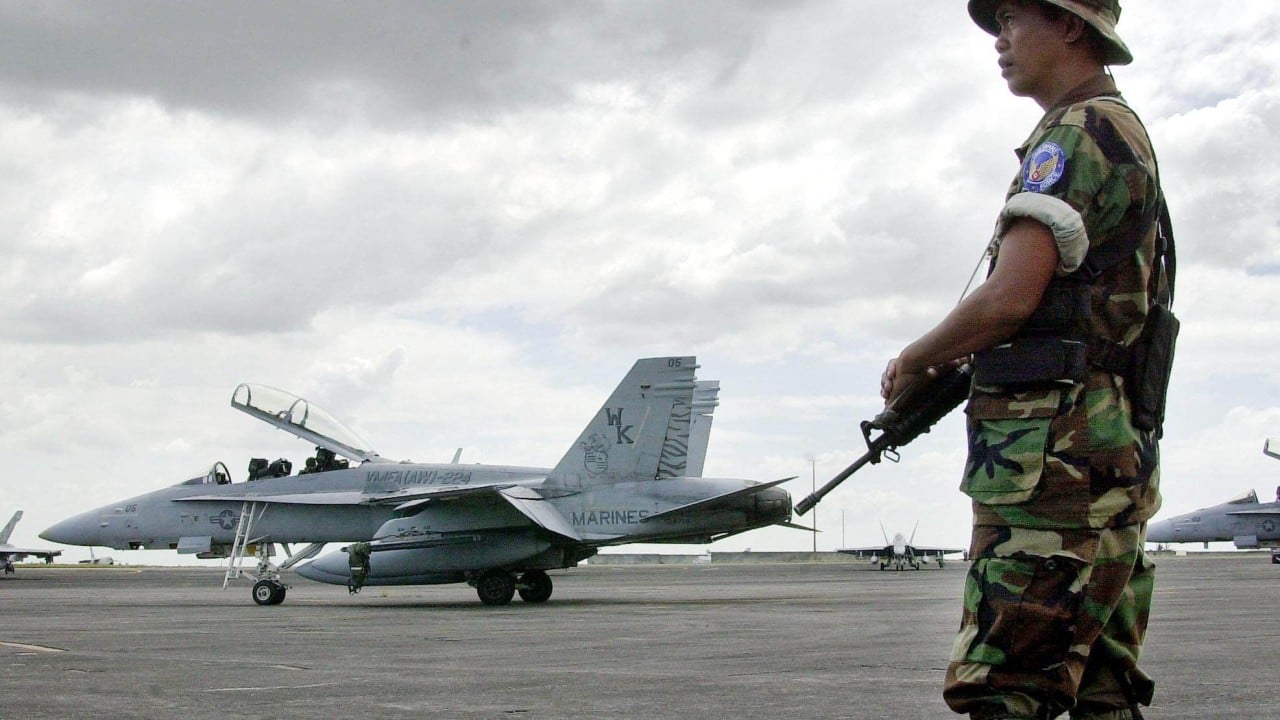
Clark Air Base and its sister facility at Subic Bay form the backbone of the Luzon Economic Corridor. These aren't just relic sites from the Cold War anymore. They handle roughly 80 percent of Philippine port traffic and sit directly adjacent to military installations designated under the Enhanced Defense Cooperation Agreement with the United States. Germany isn't stumbling into this zone by accident. It's intentionally placing its industrial infrastructure inside a military ecosystem. For additional background on this development, in-depth reporting is available at Associated Press.
This strategy avoids the domestic political backlash that usually comes with sending troops abroad. The German public remains deeply skeptical of foreign military adventures. Securing a footprint through aviation and logistics contracts allows Berlin to achieve the same strategic positioning without triggering protests back home. It's a calculated, commercialized defense policy.
Why the Philippines Welcomes European Boots and Billions
Manila is aggressively diversifying its security network. Relying solely on Washington is a dangerous game for the Philippines, especially with shifting political winds in American domestic politics. President Marcos Jr. knows his country needs a broad base of international backers to deter Beijing's maritime militia.
Germany has steadily stepped up its concrete support over the last few years. It provided the Philippine Coast Guard with high-tech surveillance drones and specialized Airbus helicopters. German military officials have also been showing up to the annual US-Philippines Balikatan military exercises as invited observers. Signing a Visiting Forces Agreement with Germany would formalize this relationship, allowing German troops to cycle through Philippine bases for joint training and disaster response operations.
The economic reality is just as critical. The Philippines needs capital to modernize its aging infrastructure. When Western companies invest in places like Clark or the nearby Agila Shipyard in Subic Bay, they effectively crowd out Chinese state-owned enterprises. Beijing tried hard to buy up these bankrupt industrial assets years ago. Washington and Manila successfully blocked those bids, and now European capital is filling the vacuum to lock down the territory for the Western alliance.
Reading Between the Lines of the Berlin Manila Pact
This newfound alignment isn't without serious friction. Germany's economy is profoundly dependent on trade with China. Corporate leaders in Frankfurt and Munich are terrified that Berlin's aggressive stance in the South China Sea will trigger economic retaliation from Beijing. Berlin is walking a razor-thin tightrope.
There is also the thorny issue of legal jurisdiction that comes with any foreign military presence. The return of Western forces to old bases like Clark brings back bitter historical memories for many Filipinos. Past arrangements during the Cold War shielded American servicemen from local prosecution, creating deep-seated resentment. If Germany pushes forward with a full Status of Visiting Forces Agreement, negotiators will have to navigate intense public scrutiny over sovereignty and legal accountability.
The sheer distance presents another harsh reality. Germany's navy is already stretched thin protecting European waters and maintaining commitments in the Atlantic. Sending frigates to patrol the Taiwan Strait or the West Philippine Sea is a symbolic gesture, not a sustainable military strategy. That's exactly why the investment at Clark Air Base is so telling. Berlin knows its actual military power in Asia is limited, so it's banking on commercial infrastructure to establish long-term influence.
Your Next Moves for Navigating Indo-Pacific Supply Risks
If you operate a business relying on global shipping or regional supply chains, you can't ignore this European pivot into the Philippines. The militarization of commercial hubs like Clark and Subic Bay means the region is stabilizing under Western security guarantees, but it also raises the stakes for any future conflict.
Start auditing your regional logistics immediately. Look closely at how much of your freight moves through the Luzon Economic Corridor and determine your exposure if localized maritime standoffs escalate.
Diversify your manufacturing and transit nodes away from the immediate vicinity of the First Island Chain. Use the influx of Western and European capital into Philippine infrastructure to explore new, heavily defended logistics hubs that are gaining legal and physical protections from allied states. Watch the upcoming negotiations for the German-Philippine Visiting Forces Agreement closely, as the specific terms will dictate just how deeply European defense assets will be embedded in the region.