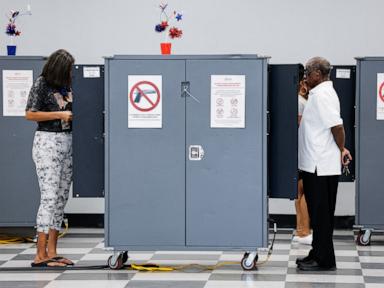
The fluorescent lights of a county clerk’s office in central Pennsylvania hum at a frequency that gets behind your eyes after fourteen hours.
It is late October, and the air smells like stale coffee, damp wool coats, and the peculiar, metallic tang of high-speed ballot scanners running nonstop. Behind a laminate counter worn smooth by decades of elbows, a woman named Brenda—a hypothetical composite of the thousands of local election administrators who keep the gears of American democracy turning—is squinting at a computer screen. On that screen is a spreadsheet row that doesn't quite make sense. A citizen naturalized three weeks ago has just registered to vote, yet the state’s automated database flag is blinking amber because a legacy Social Security record hasn’t updated to reflect their new status.
Brenda picks up the phone. She checks the naturalization certificate number. She verifies the birth date. She cross-references the signature on the paper form. It takes eleven minutes. Eleven minutes of quiet, unglamorous, bureaucratic detective work to ensure that one newly minted American gets to exercise their constitutional right, while ensuring that anyone who shouldn't be on that list stays off it.
Now, zoom out from Brenda’s humming fluorescent office to the roaring megaphone of national politics.
For years, and with renewed intensity across recent election cycles, Donald Trump and his allies have painted a vastly different picture of what happens in rooms like Brenda’s. In speeches, social media posts, and press conferences, they have alleged that millions of undocumented immigrants and noncitizens are flooding the voter rolls, poised to tip the scales of American elections. It is a visceral, terrifying image: the fundamental lever of self-governance hijacked by people who hold no legal stake in the nation's covenant.
When a claim that massive hits the public bloodstream, the instinct of most news outlets is to publish a dry, clinical rebuttal. They quote a secretary of state. They cite a paragraph of federal statute. They move on.
They miss the real story. Because when state election officials—Republicans and Democrats alike—push back against claims of widespread noncitizen voting, they aren't merely engaging in a partisan turf war or reciting talking points. They are fighting to protect a fragile, human-built machine from being dismantled to solve a problem that, by every empirical measure, barely exists. And the collateral damage of that fight isn't an abstract political loss. It is the quiet, systematic erasure of eligible American citizens from the rolls.
The Anatomy of a Phantom
To understand why secretaries of state from Georgia to Ohio to Arizona have taken the extraordinary step of publicly rebuking claims of mass noncitizen voting, you have to understand how deeply insulting—and operationally dangerous—the accusation actually is.
Imagine spending your career building a vault, installing biometric locks, motion sensors, and three-foot-thick steel doors, only to have someone stand outside on the sidewalk shouting through a bullhorn that the vault is wide open and filled with thieves. If enough people believe the man with the bullhorn, they won't just distrust the bank. They will demand you weld the doors shut, trapping the legitimate customers inside.
That is the exact dilemma facing state election chiefs today.
When Trump and allied groups allege that noncitizens are voting in droves, they rely on a powerful psychological shortcut. People see chaotic images of the southern border on television. They know that millions of migrants have entered the country over the past several years. They also know that in many states, applying for a driver’s license or state benefits involves motor-voter registration prompts. Connect those two dots in the dark, and a conspiracy theory writes itself: They cross the border, they get an ID, they get registered, they vote.
It sounds plausible. Until you actually walk into the back room of a state election office and look at the plumbing.
Federal law—specifically the Illegal Immigration Reform and Immigrant Responsibility Act of 1996—makes it a felony for a noncitizen to vote in a federal election. Punishable by fines, up to a year in prison, and, most devastatingly for anyone trying to build a life in the United States, mandatory deportation and a permanent bar from ever becoming a citizen.
Consider the sheer irrationality required for an undocumented immigrant or visa holder to cast a ballot. You have risked everything—perhaps trekked across continents, spent your life savings, or waited a decade in a legal queue—to build a future in America. Would you willingly hand the federal government a signed, dated, address-verified paper trail proving you committed a deportable felony, all so you could cast a single vote among 160 million?
No. And the data bears that out with stunning, unambiguous clarity.
What the Audits Actually Found
When state officials push back against noncitizen voting claims, they aren't guessing. They are reading the receipts.
Take Georgia. In 2022, Georgia’s Republican Secretary of State, Brad Raffensperger—a man who famously stood his ground against pressure to overturn the 2020 presidential election—ordered a first-of-its-kind, full-scale citizenship audit of the state’s entire voter roll. Every single name. Every single record. Cross-checked against driver’s license data, federal immigration databases, and state records.
Out of more than 7.8 million registered voters in Georgia, how many noncitizens did the audit find had actually cast a ballot?
Zero.
The audit identified roughly 1,600 individuals who had attempted to register to vote over a twenty-five-year span before becoming citizens. Not one of them was placed on the active voter rolls. Not one of them cast a vote. The system caught them at the door, flagged their status, and held their applications in limbo until they could prove citizenship.
Look at Ohio, another state led by a Republican secretary of state, Frank LaRose. In 2024, LaRose conducted an aggressive scrub of Ohio’s voter rolls, cross-referencing state registration lists against Bureau of Motor Vehicles records and federal SAVE (Systematic Alien Verification for Entitlements) databases. Out of more than 8 million registered voters in Ohio, his office identified just 597 individuals who appeared to lack citizenship documentation—many of whom, upon closer inspection, turned out to be newly naturalized citizens whose paperwork simply hadn't caught up with the DMV yet. Even among that tiny fraction, only 138 had ever cast a ballot across multiple election cycles. That is 0.0017 percent of Ohio’s electorate.
Look at North Carolina. Look at Texas. Look at Michigan. Across the country, study after study—including exhaustive investigations by the conservative Heritage Foundation, which maintains a public database of every proven case of election fraud in American history—tells the exact same story. Over several decades and billions of ballots cast, confirmed cases of noncitizen voting number in the dozens nationwide. Not millions. Not hundreds of thousands. Dozens.
Statistically, an American voter is more likely to be struck by lightning on the way to their polling place than to have their ballot canceled out by an undocumented immigrant.
Yet the narrative persists. Why? Because facts are quiet, and fear is loud.
The Invisible Casualties of the Purge
If the debate over noncitizen voting were merely an argument over statistics, it would be academic. It isn't. When political pressure mounts to "clean the rolls" of phantom noncitizens, states reach for blunt instruments. And when you swing a sledgehammer inside a glass house, innocent people get cut.
To see how this happens, let’s return to the mechanics of database matching—and meet another hypothetical character, Marcus.
Marcus is sixty-eight years old. He was born in a rural hospital in Alabama in 1958, delivered by a midwife who never filed a formal state birth certificate with the county registrar. He served four years in the Army, worked thirty years as a mechanic, and has voted in every presidential election since Jimmy Carter was on the ballot.
Under aggressive "proof of citizenship" mandates—the kind championed by lawmakers convinced that noncitizens are infiltrating the electorate—Marcus’s driver’s license is no longer enough to prove he belongs on the rolls. To stay registered, or to register after moving across town, he must produce a passport (which half of all Americans do not own) or a certified birth certificate.
Suddenly, a man who wore the uniform of the United States military is functionally disenfranchised. Not because he isn't a citizen, but because the paperwork of his birth doesn't match the rigid specifications of a modern anti-fraud statute.
This isn't a theoretical worry. It happens every time a state conducts a rushed, broad-spectrum voter purge based on flawed database comparisons.
In Texas in 2019, the state’s acting secretary of state announced that his office had flagged nearly 100,000 suspected noncitizens on the voter rolls—a bombshell figure that immediately made national headlines and was amplified by the White House. Within days, the entire list began to unravel. County election officials discovered that tens of thousands of the flagged "noncitizens" were actually naturalized U.S. citizens who had legally obtained their driver’s licenses years earlier as green card holders and had never gone back to the DMV to update their records after taking the oath of citizenship.
The state was forced to rescind the advisory, apologize, and pay hundreds of thousands of dollars in legal fees to settle civil rights lawsuits.
A similar meltdown unfolded in Alabama in 2024, when the state announced a purge of over 3,200 supposed noncitizens just weeks before the November election. Federal courts had to step in and halt the purge after evidence emerged that hundreds—potentially thousands—of native-born and naturalized American citizens had been swept up in the net simply because they had once been issued an alien identification number prior to naturalization.
Think about what it feels like to be one of those citizens. You stand in line at the courthouse with your right hand raised, swearing allegiance to the Constitution, tears in your eyes as you receive your certificate of naturalization. You walk outside, proud to finally have a voice in the country you call home. And then, months or years later, you show up at a local elementary school gymnasium on a Tuesday in November, only to have a poll worker tell you your name has been scrubbed from the book because a computer algorithm decided you weren't really an American.
That is the hidden cost of chasing ghosts.
The Architecture of Trust
I have spent years watching how administrative systems fail, and there is a universal rule that applies to everything from aviation safety to public health to elections: complexity breeds fragility.
Right now, the American election system is remarkably decentralized and surprisingly resilient. Because elections are run by thousands of counties across fifty states—each with its own paper trails, bipartisan poll watchers, pre-election logic and accuracy testing, and post-election hand audits—it is virtually impossible to rig on a mass scale. You cannot hack fifty separate systems simultaneously, and you cannot sneak millions of ineligible voters past thousands of local clerks who live in the very communities they serve.
When state officials push back against claims of noncitizen voting, they are defending that local, human-verified architecture. They know that every layer of redundancy works.
Consider what actually happens when someone tries to register to vote in the United States today.
First, you must attest, under penalty of perjury, that you are a United States citizen. That alone deters almost everyone who isn't eligible, because immigration attorneys explicitly warn clients that falsely claiming U.S. citizenship is the single fastest way to ruin any chance at legal residency.
Second, your application is routed through state verification systems. Your driver’s license number or the last four digits of your Social Security number are cross-checked against state motor vehicle databases and the federal Social Security Administration.
Third, if a state flags a discrepancy—for instance, if your driver’s license was issued under a temporary visa—your registration is either rejected outright or placed in a pending status requiring documentary proof of citizenship before a ballot is ever issued.
Fourth, even in the vanishingly rare instance where a clerical error slips someone onto the rolls, casting a ballot creates a permanent, auditable record. Unlike internet rumors, paper ballots and voter history logs don't vanish into thin air. When states audit their rolls, they find those outliers, refer them to prosecutors, and remove them.
Is the system 100 percent perfection? No human institution is. Out of 160 million votes, a handful of confused or reckless individuals—a green card holder who misunderstood a form at the DMV, or someone misled about their eligibility—occasionally slip through. When they do, they are caught, prosecuted, and often deported.
Treating a handful of isolated errors as proof of a coordinated invasion is like finding three shoplifters at a major stadium and declaring that the entire building has been looted.
Why the Pushback Matters Now
There is a deeper danger in the rhetoric surrounding noncitizen voting, one that extends far beyond voter registration forms and DMV databases. It strikes at the psychological foundation of democracy itself.
Democracy runs on a shared, invisible agreement: I will accept the outcome of the election, even when my candidate loses, because I trust that the process was fair.
Once millions of citizens are convinced that the process is fundamentally corrupted—that their votes are being canceled out by shadowy hordes of illegal voters—that agreement fractures. Local election workers like Brenda begin receiving death threats over routine database updates. Poll workers quit in droves, exhausted by hostility and suspicion. State legislatures pass increasingly restrictive laws that make voting harder for elderly residents, students, rural voters, and naturalized citizens, all in the name of stopping a phantom menace.
And perhaps most tragically, when a legitimate election outcome doesn't go a candidate's way, the pre-built excuse is already sitting on the shelf, waiting to be deployed to delegitimize the result.
That is why secretaries of state across the political spectrum have grown so vocal in their pushback. They understand that once public trust in the ballot box is poisoned, no amount of audits, recounts, or court rulings can easily cure it. You cannot prove a negative to someone who has already decided the referees are bought.
The Weight of a Single Name
Step back into that central Pennsylvania clerk’s office for one last moment.
The clock on the wall reads 9:45 PM. The building is mostly empty now, save for the janitor pushing a mop down the linoleum hallway outside. Brenda finishes her call with the state bureau, clicks a final confirmation box on her screen, and watches the amber flag beside the new citizen’s name turn green.
She prints out the updated voter registration card, folds it neatly into a window envelope, and drops it into the outgoing mail tray.
Tomorrow, that envelope will land in a mailbox on a quiet residential street. Inside is a piece of cardstock no heavier than a playing card, bearing a precinct number, a polling address, and a name. It doesn't carry a party label. It doesn't carry a guarantee of who will win or lose. It carries only the quiet, hard-won promise that in this country, every legitimate voice counts once, and no voice counts twice.
Keeping that promise doesn't require burning down the house to catch a ghost. It just requires letting the people inside do their jobs.


