The champagne was still cold when the first passenger began to ache.
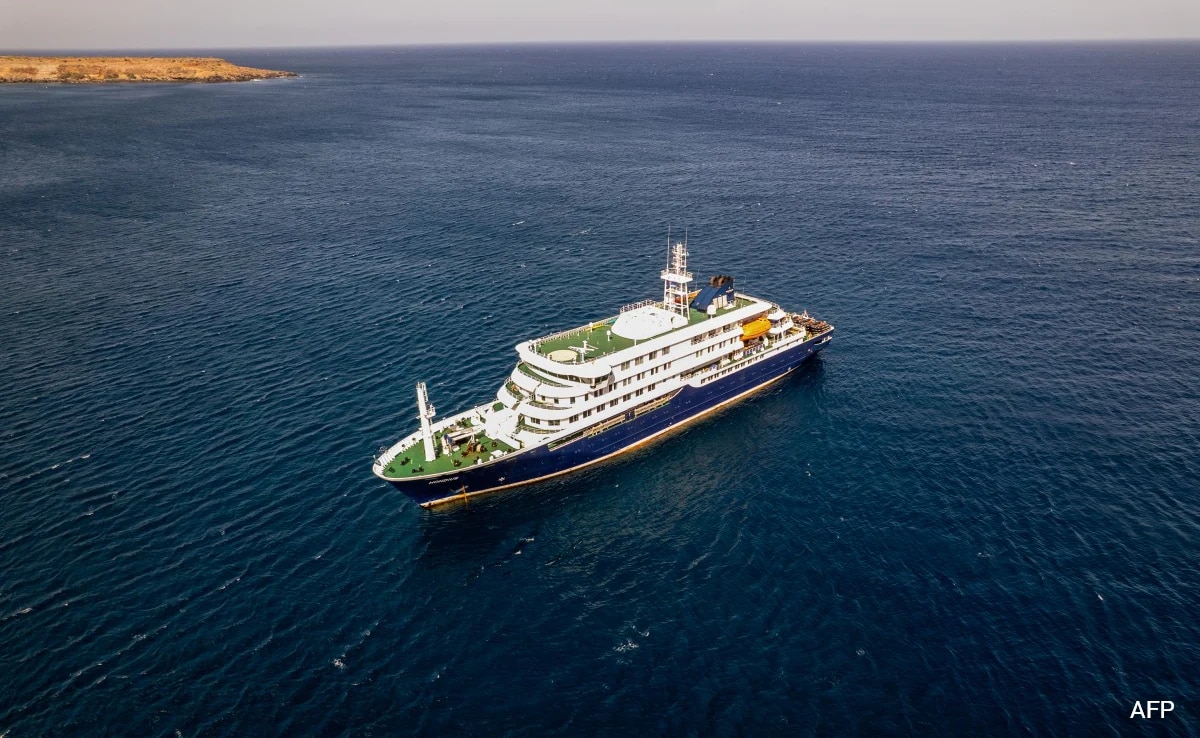
On the MS Starlight, a vessel that carves the Atlantic into a playground of luxury, the transition from celebration to catastrophe happened in the space between two breaths. It started with a shiver. A common enough thing at sea, where the breeze off the whitecaps carries a sudden, sharp chill. But for three people aboard this floating city, that shiver was the beginning of the end.
The World Health Organization (WHO) has confirmed that three passengers have died aboard an Atlantic cruise liner from suspected Hantavirus. To most, Hantavirus is a word found in the dusty corners of medical journals or the frantic scrolls of a news ticker. To those on the Starlight, it is a ghost. It is an invisible passenger that boarded without a ticket and left with three souls.
The Mechanics of a Fever
Imagine a man named Elias. He is seventy-two, a retired architect who spent forty years designing structures that would stand the test of time. He is on this cruise to celebrate his golden anniversary. He feels a dull throb behind his eyes. He blames the sun. He blames the extra glass of Chardonnay at lunch.
He is wrong.
Inside his body, a war has been declared. Hantavirus is not like the flu, though it mimics it with a cruel precision in the early hours. It is a viral hemorrhagic fever. It targets the very vessels that carry life through the limbs. While Elias tries to nap it off in his wood-paneled suite, the virus is busy compromising his capillaries.
The lungs are the primary theater of operations. In what doctors call Hantavirus Pulmonary Syndrome (HPS), the lungs begin to fill with fluid. Not because of an external drowning, but because the body is leaking into itself. It is a quiet, internal deluge. By the time the ship’s infirmary realized that Elias wasn't just seasick, the oxygen levels in his blood were plummeting like a lead weight in the Mariana Trench.
He was the first. Two others followed within forty-eight hours.
The Impossible Vector
How does a "land" virus find its way into the middle of the Atlantic? This is the question currently keeping epidemiologists awake in Geneva. Hantavirus is typically the province of the deer mouse, the cotton rat, and the rice rat. It is a disease of the soil and the shed—transmitted through the aerosolization of rodent waste. You breathe it in while cleaning an old garage or hiking through a dormant forest.
You do not expect to find it on a billion-dollar vessel scrubbed with bleach and polished with pride.
But ships are complex ecosystems. They are steel labyrinths with miles of ventilation shafts, food storage lockers, and dark corners where the sun never reaches. A single stowaway—a mouse tucked into a crate of fresh produce from a port in South America or a rural coastal terminal—is all it takes.
The virus survives in the dust. It waits. When the air conditioning kicks on to keep the tropical heat at bay, it carries the microscopic particles through the vents, delivering them directly into the lungs of the unsuspecting.
The tragedy of the Starlight highlights a terrifying reality of our modern, hyper-connected existence: we have built bridges for our enemies. We move goods and people across the globe at such a velocity that the natural barriers of geography—the deep, salt-dead expanses of the ocean—no longer provide a sanctuary.
The Weight of the Invisible
There is a specific kind of panic that takes hold when the threat cannot be seen. On a cruise ship, you are trapped in a paradox. You are surrounded by the infinite horizon of the sea, yet you are confined to a metal box with thousands of strangers.
When the Captain made the announcement, the atmosphere shifted. The glittering chandeliers seemed a little dimmer. The buffet, once a symbol of abundance, became a site of suspicion. Was the virus in the bread? Was it on the handrail?
Actually, Hantavirus is not known to spread from human to human. This is the one mercy of the pathogen. Unlike the respiratory viruses that have defined the last several years of our lives, you cannot catch this from a cough in the elevator. You have to encounter the source.
But that knowledge provides cold comfort when you are three days from the nearest port and three people have already stopped breathing. The fear isn't just about the virus; it's about the loss of the illusion. We go on cruises to escape the grit and danger of the "real" world. We pay for the privilege of being untouchable.
The three deaths on the Starlight have punctured that bubble. They remind us that nature is a relentless opportunist. It does not care about the cost of your cabin or the prestige of your itinerary. It only cares about the next cell it can hijack.
A Silent Reckoning
The ship is now a floating quarantine zone. The WHO investigators are clad in Tyvek suits, their faces obscured by respirators, moving through the halls like astronauts on a dead planet. They are looking for the "Patient Zero" of the rodent world. They are swabbing vents and inspecting the dark underbelly of the ship's galley.
They will find the source. They always do. They will trace it back to a specific port, a specific shipment of grain, or a specific pallet of linens. The facts will be cataloged. The statistics will be updated. The "3 Die" headline will eventually be archived.
But for the families left behind, the facts are secondary. For the woman who sat across from Elias at dinner for fifty years, the Atlantic has become a graveyard. She didn't lose him to a storm or a shipwreck. She lost him to a speck of dust.
We live in an age where we believe we have conquered the wild. We have mapped the DNA of our killers and built fortresses of glass and steel to keep them out. Yet, as the Starlight sits idle in the grey swells of the mid-Atlantic, we are forced to look at the gaps in our armor.
The ocean remains vast. The wind remains indifferent. And sometimes, the most dangerous thing on the water isn't the waves, but the air we breathe in the dark.