Dawn in Ashton-under-Lyne does not arrive with a fanfare. It arrives in shades of slate grey, slipping over the slate roofs, the brick terraces, and the quiet municipal squares of Tameside. On a Thursday morning in late May, that quietude was shattered. Doors were knocked on. Words like "conspiracy to defraud" and "illegality and criminality" were read from police warrants. By the time the sun had fully cleared the horizon, four men and a woman were sitting in police cells.
They were not international masterminds. They were local political operators, aged between 23 and 47, caught up in an extraordinary, labyrinthine investigation into how a single local council seat was won.
To understand why this matters, you have to look past the dry police press releases. You have to look at how a democracy dies in the small corners, one phantom name at a time. This is not a story about national policy or grand geopolitical shifts. It is a story about a WhatsApp message, a disappearing candidate, and the quiet theft of a community’s voice.
The Puppet on the Ballot Paper
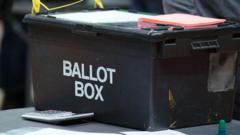
Imagine standing in a polling booth on May 7th, pencil in hand. You are frustrated with the status quo. You want change. You look down the list of names for the St Peter’s ward election and see an independent option. It feels like a genuine alternative.
But what if that alternative was a ghost?
Consider the reality uncovered in the aftermath of the vote. One of those independent candidates was a woman named Marie Fairhurst. When local journalists from The Manchester Mill later tried to trace her campaign, they found something chilling. She had no website. She had no flyers. She did not answer calls. In a staggering twist reported by local media after the ballots were counted, it emerged that Fairhurst allegedly did not even realize she was standing as a candidate.
She was, to all intents and purposes, a human shield. A political decoy.
The strategy behind a ghost candidate is brutal in its mathematical simplicity. It is an exercise in democratic sabotage known as vote-splitting.
In St Peter’s ward, a legitimate independent candidate named Ahmed Mehmood was running a fierce, heavily backed campaign. He was a real threat to the established order. If the mainstream party candidate faced Mehmood head-to-head, they might lose. But introduce a couple of other "independent" names onto the ballot, and the anti-establishment vote shatters. The mathematically inclined strategists knew exactly what they were doing.
Every vote cast for a phantom candidate who didn't even know she was running was a vote subtracted from the genuine challenger.
When the final tallies were announced, the Labour candidate, Atta Ul-Rasool—publicly noted as a protégé of senior party figures—won the seat by a mere 177 votes. The ghost candidates, Marie Fairhurst and Muhammad Ali, had pulled in a combined 291 votes. They never knocked on a door. They never gave a speech. Yet, their presence altered the course of the election.
The numbers tell the story. The math worked perfectly. But the machinery behind it left a paper trail that led straight to the police station.
The Digital Smoke Screen
The plot did not materialize from thin air. It was forged in the modern engine room of political organizing: the encrypted group chat.
Before the election, whispers began to circulate within local Labour WhatsApp channels. The messages explicitly laid out the blueprint: plant stooge independents to cannibalize the opposition’s momentum.
But modern conspirators are plagued by a frantic anxiety. They know that digital footprints endure. According to whistleblowers within the party, as soon as the suggestions were typed into the chat, panic set in. Group members were ordered to instantly delete the messages. Strict, top-down instructions were handed out: do not discuss this topic in this forum.
It was a digital smoke screen, a desperate scramble to wipe the slate clean before anyone looked too closely.
But you cannot delete a human memory.
The crack in the facade widened when Philip Wilson-Marks, the former Vice-Chair of the Ashton-under-Lyne Community Labour Party, chose to speak out. He alleged that he had been approached twice by a high-ranking councillor to discuss the fake independent strategy. One of those conversations, he claimed, took place in the kitchen of a prominent Member of Parliament.
Suddenly, the dry, administrative language of "electoral irregularities" transformed into something far more visceral. It painted a picture of backroom deals over cups of tea, where the democratic rights of working-class voters were treated as chips in a high-stakes poker game.
The House with the Split Loyalties
The physical world has a funny way of betraying the most carefully hidden secrets.
During the campaign, investigative reporters traveled down the terraced streets of Tameside to verify the official nomination papers of these mysterious independent candidates. Every candidate needs backers—citizens who sign the forms to vouch for them.
When reporters arrived at the home of Afzal Anwar, the official seconder listed on Marie Fairhurst’s nomination papers, they found a curious sight. There, proudly displayed in the front window of the house of this supposedly "independent" backer, was a campaign poster for Atta Ul-Rasool. The Labour candidate.
The mask did not just slip; it fell completely off.
Photographs from local television broadcasts later emerged showing Anwar and the backers of the other independent candidate, Muhammad Ali, smiling together at Ul-Rasool’s official campaign launch event. They were not political rivals fighting for the soul of St Peter’s ward. They were colleagues sharing a drink, celebrating the launch of the man they were ostensibly running against.
The Cost of the Game
It is easy to look at local council elections and dismiss them as small-time politics. The turnouts are often low. The issues—bin collections, potholes, local park funding—rarely make the national news.
But this cynicism is exactly what corrupt operators rely on.
When a community's election is rigged through smoke and mirrors, the damage cuts deeper than just a single council seat. It breeds a profound, systemic rot. It tells the ordinary citizen that their participation is a farce.
Imagine being Ahmed Mehmood, spending weeks pounding the pavement, talking to residents, listening to their grievances, believing that a fair fight was underway. Imagine being a voter who genuinely wanted to back a non-aligned candidate, only to discover your vote was harvested by a campaign engineered to keep the status quo in power.
Now, a cross-party motion is heading to the council chamber to challenge the legitimacy of the entire vote. The single seat that Labour managed to win in Tameside during that election cycle is now stained by the shadow of Greater Manchester Police's fraud squad.
The five individuals arrested in Ashton-under-Lyne have been taken to a secure station. They will face questions about forgery, about deception, and about the deliberate subversion of British democracy. The lawyers will argue over the fine print of the Representation of the People Act. The politicians will issue carefully worded press releases designed to distance themselves from the wreckage.
But look past the legal jargon. Look back at that quiet morning in Tameside, where the police vans sat idling outside ordinary houses.
A vote is not just a piece of paper. It is a fragile piece of trust, handed over by a citizen to the state. When that trust is manipulated by digital phantoms and backroom architects, the entire structure begins to wobble. The cells in Greater Manchester are full, but the real vacancy is the trust that used to live in the hearts of the voters of St Peter’s.


