The steel hull of a supertanker is an indifferent thing. It does not feel the weight of international law, the friction of geopolitical tension, or the invisible ink of a Treasury Department blacklist. To the waves of the Persian Gulf, a sanctioned vessel is indistinguishable from a legitimate one. It displaces the same salt water. It burns the same heavy fuel.
Deep in the engine room of a three-hundred-meter behemoth, the air is a thick, humid soup of grease and heat. A third engineer, let’s call him Elias, wipes sweat from his brow with a rag that has seen better days. Elias isn't a politician. He isn't a billionaire oil tycoon or a high-ranking diplomat in Washington or Tehran. He is a man who needs to send money home to a family that hasn't seen him in eight months.
To Elias, the ship is a world. To the world, the ship is a ghost.
Technically, this vessel shouldn't exist in these waters. It is under heavy sanctions, its name likely scrubbed and repainted three times in as many years. Yet, here it is, slicing through the Strait of Hormuz, heading straight into the heart of the Gulf despite a global blockade designed to paralyze it. This is the reality of the "shadow fleet," a growing armada of aging tankers that operate in a gray zone where the laws of economics collide head-on with the laws of nations.
The Art of Disappearing in Plain Sight
Modern shipping relies on transparency. Every vessel carries an Automatic Identification System (AIS) transponder, a digital heartbeat that broadcasts its position, speed, and identity to the world. It is the foundation of safety at sea. But for a sanctioned tanker, transparency is a death sentence.
The first step in the dance is "spoofing."
Imagine a GPS coordinates display suddenly jumping five hundred miles to the east while the physical ship remains stationary, or worse, continues its journey in total electronic silence. Analysts tracking these vessels often see digital ghosts lingering off the coast of Oman while the physical steel is actually docking at a forbidden terminal in Iran. It is a sophisticated game of cat and mouse played with satellites and software.
But why risk it? The answer is as old as trade itself.
The spread between the price of sanctioned oil and the global benchmark is a cavernous gulf of profit. When a country is cut off from the global banking system, its oil becomes a stranded asset. If you are a trader willing to look the other way, or a ship owner with a fleet of older vessels nearing the scrapyard, that oil represents the chance of a lifetime. The "sanctioned" tag acts like a massive discount coupon for those brave—or desperate—enough to redeem it.
A High-Stakes Shell Game
The blockade is not a physical wall of warships. It is a wall of paper. It is built from insurance certificates, banking licenses, and port clearances. If a ship cannot get Western insurance—specifically the "Protection and Indemnity" (P&I) clubs that cover 90% of the world’s fleet—it is effectively an outcast. Most major ports won't even let a ship dock without it.
To bypass this, the shadow fleet has built its own parallel universe. They use "front" companies based in jurisdictions where the sun always shines and the corporate registers are delightfully vague. A ship might be owned by a company in the Marshall Islands, managed by an entity in Dubai, and flagged in Panama or St. Kitts and Nevis. By the time a regulator peels back the third layer of the onion, the oil has already been sold, refined, and pumped into a car in a country that doesn't care where the carbon came from.
Then there is the "Ship-to-Ship" (STS) transfer. This is the most precarious part of the narrative. Two massive tankers, often decades old and poorly maintained, pull alongside each other in the open ocean. They lash themselves together with heavy ropes, their hulls grinding against rubber fenders as the swells toss them. Large hoses are connected, and millions of barrels of crude oil are pumped from the "blacklisted" vessel to a "clean" one.
Under the cover of night, in international waters, the identity of the oil is laundered. The black gold that left a sanctioned terminal is reborn as a "Malaysian blend" or a "Middle Eastern mix."
The Invisible Cost of the Shadow
For the diplomats in high-ceilinged rooms, sanctions are a "tool of statecraft." They are a way to exert pressure without firing a shot. But on the water, the risks are far more visceral than a line item on a budget.
Most of the ships in this shadow fleet are old. They are the "rust buckets" of the sea, vessels that should have been recycled into rebar years ago. Because they are sanctioned, they cannot access top-tier repair yards. They cannot buy genuine spare parts from the original manufacturers. Their crews are often underpaid and operating without the safety nets provided by international unions.
If one of these ghost ships suffers a mechanical failure in the crowded shipping lanes of the Gulf, there is no easy fix. If a hull breaches during an illicit STS transfer, there is no standard insurance policy to pay for the cleanup. The environmental stakes are astronomical. A single major spill from a shadow tanker could devastate the delicate ecosystems of the Gulf, desalinization plants, and the livelihoods of thousands of fishermen who have no part in this geopolitical chess match.
We are watching a slow-motion collision between two different types of power. On one side is the financial might of the United States and its allies, using the dollar as a gatekeeper. On the other side is the sheer, stubborn demand for energy. As long as someone, somewhere, needs cheap oil to keep the lights on, there will be an Elias in an engine room, and there will be a captain willing to turn off his transponder and vanish into the haze.
The Ghost in the Machine
The entry of these tankers into the Gulf despite the blockade isn't just a failure of policy. It is a testament to the fluidity of modern global trade. We like to think of the world as a series of neat borders and clear rules, but the ocean reminds us that it is actually a web of interconnected needs.
The blockade is meant to be a vacuum, a space where no trade can happen. But nature—and capital—abhors a vacuum. Money finds a way. It flows through the cracks in the legislation, it hides in the shadows of the digital world, and it sails on ships that officially do not exist.
The "ghost fleet" continues to grow, numbering in the hundreds now. They are the physical manifestation of a world that is decoupling, where one half operates by a set of rules that the other half has decided to ignore.
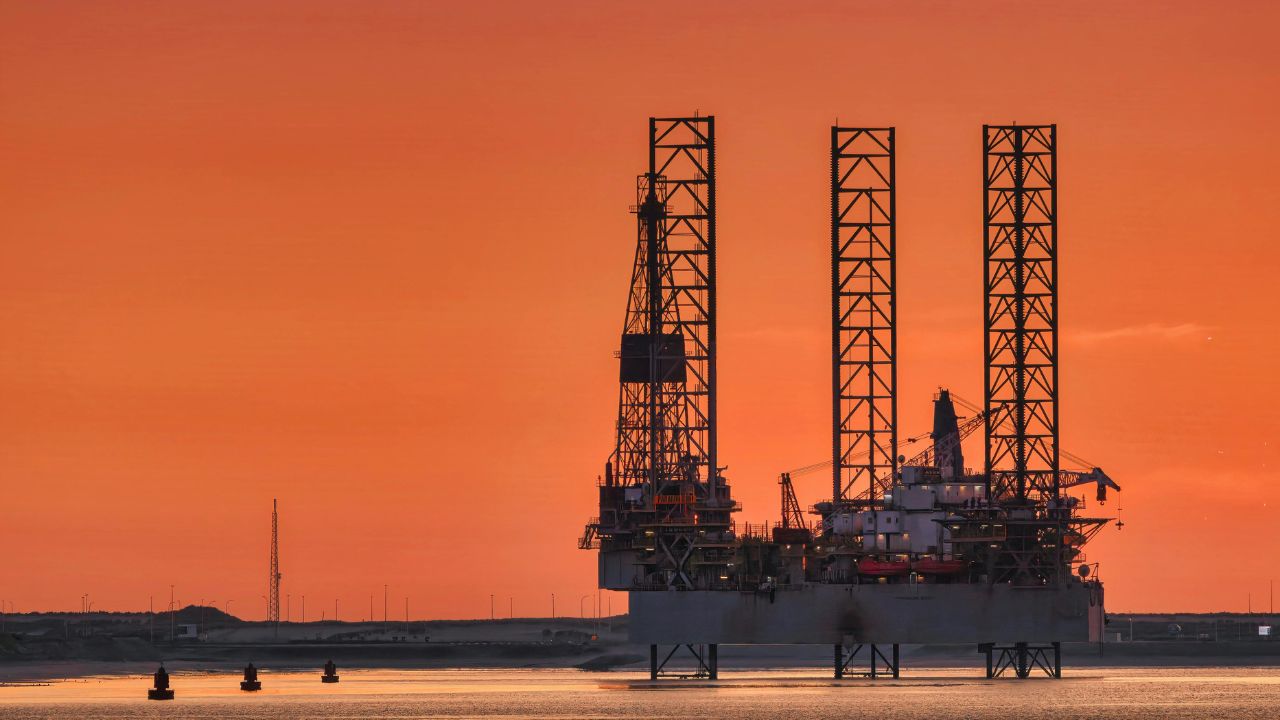
As the sun sets over the Gulf, the silhouette of a supertanker appears on the horizon. It has no name on its bow. Its AIS signal is silent. It moves with a quiet, heavy purpose, carrying its cargo through a blockade that is both everywhere and nowhere. The stakes aren't just about who gets paid or which regime stays in power. The real stakes are written in the salt spray and the aging steel, in the risk of a catastrophe that no amount of paper can stop.
The ship moves on, a dark shape against a darker sea. It is a reminder that you can sanction a company, a person, or a country, but it is much harder to sanction the tide.
The engine hums. The heat in the galley rises. Somewhere on the bridge, a hand reaches out and flips a switch, and a million-ton ghost vanishes from the radar of the world, only to reappear exactly where it was never supposed to be.