The air in Portadown carries a particular kind of dampness, the sort that clings to the wool of a coat and stays there for days. It smells of peat smoke, old rain, and something sharper: the metallic tang of history refusing to stay buried.
Walk down Garvaghy Road on a Tuesday morning when the world is quiet, and you might mistake it for any other working-class neighborhood in Northern Ireland. There are modest brick homes, trimmed hedges, and the faint hum of traffic from the bypass. But look closer. Look at the iron gates reinforced against petrol bombs, the murals painted on gable walls with eyes that seem to follow you, the invisible lines drawn across the tarmac that every local knows not to cross.
Thirty years ago, this asphalt became the center of a gravity so intense it threatened to pull the entire peace process into a black hole. Now, the old drumbeats are starting to echo again.
To understand why a parade row from three decades ago still possesses the power to curdle blood, you have to throw away the dry language of political science. You have to step inside the skin of someone standing behind a lace curtain in the midday sun, watching a column of men in bowler hats and orange sashes approach, accompanied by the concussive, chest-tightening thud of a lambeg drum.
The Geography of Memory
Imagine living on a street where your front door is twenty feet from a route you believe is designed solely to humiliate you.
In the mid-1990s, the Garvaghy Road dispute was not merely a local disagreement over traffic or scheduling. It was a violent collision of two absolute truths. For the Orange Order, the right to walk down the King’s highway—a route their grandfathers marched—was an ancient liberty, a sacred assertion of cultural identity and British heritage in a land that felt increasingly uncertain of its place. For the nationalist residents of the Garvaghy Road estate, mostly Catholic, the march was an uninvited occupation, an annual display of dominance by an organization that had historically barred them from power, employment, and dignity.
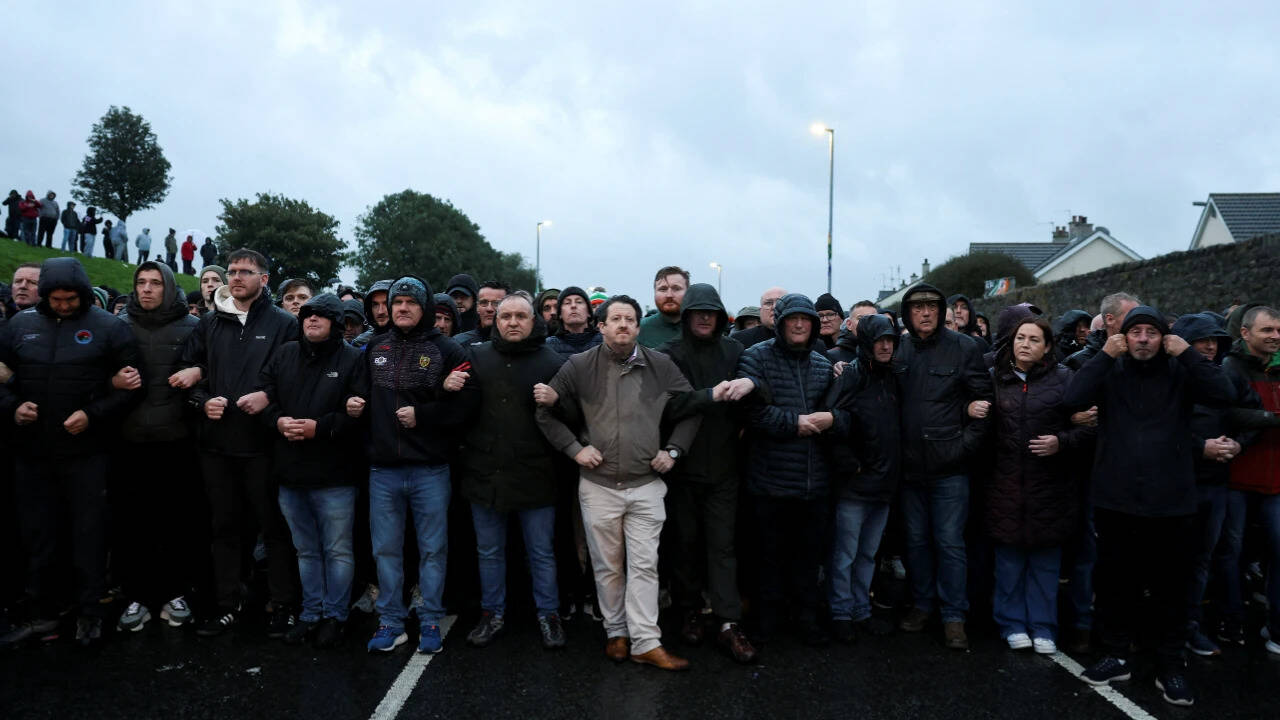
The tension was not theoretical. It was measured in broken glass, tear gas, plastic bullets, and the screech of armored Land Rovers. The British Army and the Royal Ulster Constabulary built massive steel-and-concrete barricades to keep the two sides apart, turning a residential neighborhood into a militarized zone.
When the Parades Commission was eventually established to adjudicate these disputes, it attempted a Solomon-like compromise: rerouting contentious marches away from areas where residents objected. For a long time, that ruling held. The barricades came down. The daily terror receded into the background noise of a fragile, uneasy peace.
Yet peace in Northern Ireland is rarely a fixed state. It is a truce maintained by exhaustion and institutional duct tape.
Why the Drumbeats Return
History does not repeat itself cleanly; it rhymes in a minor key.
Lately, the whispers have grown louder. Conversations in local pubs, long hushed, are sharpening. The old friction points are being prodded by political actors who find utility in division. When political institutions in Stormont stutter or collapse—as they have repeatedly in recent years—the vacuum is quickly filled by the ghosts of the past.
Consider the mechanics of grievance. It is a renewable resource. Every generation needs its own anchor points, its own symbols of resistance. For younger loyalists who grew up after the Good Friday Agreement, the restrictions on traditional routes feel like a slow-motion theft of their heritage. For younger nationalists, any sign that the old dominance might return triggers a visceral, defensive alarm.
When rumors circulate that the Orange Order might push to re-enter the Garvaghy Road, the reaction is instantaneous. It is not because people want to fight; it is because nobody knows how to lose a symbolic war without losing themselves in the process.
Let us be entirely clear about the mechanics here. This is a hypothetical scenario grounded in recurring patterns: if a contentious parade is forced through a hostile area without local consent, the security apparatus must mobilize on a massive scale. Streets are locked down. Helicopters hover overhead, churning the heavy gray air. The economic life of the town stutters. Trust, that most delicate and irreplaceable currency in post-conflict societies, evaporates in a single afternoon.
The danger is not just the physical violence, though that remains a terrifying baseline possibility. The true danger is the psychological regression. It is the sudden snap back into tribal default settings. The neighbor you wave to across the fence becomes a potential combatant again. The past reclaims the present.
The Architecture of Reconciliation
To walk away from this cycle requires a radical act of imagination.
The tragedy of Garvaghy Road is that both communities are trapped inside their own narratives of victimhood. In the loyalist narrative, they are a besieged culture fighting for survival against an encroaching, demographic tide. In the nationalist narrative, they are a permanent underclass demanding the basic human right to live free from sectarian intimidation.
Both narratives contain elements of historical truth. Both narratives are weaponized to prevent change.
True resolution will never come from a court ruling or a police baton. It cannot be legislated into existence by politicians sitting safely in glass-fronted offices miles away in Belfast or London. It has to be built, brick by painful brick, by the people who have to sweep the glass off the pavement after the riots end.
It requires leaders on both sides to commit political suicide—to risk the wrath of their own hardliners by suggesting that victory does not mean the total humiliation of your neighbor. It requires the Orange Order to ask whether a traditional route is worth a renewed cycle of generational trauma. It requires nationalist leadership to acknowledge that cultural expression, even when it feels offensive, cannot simply be wished out of existence through coercion.
Until that happens, the ghosts remain on Garvaghy Road. They sit on the park benches. They march in the rhythm of the rain against the windowpane.
The drum is quiet tonight, but the skin is dry, and it is pulled taut. It would take very little to make it sound again.