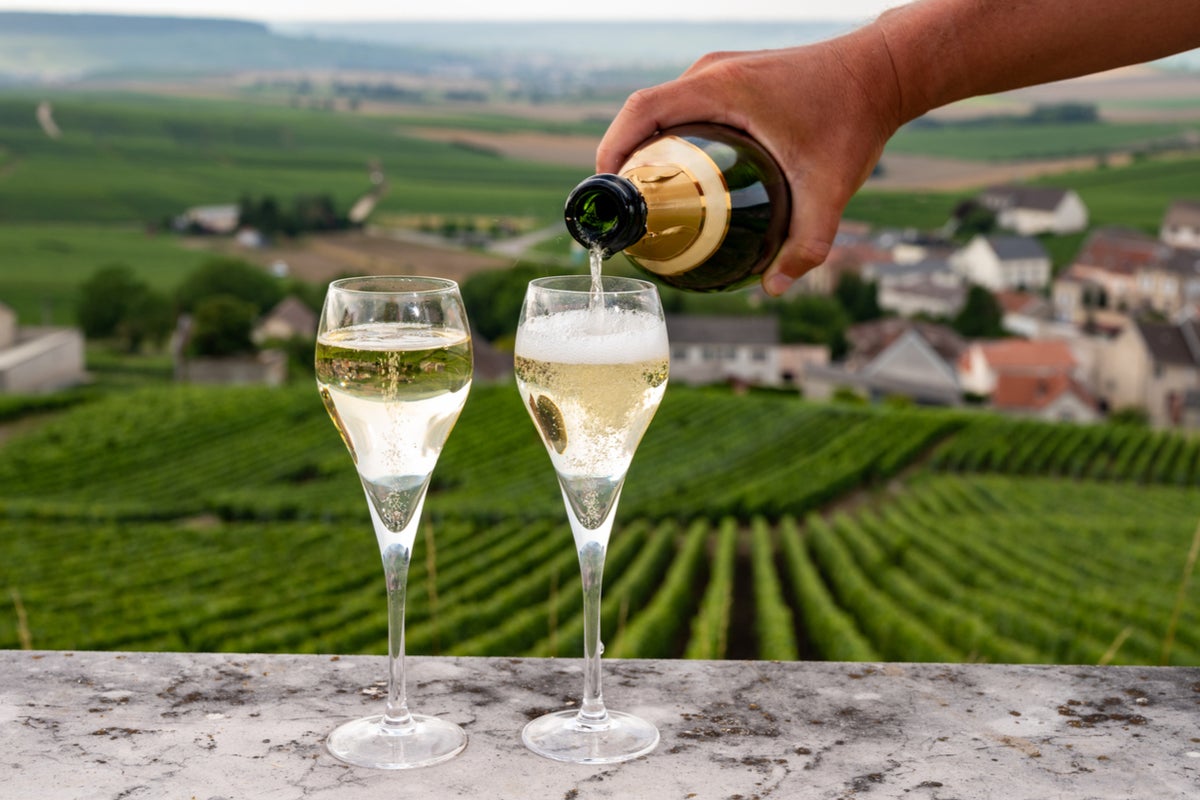
The dirt in the Côte des Blancs does not look like much. To an outsider stepping off the train into the Champagne region on an August afternoon, it looks like crushed bone and grey dust, dry enough to choke the wind. But Jean-Luc knows that dirt. He has spent forty years kneeling in it, his palms stained with the dark juice of extraction, his back curved like a willow branch.
When Jean-Luc puts his fingers into that chalky soil at noon, it burns.
The heat does not arrive with drama. It comes as a weight, a heavy, motionless blanket that settles over the vines before the grapes have even learned how to blush. By mid-afternoon, the leaves turn inward, curling like fists trying to shield themselves from an invisible fire. The berries do not swell; they bake. They shrivel on the wire, losing their water before they can find their sugar, turning into tiny, hard pellets of unfulfilled promise.
Across France, the harvest of two thousand twenty-four did not simply fall short. It vanished.
In the chalk cellars beneath Epernay, the silence is different this year. Normally, September is a symphony of iron wheels, clinking glass, and the sharp, yeast-rich scent of fermentation bubbling in massive vats. This year, the echoes bounce off empty stone. Official tallies from the French agriculture ministry and local syndicates paint a grim numerical portrait: production in Champagne dropped by nearly half compared to the prior year. In some plots, losses exceeded fifty or sixty percent. Down in the Loire, across Bordeaux, and through the sun-bleached slopes of the Rhône, the story repeats with minor variations. Mildew arrived like a ghost in the humid spring, followed immediately by relentless, searing heatwaves that scorched the fruit on the vine.
We look at these numbers on a glowing screen—minus forty percent, fifty percent reduction, billions in agricultural deficit—and we treat them as macroeconomic weather. We blink, scroll past, and wonder how much a bottle of celebratory brut will cost us come December.
We miss the human tragedy entirely.
Consider what actually happens when a vineyard fails. A vineyard is not a factory floor where you can simply turn up the assembly line next Tuesday to make up for lost time. A vine is an elder. It remembers every frost of the 1990s, every drought of the early aughts, every drop of rain that shaped its root system deep into the fractures of the limestone. When a heatwave cooks the crop to a crisp, it hurts the plant in ways that take years to heal.
Jean-Luc walked his rows at dawn, shears in hand, and found himself cutting away seventy percent of his bunches. Not because they were bruised or slightly tart, but because they were raisins. Dry, brown, dead husks.
"You do not argue with the sun," he told me, his voice rough as sandpaper, wiping sweat from a brow weathered by decades of unpredictable skies. "You just watch your life’s work evaporate into the air."
The economic math of a ruined harvest is brutally simple for families who have farmed the same patch of earth for three centuries. Fixed costs do not care about climate anomalies. The bank loans for the pneumatic presses must be paid. The tractor payments remain. The labor costs—what little labor could be found to harvest the sparse, shriveled yield—still had to be met. When yields plummet by half, the price per bottle must rise to keep the lights on, yet the small grower cannot simply double their prices without pricing out the very people who have bought their wine for generations. They are caught in a vise between a warming sky and a cold market.
This is the hidden cost of our changing climate. It is not just about missing out on a toast at New Year's Eve. It is the quiet, agonizing unravelling of cultural inheritance.
For centuries, winemaking in France has been governed by terroir—that untranslatable French concept binding soil, climate, topography, and human tradition into a single liquid expression. When the climate parameters shift beneath your feet, terroir becomes a moving target. The delicate balance of acidity and sugar that makes Champagne unique relies on a cool, marginal northern climate. What happens when that climate begins to look more like northern Spain?
The vines are trying to tell us something, and we are too busy arguing about supply chains to listen.
In the village square, the elders sit on benches beneath the plane trees and talk about vintages past. They remember 1976, another famously hot, dry year that terrified the elders of their youth. But 1976 is now a baseline, a cool summer compared to what has become routine. The recurrence interval of these extreme weather events has collapsed. What used to happen once in a generation now happens twice in a decade. Hailstorms in May, frost in April after a false spring has coaxed the buds into the open air, followed by Saharan heat domes in August.
It is a war of attrition waged by the atmosphere against agriculture.
When you pop a cork, you are drinking captured time. You are swallowing sunlight from a specific summer, filtered through a specific root system, preserved by human patience. When that summer is born of crisis, the wine changes. Master blenders in the great houses of Reims and Epernay are performing miracles of alchemy right now, blending reserve wines from past years—precious liquid gold locked away in stainless steel tanks—to stretch the meager, sun-baked harvest of the current season. They are curators of memory, trying to keep a consistent flavor profile alive while the earth shifts beneath their cellars.
But there comes a point where the reserves run dry. There comes a year when the past can no longer bail out the present.
We are standing at the edge of that precipice. The data from this harvest is not an anomaly to be filed away under bad weather. It is a flashing red light on the dashboard of our shared planetary vehicle. The vineyards of France are the canaries in the global coal mine. If crops that have thrived in these specific limestone valleys for a thousand years can no longer survive the summer, no corner of our global pantry is truly safe.
Yet, walking back through the silent rows with Jean-Luc as the sun dipped below the chalky horizon, casting long, purple shadows across the mutilated vines, I did not see despair. I saw stubbornness.
He bent down and inspected a young shoot fighting its way up from the base of an old, scorched trunk. It was green. It was alive. It was reaching upward, ignoring the heat of yesterday, stretching blindly toward whatever sky tomorrow might bring.
We will continue to pour the wine. We will raise our glasses at weddings, at funerals, at midnight on cold December nights. But the next time the bubbles rise in the glass, sparkling and cold against the rim, remember the silence in the cellars. Remember the dust of the Côte des Blancs. Remember that every drop of joy we hold in our hands has been fought for, tooth and nail, against a sky that is forgetting how to rain.