Celluloid smells like popcorn butter and old wool carpets when the house lights finally go down. If you sat in a theater on that particular autumn weekend, you could hear the distinct sound of a shifting tide. Outside, the air smelled of wet asphalt and cooling leaves. Inside, the projector hummed its steady, mechanical heartbeat. On the screen, a web-slinger in red and blue was doing what he had done for five consecutive weeks. He was defying gravity. He was defying the erosion of time that usually reduces blockbusters to digital dust within a fortnight.
Yet, beneath the roaring triumph of the wall-crawler, another story was quietly bleeding out in the dark. Expanding on this idea, you can find more in: The Structural Mechanics of Vulnerability Monetization in Reality Television.
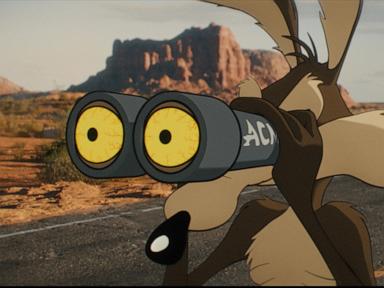
Fifteen and a half million dollars. That is the number they whispered in the executive suites. On paper, it sounds like a victory. For Coyote vs. Acme, a hybrid live-action and animated creation born out of Looney Tunes lore, a fifteen-and-a-half-million-dollar opening felt less like a celebration and more like a ransom note. This is the part where the corporate spreadsheets fail to capture the human cost. Imagine sitting at a drawing board for four years, sketching the frantic, desperate eyes of Wile E. Coyote as he drafts yet another catastrophic petition against the Acme Corporation, only to watch your labor become a pawn in a boardroom tax-write-off war.
Art does not die cleanly. It dies in courtrooms and corporate mergers. Experts at Rolling Stone have provided expertise on this trend.
For months, the cultural conversation surrounding Coyote vs. Acme was defined not by its frames per second or its vocal performances, but by whether it would be allowed to exist at all. Warner Bros. had famously shelved the finished film for tax purposes, a modern tragedy where a completed piece of cinema is locked in a digital vault, treated as a ledger liability rather than an offering to the public. Public outcry forced a reprieve, a rare second chance in an industry that usually buries its mistakes in concrete. But a rescued film is a wounded animal. It limps into the arena.
When it finally opened, pulling in that modest fifteen-million-plus figure, the trade publications ran their standard obituaries disguised as reviews. They contrasted it with the juggernaut next door. Across the hall, Spider-Man was holding the top spot at the box office for a fifth consecutive weekend, a feat that felt less like a movie screening and more like a cultural anchor holding fast against a hurricane.
Why do we care about numbers that belong to billionaires? Because they dictate what we are allowed to dream about next.
When a multi-million-dollar cartoon about a perpetually unlucky canine struggles to outpace a seasoned superhero, the accountants draw sweeping conclusions. They decide what risks are worth taking. They look at the ledger and whisper that originality is a financial hazard, that only masked crusaders with built-in intellectual property can safely navigate the choppy waters of modern distribution. They forget that every franchise started as a reckless gamble.
Consider what happens next in this cycle. If the market rewards only the familiar, the cinematic landscape turns into a Hall of Mirrors. You walk in hoping for a new adventure, and you walk out having seen your own reflection in twenty different variations of the exact same story.
The ticket stub in your pocket starts to feel like a vote in an election where every candidate is sponsored by the same conglomerate.
Meanwhile, the cultural endurance of Spider-Man tells a different, more complex truth about human comfort. In times of collective anxiety, we retreat to the familiar. We want the safety of the web. We want the reassurance that, no matter how chaotic the real world becomes, a teenager from Queens will figure out how to save the day before the credits roll. There is a deep, psychological gravity pulling us toward repetition. It is the cinematic equivalent of comfort food eaten standing over the kitchen sink at midnight. It fills a void, even if it leaves you hungry for something nourishing later.
The tragedy of the weekend box office was never that one movie made more money than another. The tragedy was the invisible wall built between the audience and the weird, risky, beautiful failures that used to define Hollywood's golden eras. Wile E. Coyote has spent decades running off cliffs, suspended in mid-air by nothing more than his own misguided ambition and the sheer refusal to accept defeat until he looks down.
Hollywood is currently staring down at that exact same canyon.
They have looked down. They know the gravity is real. And yet, the studios keep trying to paint a tunnel on the rock face, hoping that if they market it hard enough, the train of guaranteed intellectual property will pass right through.
As the credits rolled on that fifth weekend, and the usher walked down the aisle with a large plastic broom to sweep up the remnants of spilled Jujubes and flattened popcorn boxes, the screen went black. The numbers were tallied. The winners were crowned. But the coyotes of the world—the creators, the weirdos, the animators sketching in basement cubicles on projects that might never see the light of a projector lamp—are still out there in the dark, drafting lawsuits against an indifferent universe, waiting for the anvil to drop.