Water does not look like a threat when it moves through the desert. It looks like a miracle.
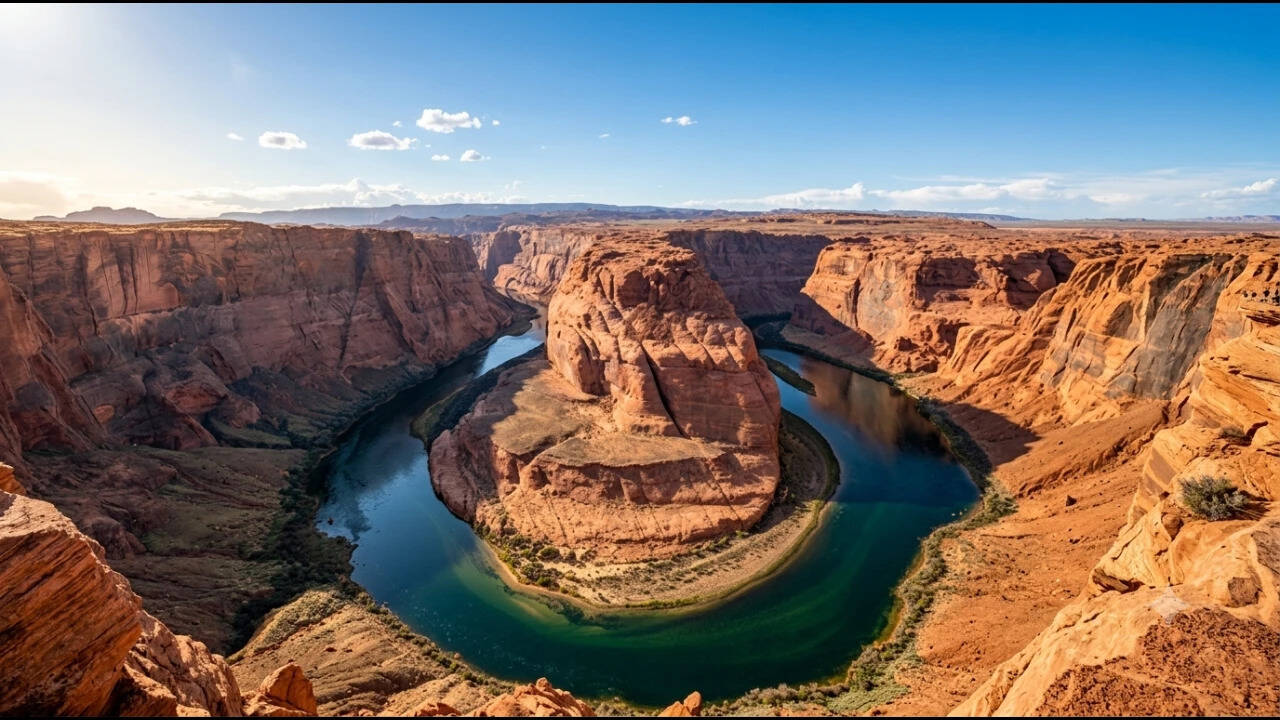
To stand on the banks of the Colorado River is to watch the lifeblood of the American West slide past, a thick, silt-heavy current carrying the weight of seven states, forty million people, and an ancient, stubborn history. For generations, we treated this water as an infinite ledger. We built concrete walls to hold it, carved canals to redirect it, and drank deeply from a supply we assumed could never truly break.
Then came the DNA.
It arrived not as a dramatic flood or a dying fish washed ashore, but as a microscopic whisper in a vial of water collected from a stretch of the river in Utah. Scientists testing routine samples found something they had prayed against for decades: the genetic signature of zebra mussels.
No adult shells have cluttered the beaches yet. No massive colonies have yet clogged the intake valves of the massive hydroelectric turbines downstream. But biology does not negotiate with hope. When the genetic code of Dreissena polymorpha turns up where it has never belonged, the alarm bell is not just ringing. It is screaming.
The Weight of a Speck
Picture a creature no larger than a fingernail, striped like a convict's uniform, capable of anchoring itself to any hard surface with threads of spun protein tougher than steel.
Now multiply that creature by the billions.
To understand what zebra mussels mean for the Colorado River, you have to look past the biological textbook definitions and step into a hypothetical morning at a municipal water treatment plant in Arizona. Imagine a plant operator walking the catwalk above a subterranean intake pipe. For thirty years, his job has been straightforward: pull water from the river, treat it, send it to the taps of suburban homes and desert farms.
Tomorrow, that pipe could look like the inside of a clogged artery.
Zebra mussels do not just live in water; they consume it, filter it, and choke it. A single female can release a million eggs in a single spawning season. In their larval stage, they are microscopic, invisible ghosts drifting effortlessly downstream on the current. When they find a hard surface—a steel pipe, a concrete wall, a boat hull, the shell of a native mussel—they settle. They multiply. They form dense, razor-sharp mats that can sheer skin and suffocate infrastructure.
In the Great Lakes and the Mississippi River basin, where these invaders arrived decades ago via ballast water from transatlantic ships, the cost has run into the billions of dollars. Power plants have tripped offline because their cooling systems were blocked solid. Boat owners have watched aluminum hulls blister and rot beneath crusts of sharp shells. Native species, stripped of the phytoplankton that the invaders vacuum out of the water column, have starved.
Now, that exact threat has crossed the continental divide and breached the ultimate western watershed.
A History of Borrowed Time
We are remarkably good at ignoring slow-moving disasters.
For years, western states have spent millions of dollars running boat check stations along highways, inspecting watercraft, and warning tourists to clean, drain, and dry their boats. It feels tedious. It feels like bureaucratic overreach when you are just trying to spend a Saturday afternoon fishing with your kids.
(To be clear: when I talk about the friction of these inspections, I am describing the lived frustration of every angler who has ever waited in a Sunday afternoon traffic jam behind a line of jet skis, watching the sun dip low while an inspector peers into a bilge pump with a flashlight.)
That friction is the only thing that has kept the American West clean for this long.
The Colorado River basin is different from the eastern river systems. It is already over-allocated, heavily dammed, and brittle. Lake Mead and Lake Powell, the twin giant reservoirs of the system, are already battling historic lows driven by decades of drought and overuse. Add an aggressive, prolific filter-feeder to a system that is already running on fumes, and the math changes terrifyingly fast.
When a lake or river becomes infested with zebra mussels, the water paradoxically becomes clearer because the mussels filter out all the suspended particles. Tourists might look at the startlingly clear water and think the river is healing. They do not see the dead zone creeping up from the bottom. They do not see the native fish populations collapsing because the food web has been vacuumed away. They do not see the utility bills spiking as cities spend small fortunes scraping calcium carbonate and razor-sharp shells out of municipal pipes every single month.
The Human Ripple
The danger of an invasive species is not just ecological; it is deeply, painfully economic and personal.
Consider the farmer in the Grand Valley of Colorado or the citrus grower near Yuma. Their livelihoods depend on water arriving on schedule through concrete canals. If those canals become encrusted with millions of sharp-shelled invaders, the friction slows the flow. The pumps work harder. The electricity bills double. Eventually, the system chokes.
Or consider the recreational economy. Small towns that rely on tourism—houseboat rentals on Lake Powell, weekend fishing guides in remote canyons—live on the edge of public perception. The moment a body of water is branded as infested, the psychological shift is immediate. People take their boats elsewhere. The revenue dries up just as fast as the water.
We tend to view nature as something separate from us, a backdrop against which we live our lives. But a river is an industrial highway, a drinking fountain, and a farm irrigation system all at once. When something alters the fundamental chemistry and biology of that river, it alters the rhythm of human life in the desert.
The Sound of the Current
We are standing at a very specific crossroads right now.
The detection of zebra mussel DNA in the Colorado River does not automatically mean the entire basin is doomed to look like Lake Erie. Early detection gives scientists a fleeting, precious window. Eradication is nearly impossible once a population establishes itself, but containment, management, and slowing the spread can buy decades.
It requires a collective vigilance that goes far beyond government agencies. It requires every person who dips a paddle, a kayak, or a boat hull into any body of water to treat that water as sacred. It requires washing the bilge, checking the anchor, and accepting that convenience must sometimes take a backseat to survival.
The river continues to flow. It carves its red rock canyons with the same indifferent patience it has used for millions of years. But the water is no longer what it was last week. A new resident has arrived, small and silent, carrying the weight of an ecosystem's future on a shell the size of a thumbnail.
Listen closely to the current as it passes through the gorge. Beneath the rush of the rapids and the whisper of the wind against the sandstone, there is a new, quiet hum—the sound of a race against time we cannot afford to lose.