At 5:45 in the morning, a high school gymnasium smells like floor wax, cold coffee, and stale sweat.
If you have ever worked a polling precinct—and I have spent enough sixteen-hour Election Days sitting behind folding plastic tables to know the exact pitch of a malfunctioning ballot scanner—you know that the most terrifying thing in American democracy isn't a foreign hacker in a dark basement. It is a jammed paper feed at 7:02 a.m. while forty tired nurses, construction workers, and teachers wait in line before their shifts start.
For months leading up to the midterm elections, the national bloodstream was pumped full of adrenaline and dread. Cable news tickers screamed about imminent chaos. Pundits warned of coordinated cyberattacks, armed intimidation at drop boxes, and catastrophic system failures. We braced for an earthquake.
Then Tuesday arrived. And largely, nothing happened.
The lines moved. The machines hummed. Poll workers in sensible orthopedic shoes handed out "I Voted" stickers by the tens of thousands. By midnight, the consensus across election security offices and federal agencies was unmistakable: the catastrophic Election Day interference everyone feared had fizzled into thin air.
Silence.
You might think that quietude would bring a collective sigh of relief, a moment to pack up the folding chairs and trust the machinery of self-governance. You would be wrong. Because while the specter of immediate Election Day sabotage faded before the morning coffee even went cold, a much older, quieter, and far more relentless campaign was just hitting its stride. The federal push to prosecute "voter fraud" isn't slowing down. In fact, the absence of a crisis on Tuesday has only sharpened the resolve of those determined to prove the system is broken anyway.
The Architecture of a Phantom
To understand why a peaceful Tuesday hasn't ended the war over the ballot box, we need to leave the high school gymnasium and look at what happens in the months after the stickers are peeled off lapels.
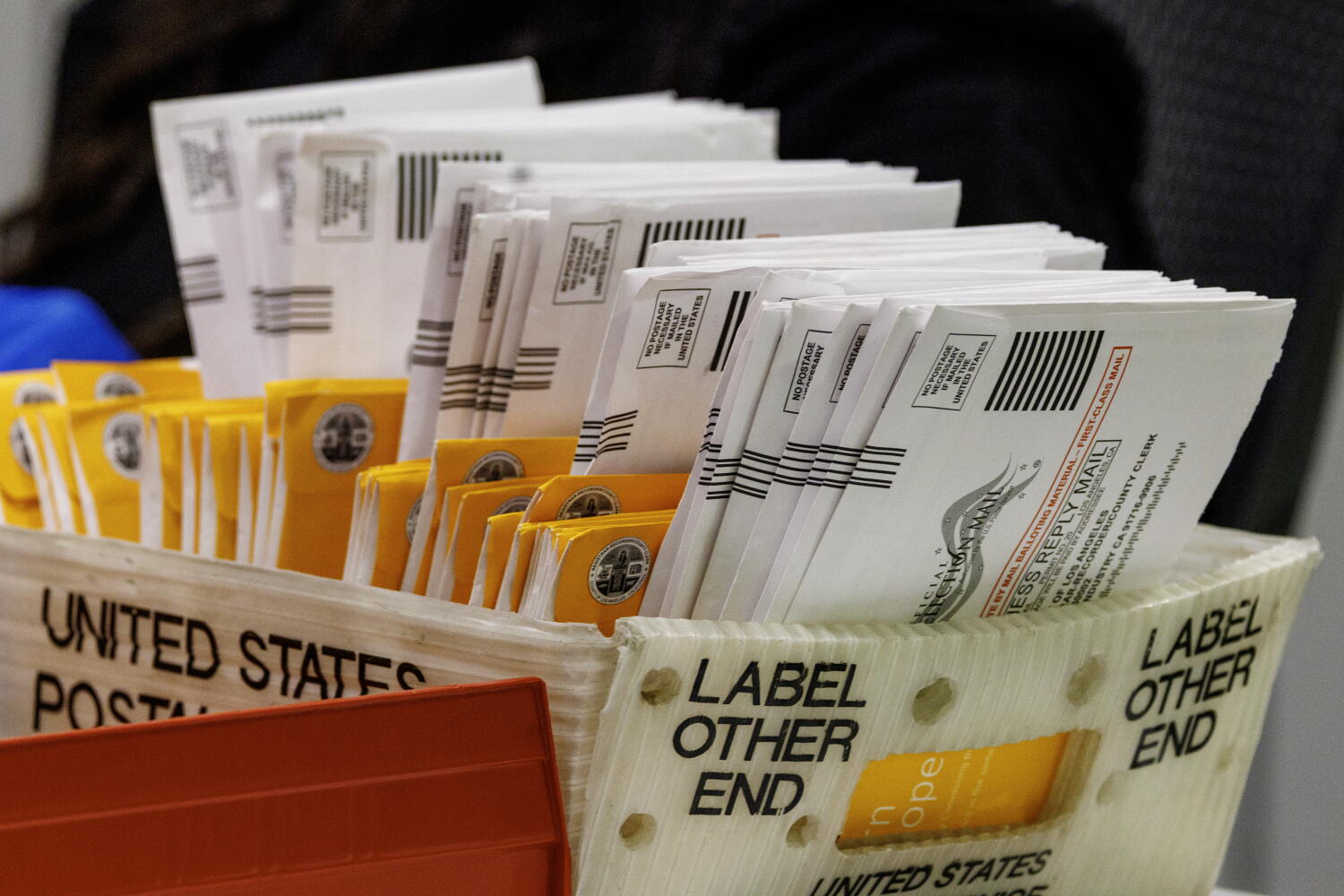
Consider a hypothetical voter—let’s call her Elena. Elena is seventy-two, lives in a sprawling suburban county, and moved three miles down the road last spring to be closer to her daughter. In the rush of packing boxes and changing utility bills, she forgot to update her voter registration. On Election Day, she shows up at her old precinct, realizes her mistake, and drives across town to her new polling place. There, an exhausted volunteer hands her a provisional ballot. Elena fills it out, seals it in the pink envelope, and goes home.
In the real world of election administration, Elena’s story happens thousands of times every cycle. It is messy, human, and completely benign. Her provisional ballot is set aside, verified by bipartisan clerks over the next week to ensure she didn't vote twice, and eventually counted.
Now, look at Elena through the lens of an aggressive federal fraud investigation.
To an investigator hunting for anomalies with a predetermined conclusion, Elena isn't a grandmother who moved three miles. She is a data point. Her name appears on two different precinct rolls in the same calendar year. Her signature on the provisional envelope looks slightly shakier than the one she signed at the DMV eight years ago when she didn't have arthritis. In the cold, binary logic of a database cross-check, Elena looks like a ghost trying to vote twice.
This is the fundamental disconnect at the heart of our current moment. When the expected storms of foreign interference or violent disruption failed to materialize on Election Day, the political appetite for a villain didn't vanish. It simply pivoted inward. If outside enemies didn't break the system, the logic goes, then the corruption must be hiding inside the ledger books, disguised as ordinary citizens.
What the Numbers Actually Say
Let’s step back from the emotion for a second and look at the cold, hard math—because numbers don't have political parties, and they don't care about cable news ratings.
Over the past two decades, every credible, exhaustive study of American elections—conducted by universities, news organizations, conservative think tanks, and federal commissions alike—has arrived at the exact same mathematical reality. In-person voter impersonation and deliberate double-voting occur at a rate hovering around 0.0003% to 0.0025%.
Put that in plain English. You are statistically far more likely to be struck by lightning while walking to your polling place than you are to stand behind someone casting a fraudulent ballot.
Think of an election system like a massive commercial airliner. Every flight has minor turbulence, a flickering overhead light, or a stuck tray table. Those are administrative errors—a misprinted address, a delayed mail-in envelope, a poll worker handing out the wrong precinct sheet. They require maintenance, training, and vigilance. A federal war on voter fraud, however, treats a stuck tray table as evidence that the wings are falling off mid-flight, and responds by demanding we ground the entire fleet.
We have seen this exact pattern before in American history. Whenever the electorate expands—whether after the Fifteenth Amendment, the Nineteenth Amendment, or the Voting Rights Act of 1965—the immediate backlash rarely argues openly that fewer people should have a voice. Instead, it wraps itself in the noble language of "ballot integrity." It demands stricter purges of voter rolls, narrower windows for registration, and aggressive criminal referrals for clerical mistakes.
I will admit something to you, because pretending otherwise insults your intelligence: watching this cycle repeat itself is exhausting, and sometimes genuinely frightening. When you sit at a precinct table and watch a young man cast his very first ballot, his hands trembling slightly with pride as he feeds it into the scanner, you realize how fragile that trust actually is. If you convince him that the machine is rigged, or worse, that filling out a form incorrectly might land him in front of a federal prosecutor, he won't fight the system. He will simply stay home next time.
The Invisible Chilling Effect
That quiet retreat from civic life is the real story that won't make the front page tomorrow.
When the Department of Justice or federal task forces allocate massive resources to hunting down a handful of scattered irregularities, the immediate legal yield is almost always microscopic. A few dozen prosecutions nationwide out of more than a hundred million ballots cast. Often, the defendants aren't shadowy operatives; they are people with past felony convictions who genuinely misunderstood complex restoration laws, or confused non-citizens who checked the wrong box while applying for a driver's license.
Prosecuting them doesn't secure our elections. It terrorizes the margins.
Imagine being a working single father who just had his voting rights restored after years of navigating probation paperwork. You hear on the radio that federal investigators are combing through voter rolls with a fine-toothed comb, looking for any discrepancy to prosecute. You stand outside the community center on a Tuesday evening, ten minutes before the polls close. You are 99% sure you are legally eligible to vote.
Are you willing to risk a five-year prison sentence on that remaining 1%?
Most people wouldn't. They would turn around, get back in their car, and drive away. No laws were broken. No poll watchers shouted. No foreign hackers breached a firewall. Yet a citizen was effectively disenfranchised, silenced not by a broken machine, but by the weaponization of doubt.
Why the Fizzle Matters
So why did the predicted Election Day chaos fizzle out?
Not by accident. It fizzled because thousands of local election administrators spent the last four years building shock absorbers into the system. They installed physical security cameras over ballot drop boxes. They instituted strict paper-trail audits so that every digital tally could be verified by hand. They ran tabletop exercises with local law enforcement to prepare for emergencies that, thankfully, never came.
In other words, the system worked because ordinary people took real threats seriously and built practical defenses against them.
That is the tragedy of continuing a federal crusade against phantom fraud. Every dollar, every FBI agent, and every courtroom hour poured into chasing statistical unicorns is a resource stolen from the actual, unglamorous work of keeping democracy running. Local counties are desperate for funding to replace aging ballot scanners, to pay poll workers a living wage so we don't have to rely exclusively on retirees, and to secure voter registration databases against genuine cyber threats.
You don't protect a house from a hurricane by tearing up the floorboards to look for termites.
At 8:30 on Tuesday night, long after the national pundits had moved on from their breathless predictions of Election Day disaster, I stood in the back of a quiet school cafeteria watching two election judges—one a lifelong Republican, the other a staunch Democrat—seal the final memory cards into a tamper-evident plastic bag. Their hands were stained with ink. Neither of them had eaten a real meal since dawn. They double-checked the serial numbers aloud, initialed the log sheet, and locked the metal case with a heavy brass padlock.
Outside, the parking lot was empty, the streetlights humming softly in the cold November air, waiting for the next round of lawyers to arrive and argue about whether any of it was real.