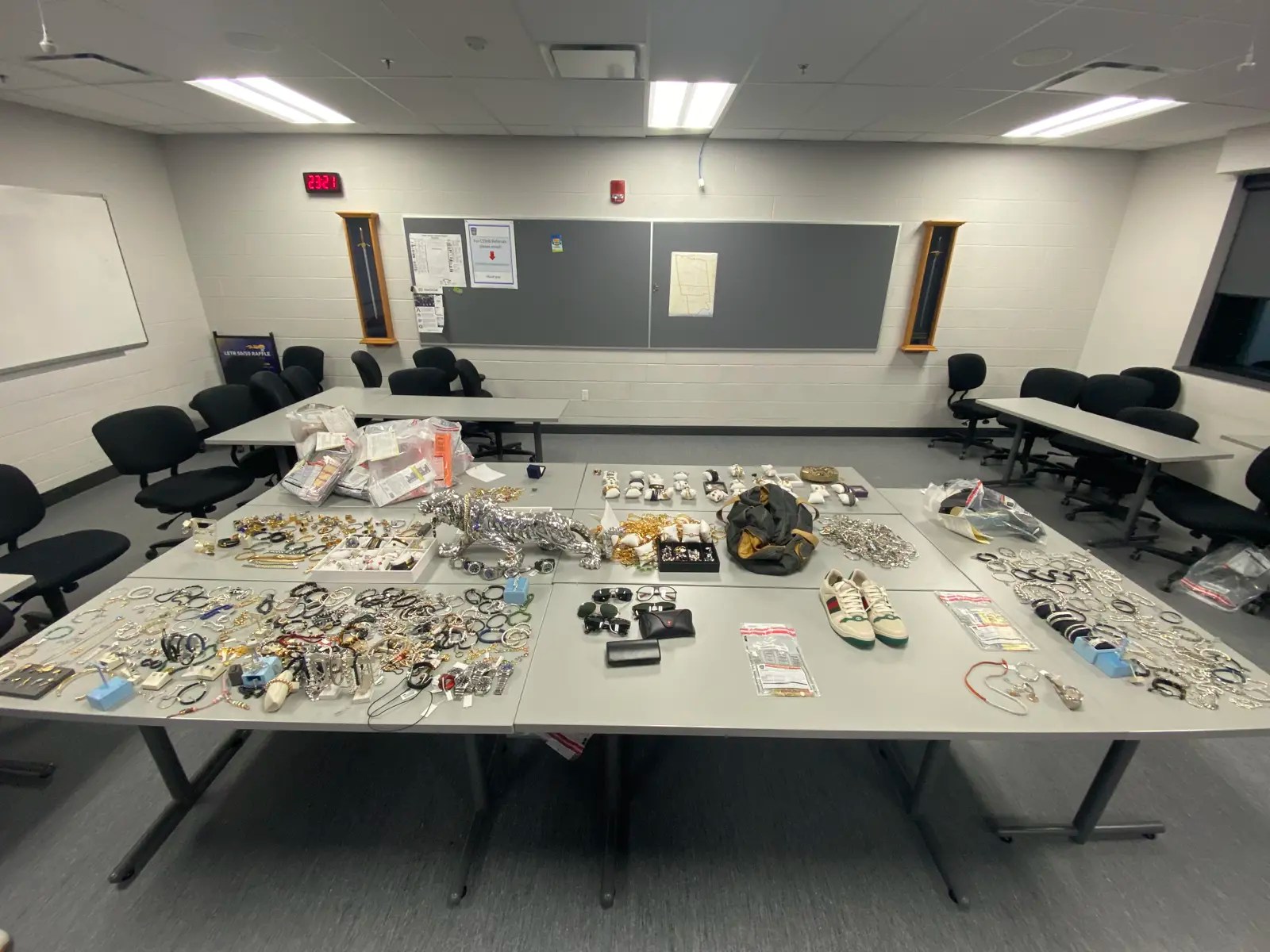
The velvet tray slides across the glass counter with a soft, expensive whisper. Under the precise halogen spotlights of a retail jewelry store, a diamond ring doesn’t just shine. It promises. It promises forever, or status, or a milestone carved into precious stone. For most of us, these rooms are sanctuaries of quiet luxury, spaces where the air is cool and the transactions are spoken in hushed, reverent tones.
Then the glass shatters.
It takes less than sixty seconds to undo a decade of security planning. The noise is a violent, percussive crack that echoes not just through the mall or the downtown strip, but through the lives of the people holding the keys. We read about retail theft in the morning papers as a series of cold numbers—percentages up, losses calculated, inventory adjusted. We look at a headline about a massive police bust and see a victory for the spreadsheets.
But the spreadsheets don’t bleed. They don’t lie awake at 3:00 AM listening for the sound of a crowbar at the back door.
To understand the reality of organized retail crime, you have to look past the recovered glitter and into the quiet panic left in its wake. Recently, Halton Regional Police in Ontario wrapped up a massive, multi-jurisdictional investigation dubbed Project Kingfisher. The raw data is staggering. Investigators recovered nearly $1 million CAD in stolen jewelry. They seized watches, rings, and loose stones that had been systematically bled from retail stores across the province. They arrested multiple suspects, laying dozens of charges. On paper, it is a triumph of modern policing, a textbook example of law enforcement agencies fusing their resources to dismantle a sophisticated network.
Yet, if you sit with the shop owners, the story changes shape.
The Anatomy of the Display Case
Consider a hypothetical boutique owner named Elena. She isn’t real, but her fear is shared by every independent jeweler from Oakville to Toronto. Elena spent twenty years building a clientele. She knows the anniversaries of her regulars. She knows which families prefer yellow gold over platinum.
When a crew hits a store like Elena’s, they aren’t just stealing inventory. They are stealing time.
Large corporations can absorb a hit; they have insurance policies with complex deductibles and corporate cushions designed to weather the storm. For the independent retailer, a smash-and-grab is an existential threat. Insurance premiums skyrocket to punitive heights after a major loss. Sometimes, providers drop the coverage entirely. Without insurance, you cannot secure a lease. Without a lease, the lights go out for good.
The theft itself is a highly coordinated operation. The public often mistakes these incidents for crimes of opportunity—desperate individuals grabbing what they can reach. The reality uncovered by Project Kingfisher paints a far more calculated picture. These are syndicates. They utilize scouts, drivers, and lookouts. They map out the vulnerabilities of specific layouts. They know exactly how much time they have before the private security monitoring company verifies the alarm and alerts the local dispatch.
The stolen goods don’t sit in a trunk for long. The speed of the modern fence is terrifying. A diamond ring stolen in a suburban Ontario plaza at noon can be stripped from its setting, the gold melted down, and the stone re-cut or shipped across international borders before the store owner has finished filling out the initial police report. The internet has anonymized the fencing process, turning illicit luxury into liquid cash through decentralized marketplaces and gray-market networks.
The Ghost in the Inventory
There is a psychological tax that statistics fail to capture. Ask anyone who has stood behind a counter during an organized raid. The physical wounds heal, but the environment changes forever.
The warmth leaves the business.
Jewelry retail relies on intimacy. You sit close to a stranger. You hand them an item worth more than their car and trust them to hand it back. After a violation, that trust curdles into suspicion. Every customer wearing a heavy coat becomes a potential threat. Every long glance at the security camera is logged as a warning sign. The store transforms from a gallery of dreams into a fortified bunker.
PROJECT KINGFISHER: THE RECOVERY BY THE NUMBERS
+-----------------------------------+-----------------------------------+
| Metric                            | Detail                            |
+-----------------------------------+-----------------------------------+
| Total Value Recovered             | Approximately $1,000,000 CAD      |
| Nature of Goods                   | High-end watches, rings, gems     |
| Operational Scope                 | Multi-jurisdictional (Ontario)    |
| Charges Laid                      | Multiple counts of theft & fencing|
+-----------------------------------+-----------------------------------+
The recovery of $1 million in merchandise is a monumental achievement for the Halton Regional Police and their partners. It represents thousands of hours of surveillance, data analysis, and coordinated raids. But the physical return of the items is only the first step in a long, bureaucratic slog.
Stolen property seized in a criminal investigation doesn’t just go back onto the velvet trays the next day. It becomes evidence. It is photographed, cataloged, and locked away in police vaults until legal proceedings advance. For a business owner clinging to survival, knowing their inventory is sitting in an evidence locker rather than a thief's pocket is a relief, yes, but it doesn't pay the immediate overhead. The capital remains frozen.
The True Cost of Cheap Luxury
Why does this network exist? Because the demand for discounted luxury is insatiable.
Every time someone buys a designer watch from an unverified online dealer, or buys a gold chain out of the back of a vehicle with a story about it being "wholesale," they are financing the next shattered storefront. The consumer feels insulated from the crime. They convince themselves that it’s a victimless hustle, a tax on the wealthy insurance companies who can afford it anyway.
But the cost trickles down to everyone. It shows up in the increased prices of consumer goods as retailers raise margins to cover security upgrades and rising insurance costs. It shows up in the deployment of police resources, funded by tax dollars, redirected from community safety to track organized rings across provincial highways.
The Ontario investigation pulled back the curtain on a truth we often try to ignore: our love for beautiful things has a dark underbelly when divorced from ethics. The glittering pieces laid out on the police evidence tables during the post-investigation press conferences are beautiful, certainly, but they look different under the harsh fluorescent lights of a police station. The romance is gone.
The real victory of Project Kingfisher isn’t the dollar amount. It is the temporary disruption of a machine that turns human anxiety into profit. It gives the people behind the counters a moment to breathe, a fleeting sense that the system can still protect them.
The glass can be replaced. The inventory can eventually be replenished. But as the shop owners lock up tonight, checking the deadbolts twice, watching the shadows in the parking lot, they know the truth. The most expensive thing stolen from them was never inside the display case.