The coffee in my ceramic mug had gone cold twenty minutes ago. Outside the window, a gray Tuesday morning pressed against the glass, matching the dull ache behind my eyes. I sat staring at a spreadsheet that refused to balance, a half-written strategy memo, and a calendar choked with meetings about meetings. My life looked productive on paper. Yet, sitting there in the quiet hum of fluorescent lights, I felt entirely incompetent. Not because I lacked data. I had too much data. I had spreadsheets of metrics, binders of best practices, and a brain stuffed with tactical blueprints.
What I lacked was a compass.
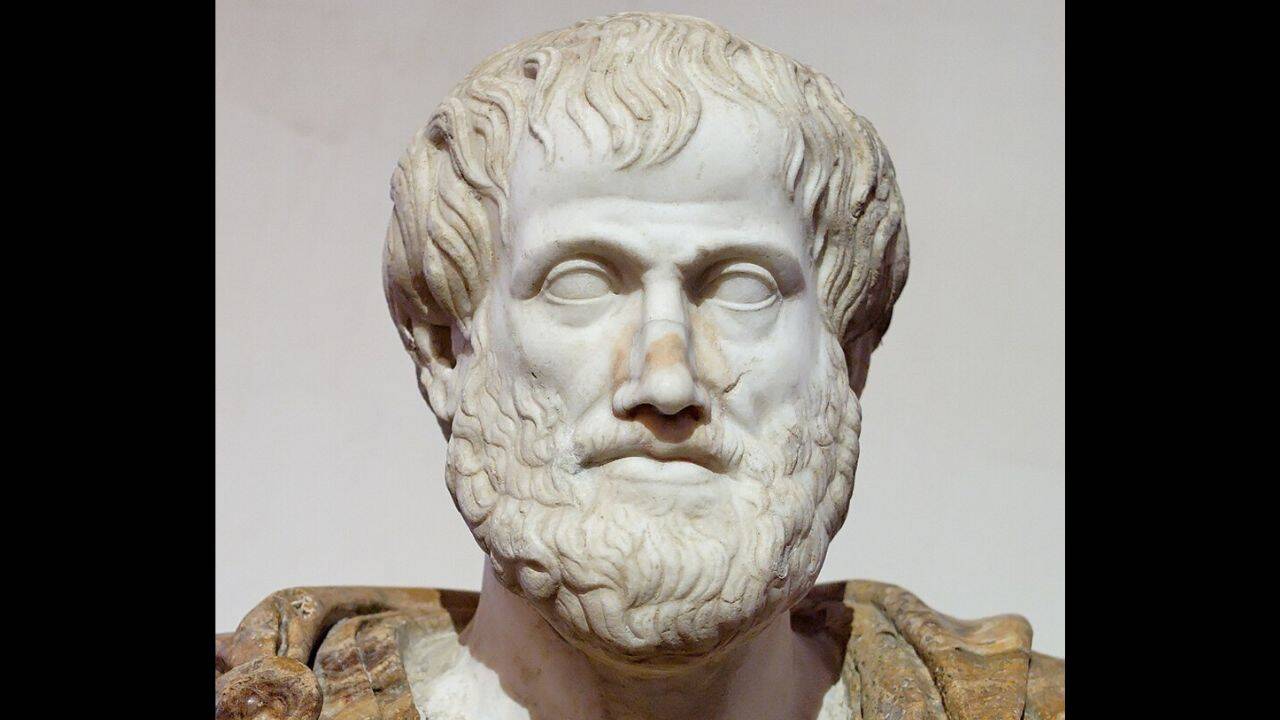
Aristotle knew this feeling. Two thousand years ago, walking the shaded gravel paths of the Lyceum in Athens, the ancient Greek philosopher identified a subtle fracture in how human beings approach decisions. He called it the split between techne—pure craft, technical know-how, the ability to build a ship or code an application—and phronesis. Practical wisdom.
Most of us spend our lives accumulating the former while starving for the latter. We treat our existence like a massive engineering puzzle, assuming that if we just gather enough facts, calculate enough variables, and master enough tools, the right path will magically reveal itself.
It never does.
Consider Julian, a hypothetical product manager whose daily routine mirrors my own past frantic pace. Julian wakes up at six, checks three different messaging apps before his feet touch the floor, and spends his commute listening to efficiency podcasts. He can optimize a database query in his sleep. He knows every industry trend, every market projection, and every competitor's quarterly earnings report.
By noon, Julian faces a crisis. Two engineers want to ship a feature that users are begging for, but the backend architecture is fragile. The metrics say launch; the technical risk says wait. Julian pulls up his dashboards. He checks the key performance indicators. He consults the agile framework.
Nothing in his technical toolkit tells him what to do next. Because techne asks a simple question: How do I build this? Practical wisdom asks a terrifyingly heavy question: Should I build this, and who will we become if we do?
We misunderstand Aristotle's quote—"The man of practical wisdom aims at..."—because we read it through the lens of modern productivity culture. We want to finish the sentence with a measurable outcome. We want him to say: The man of practical wisdom aims at maximum profitability. Or perhaps: The man of practical wisdom aims at optimal efficiency.
Aristotle refused to offer such cheap comfort.
He argued that practical wisdom is not a science. Science deals with universal, unchanging truths. Two plus two always equals four. Water always boils at sea level under standard pressure. But human life is messy, particular, and relentlessly changing. You cannot run a moral dilemma through an algorithm. You cannot solve a marital breakdown with a project management template.
When you stand in front of a classroom of restless teenagers, or sit across the kitchen table from a partner who has gone silent, or try to decide whether to blow up a career you spent a decade building, universal formulas fail.
That is why practical wisdom requires something terrifying: vulnerability.
To understand how this works in practice, look closely at how we make choices under pressure. When the stakes are real, our first instinct is to intellectualize. We retreat into research. We read fifteen reviews before buying a toaster, or fifty articles before choosing an investment strategy. We mistake the accumulation of information for the arrival of clarity.
I remember sitting in a hospital waiting room years ago, clutching a clipboard full of medical brochures. My father had just received a complicated diagnosis. The surgeon laid out three different treatment paths, complete with statistical success rates, potential side effects, and recovery timelines.
The numbers were right there in black and white. Path A offered a seventy percent success rate with high physical disruption. Path B offered a fifty percent success rate with moderate disruption. Path C offered lower numbers but preserved quality of life.
I wanted the surgeon to make the choice. I wanted him to point to a line on the chart and say, "Do this."
Instead, he looked at me and said something that annoyed me at the time. "The data tells you what has happened to other bodies, son. It doesn't tell you how your father wants to live his final years."
That was my crash course in phronesis.
Practical wisdom lives in the gap between the data and the decision. It is the capacity to see a unique, unrepeatable moment for what it is, weigh competing human values, and act with integrity even when the outcome is uncertain. It is not about having a flawless strategy. It is about developing the character required to bear the consequences of your choices.
Think about the master carpenter who does not need to measure every single board with micrometer precision because his hands have learned the weight of the cedar. He knows how the wood will warp when the winter humidity drops. He respects the grain instead of forcing it.
That is what Aristotle meant. The person of practical wisdom does not impose a rigid grid onto reality. They listen to reality. They balance justice with mercy, ambition with restraint, speed with care.
We live in a culture that worships speed. We want instant answers, automated workflows, and shortcuts to mastery. We buy books promising ten steps to success and apps that track our sleep down to the millisecond.
Yet we feel more adrift than ever.
Why? Because speed without direction is just panic running in a straight line.
When we strip the human element out of our decisions in the name of efficiency, we hollow out our choices. We make decisions that look great on a spreadsheet and feel hollow in our chests. We optimize our schedules while starving our souls.
To reclaim practical wisdom, we have to unlearn our addiction to certainty.
We have to sit in the quiet room with the cold coffee and admit that we do not know all the answers. We have to stop looking for a universal hack that will exempt us from the hard work of moral judgment.
Consider what happens next: You put down the spreadsheet. You turn off the notifications. You look at the actual human beings affected by your next move—your employees, your children, your friends, or simply your own reflection in the mirror.
You ask yourself not just Can I do this? or Will this scale? but Is this good?
The answers will not come from a search engine. They will come from the slow, unglamorous cultivation of character. They will come from paying attention to the world as it is, rather than how we wish it were.
The gray morning light eventually faded into afternoon. I closed the spreadsheet without balancing it, stood up, and walked away from the desk. The problems were still there, waiting for me. But the weight had shifted. I no longer expected a machine to tell me how to live my life.
The coffee was cold. The path was unclear. And for the first time all day, that felt entirely right.