Paper.
That is where it used to start. The faint scent of newsprint, the heavy stack of question booklets, and the cold metal of a number two pencil pressing against a bubble sheet. Millions of students across generations sat in identical desks, listening to the same quiet rustle of pages, sharing a singular, agonizing silence.
The SAT.
Love it or loathe it, that test was a fixed point in the shifting cosmos of growing up. It did not care who your parents were. It did not care what zip code you called home, or whether the high school marching band had uniforms from the 1980s. It asked questions, it timed the clock, and it delivered a score. A cold, hard number.
Then, the world decided to be kind. Or at least, it tried to.
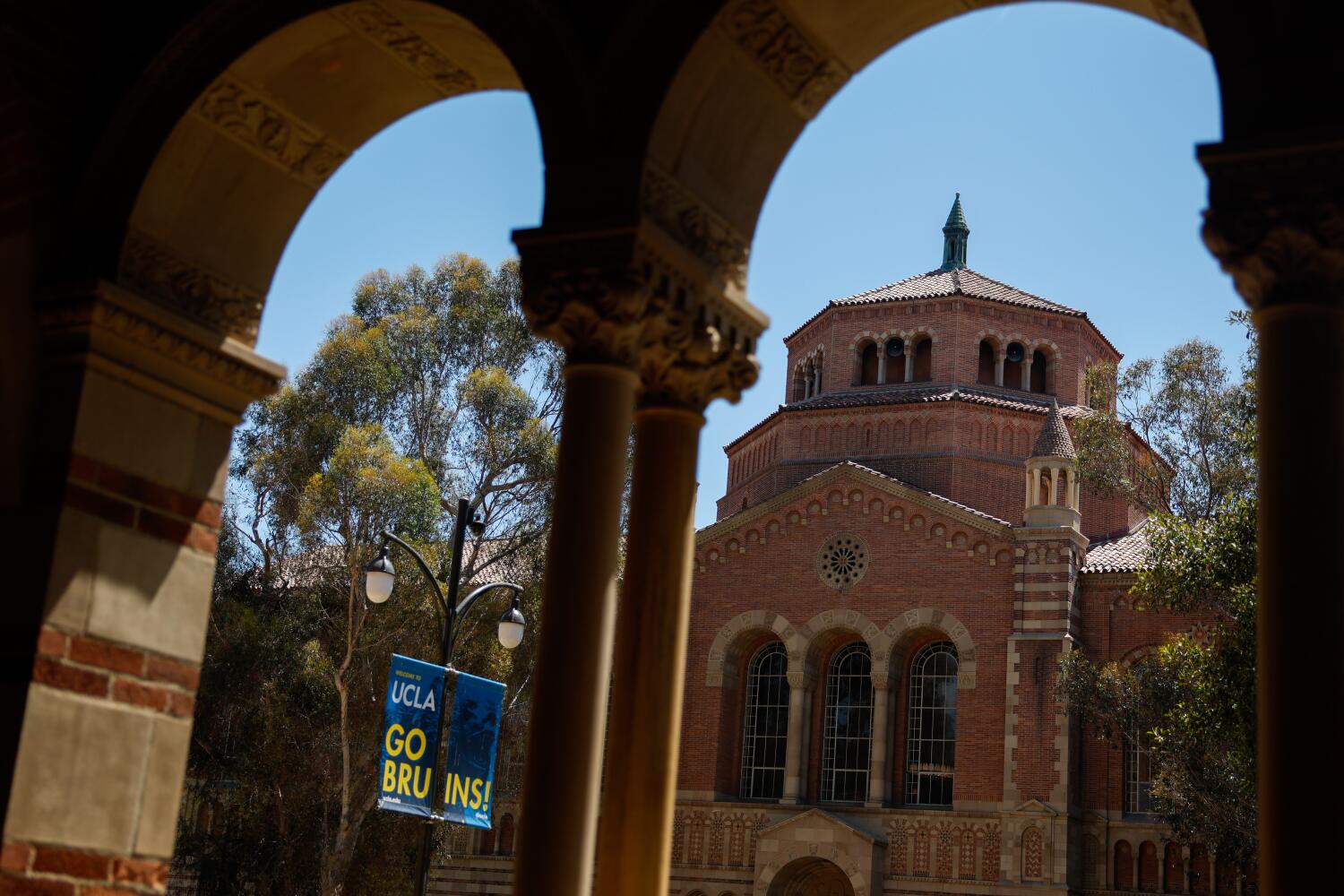
A few years ago, amid a global pivot and a collective awakening regarding equity, the University of California system made a seismic choice. They dropped the standardized test requirement. The reasoning felt noble, draped in the language of mercy. Standardized tests, critics argued, were mirrors reflecting privilege. Wealthy families could buy private tutors, prep classes, and multiple testing attempts. By throwing away the metric, the doors would theoretically swing open for everyone. The playing field would flatten.
Except, fields do not stay flat when you remove the boundary lines. They turn into swamps.
Consider a hypothetical student named Maya. Maya sits in a crowded public classroom in the Central Valley. She has a relentless work ethic, a fierce intellect, and a GPA that shines like a beacon. She reads classic literature on her phone during the bus ride home because her school library closed early due to budget cuts. Under the old system, Maya knew exactly what she had to do. If she could conquer the SAT, she could flash a golden ticket to admissions officers in Berkeley or Los Angeles. She could prove that her brilliant mind was forged anywhere, even without a fancy pedigree.
When the test requirements vanished, Maya felt a chill.
Without a standardized score, what did admissions officers look at? They looked at the rest of the file. They looked at extracurriculars. They looked at leadership roles in clubs. They looked at summer internships and unique community projects.
And right there, the invisible machinery of privilege ground into motion.
Maya cannot afford to spend her summers interning for free at a biotech startup downtown. She works at the local diner to help her mother pay for groceries. She does not have a college counselor on speed dial who charges three hundred dollars an hour to curate the perfect personal essay. When the guardrails of objective testing disappeared, subjective evaluation took the throne. And subjectivity loves a familiar face. It loves the kid whose parents went to an Ivy League school. It loves the resume padded with expensive opportunities that money can buy.
The cure turned out to be worse than the disease.
The cracks in the new system did not take long to show. Faculty members inside the UC system began to murmur, then speak, and finally shout. Professors noticed something alarming in lecture halls. Students were arriving less prepared for rigorous analytical work, regardless of their high school GPAs. Grade inflation had turned high school transcripts into currency of questionable value. An "A" in one district meant mastery; an "A" in another meant attendance. Without a common baseline, the university was flying blind through a fog of its own making.
Pressure began to mount in quiet faculty senates and loud public forums.
Enter the state senators. Three of them, stepping out of the political fray to address a growing academic crisis, pressed the UC system to restore SAT and ACT requirements. They were not acting out of malice or nostalgia for the stress-inducing bubbles of the past. They were backing a faculty outcry rooted in hard data. Studies commissioned by the university system itself had begun to whisper a surprising truth: standardized tests, for all their documented flaws, were actually better predictors of first-year college success than high school grades alone.
The test was never a magic wand. But it was a compass.
When you take away the compass in the name of kindness, you do not help the traveler find the path. You leave them wandering in the dark, where only those with flashlights provided by generational wealth can find the exit.
We mistook the messenger for the obstacle. The test scores showed inequality, true. But hiding the inequality by destroying the thermometer does not cure the fever. It merely ensures that the patient goes untreated until it is too late.
The debate raging across California is not just about math problems and reading comprehension passages. It is about a fundamental philosophical question. How do we measure human potential fairly in a profoundly unfair world?
If we rely purely on essays and resumes, we hand the keys of higher education back to the elite, disguised as progress. If we use a standardized test, we demand a brutal, leveling honesty from the system, while acknowledging that the test itself requires better support and preparation for every child who has to take it.
Maya deserves a system that sees her. Not just as a collection of glowing adjectives written by an overworked teacher, but as a mind capable of rigorous thought, waiting for a chance to prove it against a universal standard.
The pencils are waiting in the drawer. The question is whether we are brave enough to pick them back up, or if we prefer the comfortable fiction of a landscape where no one is ever measured, and everyone is left to guess their own worth.