Silence. That is the first thing you notice when a rumor of hemorrhagic fever enters a forest settlement in the Democratic Republic of the Congo.
Not the silence of peace. The silence of locked doors, averted eyes, and paths that suddenly feel too wide to share. You hear the cicadas sawing at the damp heat. You smell woodsmoke, wet red clay, and the sharp, medicinal bite of chlorine bleach where no one used to smell anything except cassava leaves and rain. And underneath it all, you hear a whisper moving faster than any runner along the laterite roads: They brought it here. They are hiding the sick. They are selling our blood.
Outbreaks do not begin with a virus alone. They begin with fear looking for a face.
When an outbreak of Ebola virus disease strikes a rural community in the DRC, public health teams arrive with syringes, tarps, protective suits, and urgent warnings. To an outsider, the logic is airtight: isolate the infected, trace the contacts, bury the dead safely, break the chain of transmission. Yet on the ground, airtight logic often collides with lived history, deep grief, and centuries of survival instincts. Prejudice blooms in that collision. Neighbors accuse neighbors of bewitching the village or profiting from crisis. Families who lost loved ones are shunned as walking contagion long after any risk has passed. Responders in white Tyvek suits—faceless, covered from crown to toe, spraying disinfectant over belongings—can look less like healers and more like invaders enforcing alien rules over sacred rituals.
To understand why a village chief keeps speaking when his own household is bleeding, you have to step out of epidemiology charts and sit inside the heat of the compound.
(Note: The following portrait of Chief Kasereka and his family is a composite hypothetical scenario built to illustrate real patterns documented during Ebola responses in the Democratic Republic of the Congo, where traditional leaders have navigated personal bereavement alongside public health resistance.)
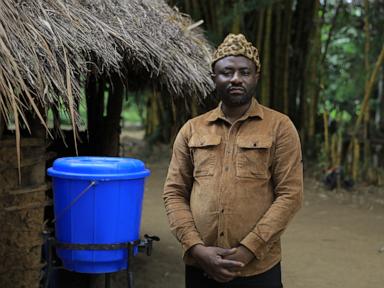
Kasereka has worn the weight of his lineage since the rains took his father's generation. A village chief in eastern Congo does not sit on a throne; he stands in a doorway. People bring him land disputes at dawn, stolen goats at noon, and dying children after dark. When a fever sweeps through the surrounding hills, his authority is tested not by decrees, but by whether people believe he still belongs to them.
First came the high fever in his brother-in-law's house. Then the crushing fatigue, the red eyes, the sudden, terrifying bleeding that turns an ordinary household into a room of dread. Within days, two relatives were gone. Grief hit Kasereka like a machete in tall grass—sudden, heavy, leaving no room to breathe.
You might think a man burying his own blood would bar the gate, pull his shawl over his face, and curse the sky. Part of him wanted to. Any honest person standing beside a freshly dug grave feels that pull toward bitterness. When a disease takes people you love in less than a week, anger wants a target. In a tense community, prejudice is simply anger that has found a convenient scapegoin—often the bereaved family itself, suspected of secrecy or carelessness, or the health workers arriving with clipboards and strict burial rules.
Consider what happens next: a rumor spreads at the market that the clinic is poisoning patients, or that survivors are still dangerous weeks after leaving treatment. Suddenly, Kasereka's grieving relatives are treated like lepers. Children are pulled back from the path when his niece walks by. Merchants refuse change from his household.
If Kasereka stays quiet to protect his own peace, the prejudice hardens into stone. People hide sick relatives in back rooms out of shame. Safe, dignified burials—essential because Ebola loads the body with high viral concentrations right around death and during traditional washing rituals—get skipped or done in secret. Chains of transmission lengthen in the dark.
So Kasereka steps into the clearing.
He does not sound like a textbook. He does not speak in percentages or case-fatality ratios. He speaks the language of shared memory and shared risk.
"My own house is crying," he tells a gathering under the mango tree, his voice steady despite the exhaustion hollowed beneath his eyes. "If this sickness were a trick of strangers, it would not be eating my blood."
Watch what happens in that moment. Prejudice thrives on us versus them—the idea that the affliction belongs to someone else's carelessness, someone else's wickedness, someone else's greed. When a respected leader stands before his neighbors and refuses to hide his own loss, the boundary between them and us begins to fray. People see grief they recognize. They see a man who has every reason to lash out choosing instead to keep the community from tearing itself apart.
Why Fear Outruns Facts in an Outbreak
To grasp how hard Kasereka's task really is, it helps to use a simple analogy. Imagine a house fire in a dry-season settlement where everyone shares a single bucket brigade. If people trust the brigade, they pass the water. If rumors claim the water is actually kerosene—or that the people holding the buckets caused the sparks—neighbors stop passing buckets and start shouting at one another while the rafters catch.
Ebola is terrifying precisely because its early symptoms mimic everyday illnesses. Malaria, typhoid, common viral fevers—they all start with headache, achiness, and heat. By the time unmistakable warning signs appear, families have already cared for the sick person at home, shared bowls, wiped brows, held hands. Caring for the sick is not a flaw in human nature; it is the bedrock of family life. Asking people to step back from a suffering mother, spouse, or child goes against every moral instinct they were raised to honor.
Add historical memory to that moral shock. Across decades and across regions, rural communities have experienced neglect, extractive economies, political instability, and armed conflict. Distrust of outside institutions is not irrational paranoia born out of nothing; it is often a learned defense mechanism. When strangers arrive asking intrusive questions about who visited whom, who touched what, and who died where, suspicion is almost guaranteed unless trust has been earned face to face.
And stigma lingers long after the fever breaks. Ebola survivors—people who fought through excruciating dehydration, organ stress, and isolation—frequently face rejection when they return home. Neighbors fear contagion even after medical clearance, or whisper superstitions about survivors carrying bad luck. Without voices pushing back against that stigma, recovery itself becomes a sentence of loneliness.
I have sat in rooms where tension was so thick you could taste the dust and suspicion. I am not a virologist standing in a containment unit, and I will not pretend the fear surrounding an outbreak is easy to untangle. Even seasoned responders admit how humbling—and sometimes overwhelming—it is when every medical instruction feels like a cultural earthquake. If you find yourself wondering how a community could doubt help offered during a lethal crisis, pause before judging. Doubt often grows where fear meets unfamiliarity.
The Quiet Architecture of Trust
Overcoming prejudice in a village does not happen in a single speech. It happens in small, unglamorous acts repeated day after day.
First, a leader like Kasereka has to bridge two worlds without betraying either. On one side stand the medical teams, bringing real clinical care—supportive hydration, targeted treatments where available, infection control, and contact tracing that genuinely stops spread. On the other side stand the elders, families, and mourners who need respect for their grief and dignity for their dead.
Safe and dignified burials offer the clearest example of that bridge. Traditional funeral rites honor the departed and comfort the living. When health workers simply bulldoze over those customs, resentment spikes. When traditional leaders work alongside teams to adapt rituals—allowing family prayers, visible respect, and culturally meaningful gestures while keeping safe physical boundaries—the ritual still heals the spirit without feeding the virus.
Second, truth has to travel through trusted messengers. A poster stapled to a wall cannot argue with a rumor told over evening tea. A chief who walks with health educators, asks hard questions publicly rather than behind closed doors, and refuses to scapegoat neighbors shifts the social climate. When the chief says, "Do not cast out the family whose child fell ill; help them get care early so the sickness stops here," social permission changes.
Third, transparency matters even when the news hurts. Pretending an outbreak is harmless or hiding deaths only feeds conspiracy. Naming the danger plainly—while standing beside the people bearing the heaviest burden—builds credibility over time.
What Grief Demands of the Living
There is a temptation in fast-moving news cycles to reduce a crisis to a scoreboard: number of cases, number of contacts monitored, number of recoveries. Numbers matter. They tell us whether interventions are bending the curve. Yet numbers cannot tell you what it costs a man to bury his kin in the morning and calm an anxious crowd by afternoon.
Prejudice feeds on isolation. It whispers that if you push away the grieving, the shamed, or the suspected, you will stay safe. History shows the opposite. Infectious diseases do not care about village feuds or social ostracization. Pushing families into secrecy makes everyone less safe, while pulling together—with clear facts, compassion, and practical care—gives the whole community a fighting chance.
Kasereka's story, whether taken as a composite of real Congolese leaders or a mirror held up to any community facing sudden peril, points to a hard truth about human resilience. Courage is not the absence of sorrow. Sometimes courage is simply refusing to let sorrow curdle into cruelty.
Late in the afternoon, when the heat begins to soften over the trees, the path through the settlement is quiet once more—not with the cold silence of suspicion, but with the steady rhythm of people walking side by side toward a grave, carrying earth, carrying memory, and refusing to let fear write the final word.