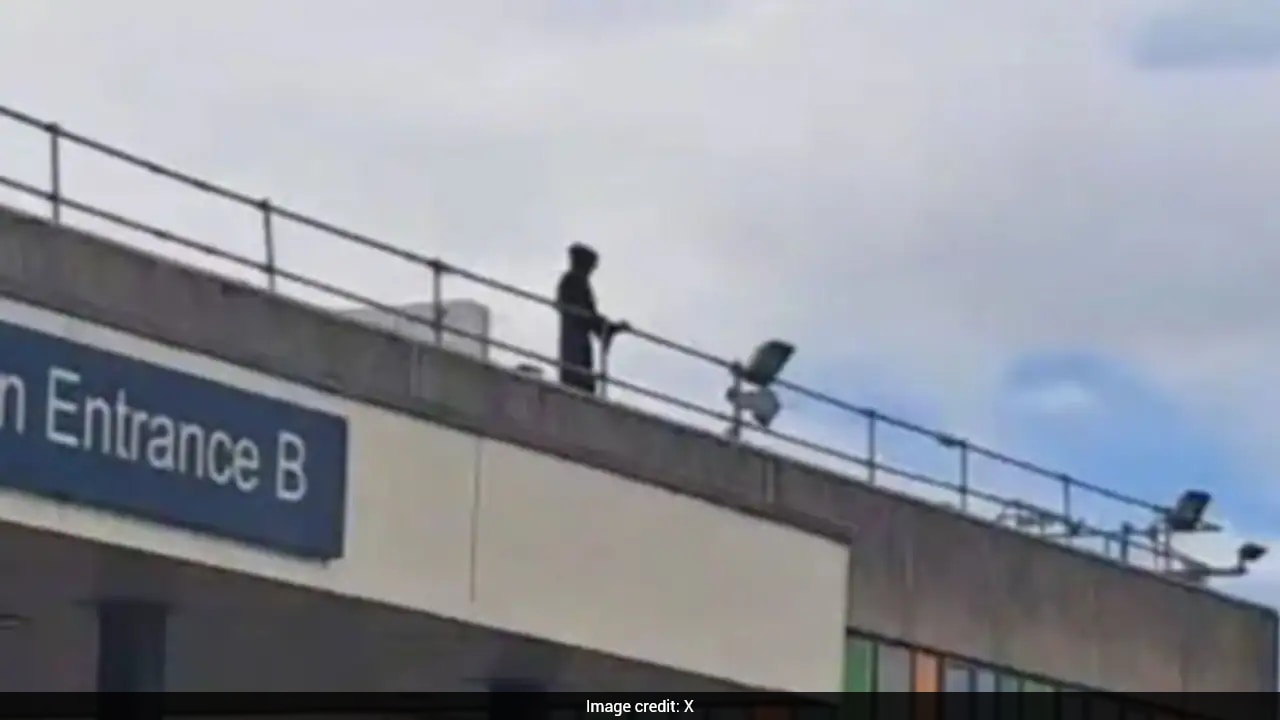
When a thirty-two-year-old man wearing a cheap black cloak and a plastic skeleton mask scaled a hospital roof to mimic the Grim Reaper, the immediate public reaction was predictable dark humor mixed with digital mockery. Social media feeds filled with ironic memes about the state of modern healthcare. Late-night television hosts found easy monologue material. Security forces looked foolish.
Beneath the viral absurdity lies a grim reality about institutional vulnerability.
Hospitals are designed to heal, which means they are fundamentally built to welcome the public. They are civic spaces with sprawling footprints, multiple access points, and a constant rotation of visitors, patients, and staff. They are not federal bunkers or corporate fortresses. When a prankster or a genuinely dangerous intruder decides to exploit that openness, the architecture of care instantly becomes a liability.
The Anatomy of a Hospital Breach
To understand how someone manages to slip past modern urban infrastructure and onto a restricted hospital roof dressed as death incarnate, you have to look at the operational reality of healthcare facilities.
Emergency rooms handle trauma, grief, and mental health crises around the clock. Security teams are stretched thin across vast properties, prioritizing active violence inside crowded waiting rooms over perimeter surveillance of exterior stairwells and maintenance ladders.
- Open access points designed for patient convenience
- Understaffed physical security details focused on internal triage
- Aging infrastructure with poorly monitored rooftop access hatches
In this specific case, the individual exploited a standard maintenance stairwell that lacked active alarm sensors. He climbed above the emergency ward, positioning himself where patients looking out their windows stared straight into the face of urban folklore. The psychological impact on vulnerable populations inside those rooms cannot be overstated. Cancer patients, recovering surgical cases, and individuals battling acute illness woke up or looked out to find a theatrical manifestation of mortality staring back at them.
Law enforcement eventually coaxed him down without physical injury, charging him with disorderly conduct and trespassing. But the legal charges miss the bigger operational crisis.
Why Institutional Openness is a Trap
For decades, healthcare administrators resisted heavy-handed security measures. Hospitals pride themselves on being healing environments. Metal detectors, armed guards at every corridor, and locked exterior perimeters turn a place of recovery into a hostile zone.
Yet the baseline threat environment has shifted.
Intruders, pranksters, and unstable actors recognize that healthcare facilities represent soft targets with high visibility. A stunt on a hospital roof guarantees immediate media attention. It offers a shortcut to infamy in an ecosystem driven by algorithmic outrage. When institutions prioritize a welcoming atmosphere over basic physical hardening, they invite disruption.
The Cost of Complacency
Security audits across major metropolitan hospitals frequently reveal the same systemic flaws:
- Unsecured Roof Access: Exterior fire escapes and mechanical ladders often lack motion-activated cameras or magnetic door locks tied to central security desks.
- Badge Fatigue: Staff routinely prop open side doors for convenience, rendering electronic access control systems useless.
- Slow Response Triangulation: Security personnel rely heavily on civilian reports rather than automated intrusion detection systems.
When the man in the costume stood on that ledge, he was not just performing a juvenile prank. He was conducting an unauthorized stress test of a multi-million-dollar medical facility. He proved that a simple disguise and a brazen attitude could bypass layers of organizational indifference.
The Psychological Toll on Staff and Patients
We talk endlessly about physical security protocols while ignoring the psychological collateral damage of these incidents. Healthcare workers operate under immense baseline stress. Burnout rates remain critically high. Nurses and doctors carry the emotional weight of life-and-death decisions every single shift.
Subjecting those workers and their recovering patients to theatrical terror is not a harmless prank. It is an assault on the sanctuary of the hospital.
When a patient checks into a medical center, they surrender a vast degree of autonomy. They place their trust in the walls around them. Breaking that trust through administrative negligence or poor physical security erodes the foundational contract between the institution and the community it serves.
Fixing the Blind Spots
Upgrading hospital defense mechanisms without destroying the therapeutic environment requires a nuanced engineering approach. Facilities cannot simply turn into fortresses without harming patient recovery.
Smart surveillance offers a middle ground. Modern analytics platforms can automatically flag unauthorized individuals lingering on exterior ledges or restricted zones long before they become a public spectacle. Integrating thermal imaging and motion sensors on roof perimeters eliminates the reliance on human guards staring at forty different monitor feeds at once.
Furthermore, administrative accountability must change. Hospitals that fail to secure basic access points should face rigorous regulatory penalties, much like financial institutions that fail to protect customer data. Physical safety is a baseline medical requirement, not an optional amenity.
The man in the plastic mask is back in custody, facing a court date and a psychiatric evaluation. The viral videos will fade from the timeline within days. The structural vulnerabilities that allowed him to stand on that roof in broad daylight, however, remain entirely unchanged.