The Strategic Calculation Behind Civilian Casualties
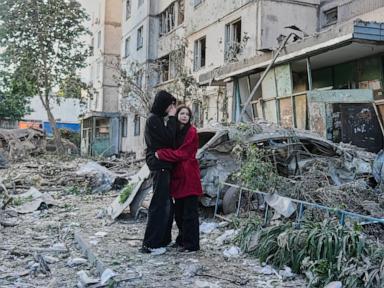
A localized strike on a residential block in Ukraine follows a brutal, recurring calculus. Eleven people are dead, others remain trapped beneath concrete slabs, and rescue workers are digging through the rubble with shovels and bare hands. Wire services will report this as another tragic statistic in a war full of them. But looking closer at the map, the logistics, and the timing reveals that these strikes are not random acts of cruelty. They are part of a deliberate, systematic campaign to break the logistical backbone of Ukraine before frontline troops even see a tank.
Moscow has shifted its focus from purely military targets to the dual-use infrastructure that keeps civilian and military life moving. When an apartment building is hit, the immediate Western response is outrage over civilian loss of life. Inside the war rooms, however, the target is often the power substation two blocks away, the rail junction behind the residential complex, or the local repair depot hidden in an industrial park. The civilian deaths are not collateral damage in the eyes of Russian command; they are a feature of the strategy. By hitting dense urban areas, Russia forces Ukraine to make an impossible choice: deplete its dwindling supply of air defense missiles protecting cities, or leave its frontline troops exposed to devastating air strikes.
The Air Defense Dilemma
Ukraine cannot cover everything. The math is simple and unforgiving. A modern air defense system like the American-made Patriot or the German IRIS-T costs millions of dollars per battery, and the interceptor missiles cost even more. Russia is exploiting this asymmetric reality by launching waves of cheap, Iranian-designed Shahed drones alongside highly sophisticated Kh-101 cruise missiles and ballistic weapons.
The drones go first. Their purpose is to draw fire, force Ukrainian radar operators to turn on their systems, and empty the missile launchers. Once the defense grid is saturated and reloading, the heavier, faster ballistic missiles slam into their targets. When these strikes hit apartment buildings, the resulting chaos paralyzes local administration. Emergency services are diverted. Grid operators must cut power to entire sectors to prevent secondary explosions or electrocution of survivors in the rubble.
This creates a rolling crisis across the country. Every missile used to protect a apartment complex in Kharkiv or Dnipro is a missile that cannot be used to protect a brigade on the Donbas front. Russian planners know this. They are intentionally burning through Ukraine's air defense stockpiles faster than Western allies can replenish them.
The Infrastructure Attrition War
Western analysis often focuses heavily on territorial gains and losses on the battlefield. This misses the larger economic and social warfare shifting the ground beneath Kiev's feet. A country cannot fight a modern war without a functioning economy, and an economy requires electricity, water, and transport.
The Thermal Power Problem
Russia has systematically targeted Ukraine's thermal and hydroelectric power plants. Unlike sub-stations, which can be bypassed or repaired with spare transformers shipped from Europe, a destroyed turbine hall takes years to rebuild.
The Grid Control Challenge
By breaking the high-voltage transmission lines that connect the nuclear power plants in the west to the industrial east, Russia is attempting to split the Ukrainian energy grid into isolated islands. When an islanded grid experiences a sudden surge or drop in demand, it collapses.
The Localized Logistics Collapse
When a strike hits a residential area near a railway line, the immediate effect is human tragedy. The secondary effect is that the railway line shuts down for twelve to twenty-four hours while crews clear debris and repair the tracks. For a frontline unit waiting for artillery ammunition, a twelve-hour delay can mean the difference between holding a trench and losing it.
The Failure of Western Industrial Policy
The rubble of a collapsed Ukrainian apartment building is a direct reflection of a bottleneck in Western factories. For decades, NATO members prepared for short, high-tech conflicts. They did not build the industrial base required for a prolonged war of attrition.
Production lines for critical air defense components cannot simply be turned on with a switch. Precision engineering requires specialized machine tools, rare earth elements, and highly skilled labor—all of which are in short supply. While European nations debate budgets and pass resolutions, Russian factories have moved to twenty-four-hour shift rotations. They are outproducing the West in basic munitions and maintaining a steady output of long-range strike options.
Sanctions were supposed to cripple this capacity. They failed because the global supply chain is too porous. Microchips from washing machines, Western-manufactured dual-use electronics, and specialized machine parts continue to flow into Russia through third-party intermediaries in Central Asia and the Middle East. The missiles striking Ukrainian cities today contain components manufactured in the West just months ago.
The Psychological War on the Home Front
Beyond logistics, there is the psychological dimension. Russia is betting that the civilian population will eventually tire of the constant terror, the blackouts, the lack of heating in winter, and the sudden deaths of neighbors.
It is a strategy with a mixed historical record. During the Second World War, the strategic bombing of cities rarely broke civilian morale; instead, it often hardened resolve. In Ukraine, the initial phases of the invasion produced a similar unifying effect. But as the war drags into its successive years, the cumulative exhaustion changes the social dynamic.
The constant state of hyper-vigilance takes a toll on human capital. People leave. Businesses shut down because they cannot predict if they will have power tomorrow. The brain drain accelerates as those with options seek stability abroad. This silent, demographic bleeding is exactly what the Kremlin wants. A nation without a young, active population cannot sustain a long-term defense, let alone a post-war reconstruction.
The Reality of Air Defense Attrition
The debate over allowing Ukraine to strike deeper into Russian territory with Western weapons is directly tied to these civilian casualties. Ukrainian commanders argue that trying to shoot down missiles over their own cities is a losing strategy. The only effective defense is to destroy the bombers on the tarmac and the missile launchers on the ground inside Russia.
| System Type | Target Capability | Interception Cost | Strategic Vulnerability |
|---|---|---|---|
| S-300 / Patriot | Ballistic & Cruise Missiles | High ($2M - $4M per shot) | Limited ammunition stockpiles |
| Mobile Flak Teams | Loitering Munitions (Drones) | Low (Autocannon ammunition) | Limited range, ineffective in bad weather |
| Electronic Warfare | Drone Navigation / GPS | Extremely Low | Cannot stop unguided ballistic missiles |
As long as Western policy restricts the use of long-range weapons against Russian military infrastructure, Ukraine remains in a defensive crouch. It is forced to play a permanent game of catch-up, reacting to strikes rather than preventing them. The cost of this policy is measured in civilian lives and shattered neighborhoods.
The rescue operations in the wake of these strikes follow a grimly predictable pattern. Heavy cranes lift the largest pieces of concrete. Search dogs look for signs of life. Volunteers clear away glass. Neighbors stand outside in shock, wrapped in blankets, watching the smoke rise into the sky. They know that tomorrow the sirens will wail again, the missiles will fly, and the calculus will remain completely unchanged.