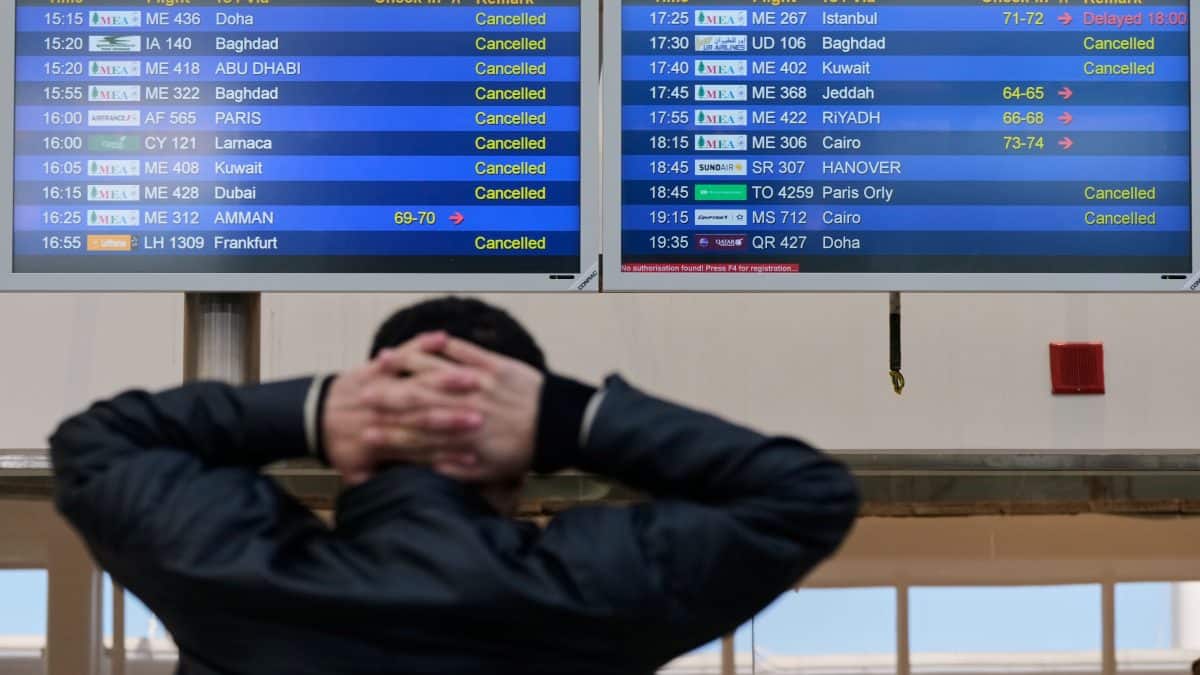
The airport floor is a cold, unforgiving host. It doesn't care that you have a board meeting in London or a wedding in Dubai. When the airspace over the Middle East snaps shut like a rusted trap, the transition from "traveler" to "refugee of circumstance" happens in a heartbeat. One minute, you are sipping an overpriced latte, checking your watch; the next, you are watching a red "CANCELLED" scrolling across the departure board like a digital obituary for your plans.
Consider Elias. He is a hypothetical composite of the thousands currently sitting on their suitcases in Istanbul, Amman, and Doha. He has three percent battery left on his phone and a fading hope that his airline’s app will provide anything other than a spinning wheel of despair. Elias represents the invisible stakes of a regional conflict. While the world watches missile trajectories, Elias is wondering if he can afford a third night in a transit hotel that has tripled its rates because, suddenly, demand is the only thing higher than the tension in the sky.
Airspace is not just empty blue. It is a complex grid of invisible highways. When Iran or its neighbors toggle those highways to "closed," the ripple effect is a global cardiac arrest for aviation.
The Architecture of a Standstill
The math of a closed airport is brutal. A single hour of a shuttered runway at a hub like Tehran or Tel Aviv doesn't just delay one flight. It displaces the crews. It strands the physical aircraft. It creates a vacuum where the supply of seats cannot possibly meet the sudden, frantic demand of thousands trying to claw their way out.
If you find yourself in Elias’s shoes, the first thing you lose is the illusion of control. You assume the airline is your guardian. They aren't. In the eyes of international law and most "Contract of Carriage" agreements, a war is an Act of God—or more accurately, Force Majeure. This is the legal trapdoor. When a flight is cancelled due to a mechanical failure, the airline owes you a hotel, a meal, and a smile. When it’s cancelled because of a drone swarm or a closed border, the airline is often legally absolved of those "duty of care" costs.
You are, quite literally, on your own.
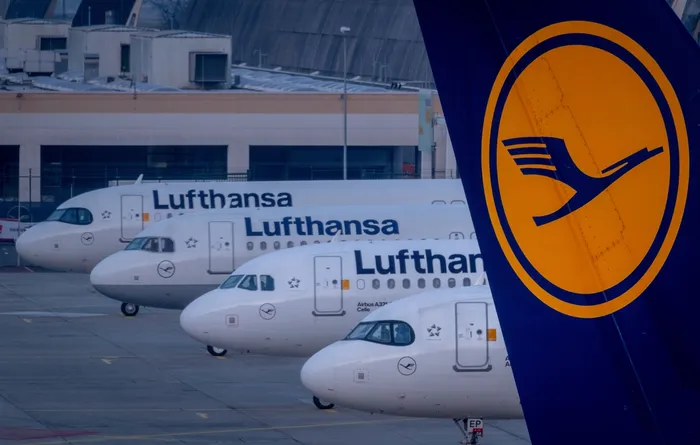
The reality of the current Iranian airspace situation is a patchwork of confusion. Some carriers—the brave or the desperate—might skirt the edges of the restricted zones. Others, like Lufthansa or Qantas, will add five hours to a flight time just to loop around the danger. This consumes fuel. It creates "crew timing" issues where pilots hit their legal limit of wakefulness and have to land in a third country just to sleep.
The Fine Print of Chaos
What can a stranded passenger actually do? Very little, yet everything.
The most common mistake is waiting in the three-hundred-person line at the transfer desk. By the time you reach the front, the last seat on the flight to Frankfurt via a secondary route will be gone. Elias, if he were wise, would be on his phone calling the airline’s international helpline in a different time zone—Singapore or Canada—where the wait times are shorter, all while standing in that physical line. It is a pincer movement for survival.
Then there is the matter of the "Special Flight." Governments often talk about chartering evacuation planes. These sound like a rescue, but they are often a last resort with a hefty price tag. They aren't free. You sign a promissory note. You pay later. And they usually only take you to a "safe haven" hub, not your final destination.
The logistical nightmare deepens when you realize that travel insurance is often a fair-weather friend. Most standard policies have a specific exclusion for "acts of war" or "civil unrest" if the conflict was already brewing when you bought the policy. If you booked your ticket yesterday, hoping to squeeze through the gap, the insurance company will likely watch your struggle with a cold, detached eye.
The Weight of the Invisible
Beyond the tickets and the fine print lies the emotional erosion. Travel is supposed to be an act of freedom. Being stranded by a war you didn't start, in a country that isn't yours, is a unique brand of helplessness. You see it in the way people stop making eye contact at the gate. Everyone becomes a competitor for a limited resource: a way home.
The invisible stakes are the missed moments. It’s the grandmother who won’t make it to the birth of a grandchild because the flight from Shiraz was grounded. It’s the student whose visa might expire while they are stuck in a transit lounge. We talk about "flight disruptions" as if they are mere inconveniences, but for the person sitting on a linoleum floor at 3:00 AM, it is a crisis of identity.
Information becomes the only currency that matters, and yet it is the most diluted. Social media fills with rumors of "reopening soon" or "total escalation." Filtering the noise is a full-time job. The only truth is the gate agent's face. If they are packing up their desk, you aren't leaving tonight.
The Strategy of the Stranded
If you are caught in this specific geography of grief, you must become your own travel agent.
- The Ghost Booking: Look for "refundable" tickets on alternative routes before you even cancel your original one. It’s a gamble on your credit card limit, but it’s a lifeboat.
- The Land Route Fallacy: In the Middle East, the temptation is to grab a bus to a neighboring country. But when airspaces close, land borders often tighten or choke under the pressure of those with the same idea.
- The Digital Paper Trail: Document everything. Take photos of the departure board. Save every "Update" email. Even if Force Majeure is invoked now, class-action lawsuits or future policy changes often rely on the evidence of the "stranded."
But even with the best strategy, there is a limit to what human ingenuity can do against a closed sky. We have built a world that relies on the seamless movement of people, a world that assumes the "above" is always available. When that assumption fails, we are reminded of how small we are.
Elias eventually finds a corner with a working power outlet. He plugs in his phone. The screen glows, showing a map of the world with a giant, jagged hole over the place he needs to go. He realizes that the "cannot" far outweighs the "can" in this situation. He cannot make the planes fly. He cannot make the missiles stop. He cannot force a government to prioritize his vacation over their sovereignty.
He can only wait.
There is a specific kind of silence that falls over a terminal when the last scheduled flight is officially scrubbed for the night. It isn’t the silence of peace. It is the silence of a thousand interrupted stories. People curl into themselves. They use coats as blankets and backpacks as pillows. They look out the floor-to-ceiling glass at the runways, where the lights are still blinking, guiding no one. The planes sit on the tarmac, heavy and useless, their engines covered, looking like great silver birds that have forgotten how to dream of the wind.
Would you like me to look up the specific current status of European carriers flying into the Tehran Flight Information Region to see which routes are still being diverted?