The ink on a treaty rarely smells like seawater, but it always carries the scent of money. Deep within the halls of Parliament House, away from the sterile glare of television cameras, a quiet realization is settling over the nation’s capital. It is the realization that Australia has agreed to pay a premium price for someone else's used machinery.
When the AUKUS pact was unveiled, it arrived with the fanfare of a new era. We were promised a shield forged from the highest order of technological supremacy. Nuclear-powered submarines. Sleek. Silent. Indomitable. They were marketed as the ultimate guarantee of Australian sovereignty, a multi-billion-dollar insurance policy in an increasingly volatile Indo-Pacific.
But look closer at the fine print.
Before the nation ever builds its own fleet, it will first inherit Virginia-class submarines from the United States. These are not factory-fresh vessels rolled off the assembly line in Virginia or Connecticut with that new-submarine smell. They are used. They have spent years patrolling the crushing depths of the world's oceans, their hulls enduring the brutal, microscopic fatigue that comes with undersea deployment.
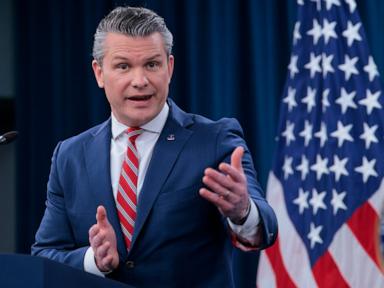
Ed Husic, a senior Labor figure, looked at this arrangement and asked the question that many were whispering but few dared to voice publicly. Is this truly the deal we were promised? Or have we signed up to be the world’s most expensive secondhand dealership?
Imagine buying a house, but for the first decade, you are forced to rent a property that the previous owner has already lived in for fifteen years, all while paying the mortgage on a mansion that hasn't been built yet. That is the reality of the stopgap measure.
The Weight of the Used Hull
Submarines are not cars. You cannot simply pull over to the side of the road if an alternator fails. When you are three hundred meters beneath the surface of the ocean, every weld, every pipe, and every bolt is a life-or-death calculation.
The United States Navy operates on a relentless schedule. Its attack submarines are pushed to the absolute limit, racking up thousands of hours of reactor time and structural strain. By the time Australia takes delivery of these secondhand Virginia-class vessels in the 2030s, they will already possess a history. They will have wear. They will have maintenance backlogs.
Consider the psychological toll on the crew. A young Australian submariner, stepping onto a vessel that has already seen a decade of American service, knows that this machine has been handed down because its prime years are already behind it. The steel remembers the pressure cycles. The nuclear reactor has already consumed a significant portion of its finite lifespan.
This is where the grand strategy of geopolitical alignment clashes violently with practical reality. The federal government sold AUKUS as a leap forward into unmatched technological capability. Yet, the bridge to that future is built on a foundation of American hand-me-downs.
The cost of this bridge is astronomical. Estimates for the total AUKUS project hover around $368 billion over the next three decades. It is a figure so large it loses all meaning, dissolving into abstract economic noise. To ground it in reality, that is enough money to rebuild every hospital, fund every school, and secure the energy grid for generations. Instead, a massive chunk of that treasure will be spent ensuring we can maintain and operate secondhand American tech.
The Mirage of Sovereignty
True independence cannot be bought off the rack, and it certainly cannot be borrowed from a superpower's surplus yard.
The core vulnerability of the AUKUS arrangement lies in the invisible umbilical cord that will forever tie Australia to Washington. When a piece of proprietary American military hardware breaks on a secondhand submarine stationed in Western Australia, who fixes it? Australian engineers will find themselves locked out of the most sensitive components, bound by strict intellectual property laws and international traffic in arms regulations.
We are purchasing the illusion of control. If the maintenance schedules, the spare parts, and the nuclear expertise all reside in the northern hemisphere, the key to the ignition belongs to someone else.
Ed Husic’s intervention into this debate is significant because it comes from within the tent. This isn't the standard partisan sniping from across the aisle; it is a moment of profound internal friction. It reflects a growing anxiety within the labor movement and the broader defense community that Australia has surrendered its strategic flexibility for a promise that keeps shifting.
The defense establishment argues that these secondhand vessels are essential for training. They claim Australian crews must learn the ropes on American hulls before the nation can ever hope to operate its own domestically produced fleet. It sounds logical on paper.
But the sea does not care about logical policy papers.
The Industrial Reality Check
Building a domestic industry capable of constructing nuclear-powered submarines from scratch is an enterprise of mythological proportions. Australia has struggled to build traditional diesel-electric vessels on time and on budget. To transition from that to the peak of nuclear engineering requires an industrial miracle.
While we wait for that miracle to manifest in the shipyards of South Australia, the secondhand American boats will be our only shield.
If those vessels require more maintenance than anticipated—which used military hardware invariably does—the entire timeline collapses. The Australian taxpayer becomes an open checkbook for American defense contractors. We will be paying to keep aging American hulls seaworthy while simultaneously funding the construction of our own mythical future fleet.
It is a high-stakes gamble played with the nation's security and its treasury.
The public was led to believe that AUKUS was a straightforward transaction of power. We pay the money, we receive the ultimate deterrent, and our shores are safe. The revelation of the secondhand nature of the initial fleet shatters that clean narrative. It introduces doubt. It forces us to confront the reality that we are entering a buyer's market where the seller holds all the cards and dictates the condition of the goods.
The Echo in the Deep
Step back from the map rooms and the geopolitical chessboards. Think of the shipyard worker in Adelaide, told that their future depends on mastering technology that won't actually be built locally for decades. Think of the taxpayer watching the cost of living climb while billions flow overseas to secure used military hardware.
The debate sparked by Husic isn't just about submarines; it is about national self-worth. It asks whether Australia is a middle power capable of charting its own destiny, or a client state grateful for whatever surplus security its great architecture of alliances deems fit to drop from the table.
The ocean is an unforgiving environment for compromise. A secondhand hull carries the ghosts of its previous deployments and the structural fatigue of its forgotten voyages. As the nation marches forward down the costly path of the AUKUS pact, it does so with open eyes, realizing that the shield we bought at an unprecedented premium has already been worn by someone else.