The ink on a passport stamp smells distinct. It is sharp, metallic, and heavy with the scent of vinegar. For decades, that smell was the invisible wall standing between international ambition and bureaucratic reality.
Think about an airport lounge at three in the morning. The fluorescent lights hum. A diplomat sits with a leather briefcase balanced on his knees, staring at a small window where an official flips through a thick stack of papers. The diplomat has a plane to catch, a summit to attend, and a deal to close that could rewire regional energy grids. But right now, his entire world is shrunk down to the speed of a bureaucrat’s pen.
Bureaucracy is slow. It treats everyone with the same cold, methodical suspicion. For a long time, the relationship between Lisbon and Riyadh felt exactly like that early morning wait.
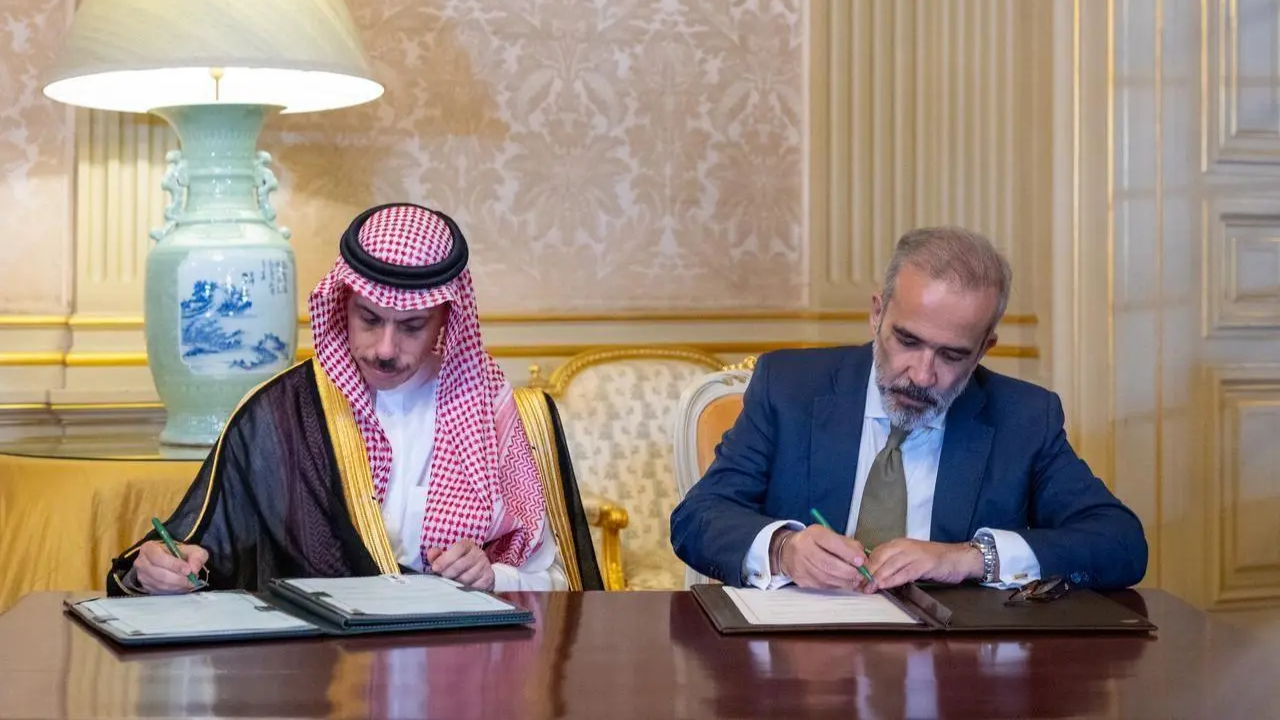
Then, a few pens moved in a quiet room, and the ink pad went dry.
Saudi Arabia and Portugal just signed an agreement that removes the visa requirement for holders of diplomatic, special, and official passports. On paper, it sounds like standard diplomatic housekeeping. It is the kind of headline that runs on page fourteen of a financial newspaper, sandwiched between shipping notices and currency fluctuations.
But headlines are bad at capturing friction. They fail to show what happens when you remove a roadblock that has defined international relations for generations. This is not about a piece of paper. It is about speed.
The Anatomy of an Open Door
To understand why this matters, look at a map from the perspective of a trade lane rather than a textbook.
Portugal is Europe’s southwestern anchor, facing the Atlantic ocean, acting as a historical maritime gateway. Saudi Arabia sits at the crossroads of three continents, currently undergoing a massive economic transformation that requires an immense amount of foreign expertise, technology, and partnership.
Before this agreement, if a Portuguese official needed to fly to Riyadh to discuss a green hydrogen partnership, the process began weeks in advance. Forms were filled. Fees were processed. Passports were couriered to embassies. The system operated on a twentieth-century timeline.
Now, look at the new reality.
A specialized engineer working for the Portuguese government receives a request to review a solar infrastructure project in the Saudi desert. Under the new pact, they pack a bag, grab their official passport, and board a flight. They walk past the long lines at the visa processing desks. They enter the country instantly.
The agreement simplifies entry, transit, and stay requirements for specific categories of travelers. By cutting the red tape for decision-makers, both nations have decided that time is too valuable to waste on administrative formalities.
The Unspoken Stakes of Modern Diplomacy
We often view international agreements through a lens of abstract statecraft. We talk about "bilateral ties" and "strategic frameworks" as if countries were blocks of marble moving across a chessboard.
They are not. Governments are made of people.
Consider a hypothetical scenario that plays out every week in the world of high-stakes negotiations. A technology firm based in Porto has developed an advanced desalination algorithm that could save millions of gallons of water in arid climates. The Saudi government wants to implement it. To do that, technical envoys and official representatives must meet face-to-face.
Video calls work for status updates, but they are terrible for building trust. Trust requires sitting across a table, drinking coffee, and looking someone in the eye when the numbers get difficult.
If those envoys have to wait three weeks for a travel permit, the momentum dies. The project stalls. A competitor from a country with fewer travel restrictions steps into the gap.
By removing the visa barrier for diplomatic and special passport holders, Saudi Arabia and Portugal have created an express lane for collaboration. They have acknowledged that in the modern economy, the fastest nation wins.
This move aligns directly with Saudi Arabia’s broader strategy to open its borders and diversify its economy away from oil dependency. The Kingdom is systematically lowering the walls that once made it one of the most difficult places on earth to visit. Portugal, meanwhile, gains a direct, frictionless pipeline to one of the largest capital deployments in human history.
The Architecture of the Deal
The mechanics of the agreement are straightforward, but the implications are vast. The deal covers multiple tiers of official travel:
- Diplomatic Passports: Used by ambassadors, high-ranking ministry officials, and state representatives.
- Special and Official Passports: Held by technical experts, state-employed advisors, and specialists dispatched to execute government-to-government projects.
This distinction is crucial. This is not just a perk for career politicians in tailored suits. It is an operational tool for the architects, engineers, and economic planners who actually do the heavy lifting of international development.
When these individuals can move across borders without hindrance, the nature of partnership changes. It becomes fluid. A Portuguese delegation can land in Riyadh, iron out a trade disagreement, and head home before the old visa application would have even been reviewed by an embassy clerk.
The Changing Global Current
The world is fracturing into regional trade blocs, yet some nations are actively choosing to build longer bridges. This agreement is a symptom of a larger shift in how countries view proximity. Physical distance matters less than bureaucratic distance.
For an individual standing in a crowded airport line, holding a standard tourist passport, this news might seem irrelevant. It is easy to look at special privileges for officials with a cynical eye.
But the decisions made by people who carry those official passports ripple outward to affect everyday lives. The renewable energy project negotiated during a frictionless weekend visit eventually powers homes. The maritime trade agreement drafted by a delegation that traveled on a moment's notice lowers the cost of goods on supermarket shelves in Lisbon.
The true value of this exemption is not the convenience it offers to a select group of travelers. It is the elimination of delay.
The metal stamping tools at the border control desks in Lisbon and Riyadh are a little quieter now. The ink pads are resting. In their place is a quiet, continuous flow of people, ideas, and capital moving between two historic corners of the world at the speed of thought.