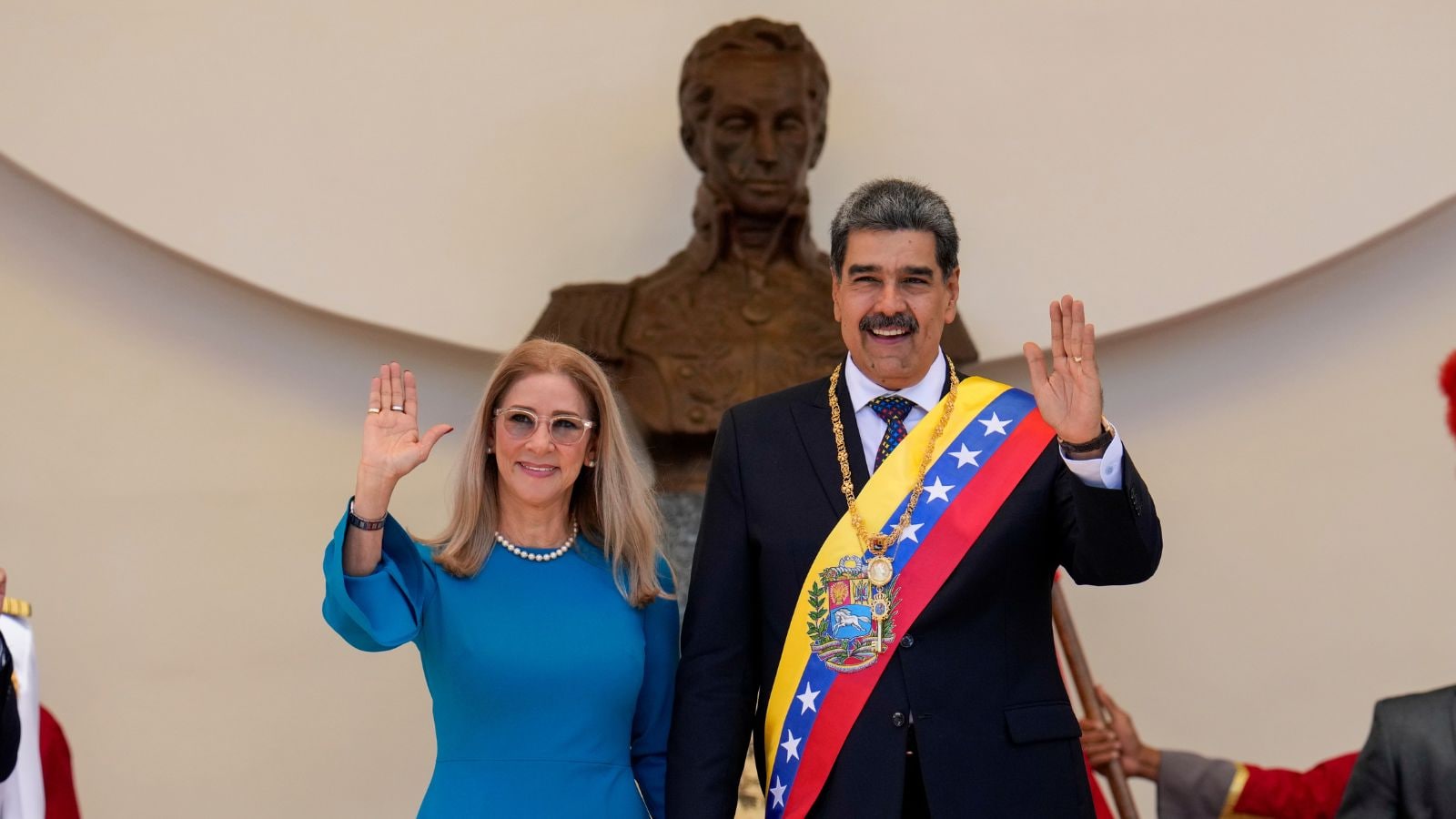
Fluorescent lights hum over a row of oak benches in Lower Manhattan. Somewhere down the hall, a bailiff clears his throat. A translator adjusts a headset. Outside on Pearl Street, sirens braid into the morning rush, while thousands of miles south, afternoon sun hits the red-brick barrios and towering office blocks of Caracas under Ávila mountain.
Listen.
That is the sound of a legal earthquake moving at the speed of a court docket.
For years, headlines around Venezuela’s leadership were framed like a ledger of contraband: tonnage, shipping lanes, illicit cash flows, and grand-jury counts read aloud in clipped legal cadence. Numbers have a way of flattening pain. A metric ton of narcotics looks neat on a chart. A sealed indictment reads like a cold blueprint. Then, in October 2026, federal prosecutors in the Southern District of New York revised their case against ousted Venezuelan President Nicolás Maduro and his wife, Cilia Flores—adding charges under a 1994 federal statute that criminalizes torture committed abroad.
Suddenly, the courtroom ledger isn't just about contraband or smuggling routes. It is about dark rooms, cold water, sleeplessness, severed pride, and whether a statute dusted off from the mid-1990s can carry the weight of what happened behind closed doors in Venezuela over more than a decade.
Why a Dormant Law Suddenly Matters
Most ordinary laws feel like guardrails along a highway you drive every day. You see the posts, you know what happens if you cross them, and you understand the traffic pattern.
A rarely invoked extraterritorial torture law is different. Think of it like a fire extinguisher bolted to the wall of a quiet hallway for thirty years—everyone walks past it, few test the gauge, and almost nobody imagines pulling the pin until smoke curls under a locked door.
Under U.S. law, federal prosecutors can pursue charges for torture committed outside the United States when an accused person is brought within U.S. jurisdiction. In practice, that authority has been used sparingly. Public court records and legal analyses show that only a small handful of individuals have been prosecuted under it, with just four convictions recorded so far—including figures tied to conflicts or abuses in Liberia, The Gambia, Syria, and Iraq.
Why so rare? Because proving torture across borders is grueling. Witnesses live far away or fear retaliation. Memories stretch across years. Prosecutors have to show severe physical or mental pain inflicted by someone acting under color of law or official authority, not merely rough policing or an isolated brawl. And defense lawyers inevitably push back with heavy shields, including arguments over sovereign immunity and whether alleged conduct meets the strict legal threshold of torture.
When prosecutors add a torture count to a case already centered on narco-terrorism, drug trafficking, and corruption allegations following Maduro’s capture in January 2026, the moral center of gravity shifts. Drugs and illicit money tell a story of greed and state capture. Torture tells a story of bodies and minds broken to hold onto power.
Inside the Invisible Stakes
When you read a legal filing from miles away, it is easy to treat phrases like "arbitrary detention," "coercive interrogation," or "cooperating witnesses" as bloodless vocabulary. That is the trap of distance. You read the noun and skip the ache.
To understand what is actually at stake in a courtroom in New York, consider a hypothetical scenario—not a single real person from the docket, but a composite sketch of how political repression ripples through ordinary families.
Imagine Elena, a schoolteacher in a mid-sized Venezuelan city who never set out to become a revolutionary. She simply marched one afternoon after prices jumped again, carried a hand-painted sign, and helped neighbors organize a food swap. One evening, unmarked vehicles stop outside her building. Knocking turns into shouting; shouting turns into zip-ties and a hood pulled down over her eyes. Days blur together in a windowless room where air conditioning blows like winter and nobody tells her what hour it is. Sleep is rationed like bread. Questions repeat until her tongue feels swollen and dry.
Even if Elena is eventually released without a conviction, the door clicks shut behind her, yet the room comes home with her. A sudden slam of a car door makes her shoulders rise toward her ears. Her brother, watching from across town, stops posting anything online and lowers his voice whenever a motorcycle slows near their gate. Her mother keeps a small bag packed near the closet, just in case, for years.
Now step back from Elena and ask: What happens when a government turns fear into an instrument of governance?
That is the human question sitting beneath the revised indictment. Court documents allege a systematic campaign of detention, abuse, and intimidation targeting political dissidents, military personnel, and U.S. citizens during Maduro’s rule—allegations that Maduro and Flores have flatly denied, with Maduro maintaining his innocence and pleading not guilty, and his defense team signaling a fierce fight in court.
Truthfully, watching a foreign leader’s prosecution unfold in an American courthouse can feel disorienting, even to people who follow international news closely. A part of you might wonder: Does a courtroom in Manhattan really heal anything in Caracas? Another part might ask: If a law was used so rarely before, is this a turning point for accountability or a high-stakes legal gamble?
Honesty requires admitting we don't know the verdict yet. Trials are messy. Witnesses can be cross-examined for days. Credibility is tested under harsh spotlights, as seen in past extraterritorial torture cases where juries scrutinized testimony closely or weighed conflicting accounts. Pretending the outcome is already written would insult your intelligence.
Memory, Power, and the Courtroom
History has a habit of keeping receipts long after officials assume the ledger is closed.
In Latin America and around the world, generations have wrestled with an agonizing tension: how do societies reckon with state-backed abuse when domestic courts are compromised or out of reach? Sometimes truth commissions take years to gather testimony. Sometimes international tribunals move slowly. Sometimes justice arrives decades late, if it arrives at all.
Here, the venue is a U.S. federal court, where American prosecutors argue that witnesses will testify about chain-of-command decisions and abuse inside detention centers, while defense counsel challenges the accusations and presses legal defenses. Meanwhile, politics on the ground in Venezuela continues to shift around interim leadership, diplomatic realignment, and energy and security deals—proving that legal proceedings never happen in a vacuum.
Consider what happens next: every witness who takes the stand will carry two burdens at once. First, the weight of reliving moments they spent years trying to lock away. Second, the cold mechanics of proof—dates, locations, who gave what order, who stood in the doorway.
Lawyers live in precision. Survivors live in memory. Bridging those two worlds is the hardest work in any human rights prosecution.
A verdict in New York cannot erase a scar on a wrist or give back a stolen youth. It cannot quiet every siren or mend every fractured family.
Yet there is something unmistakable in forcing allegations of systematic abuse out of dark rooms and into daylight under oath. Silence protects abusers. Daylight demands names, dates, and answers.
Long after the gavel falls on the final motion, a former prisoner will still wake at three in the morning to the sound of wind against a windowpane—and know that somewhere far away, a stranger finally had to listen.
US Prosecutors Use 1994 Law to Strengthen Torture Charges
This video provides additional news coverage and commentary on how U.S. prosecutors are applying the 1994 torture statute in the case against Maduro and Flores.

