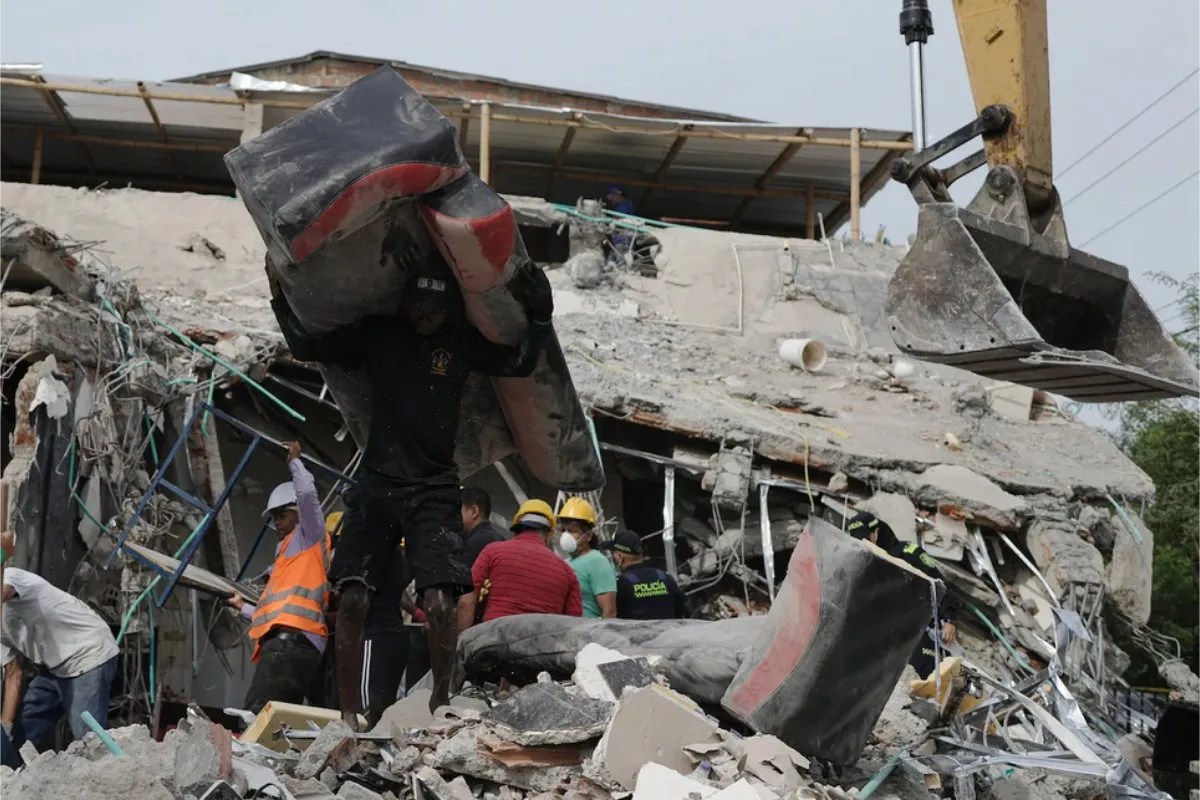
When a massive 7.4-magnitude earthquake tore through western Colombia on August 10, the immediate shockwaves rattled buildings, shattered infrastructure, and instantly upended hundreds of thousands of lives. Official reports now place the death toll at 329, with over 4,600 people injured and hundreds still missing. But raw statistics rarely tell the full story of what happens when the ground gives way in a region already grappling with deep economic divides.
If you look past the initial breaking news counters, a much more complex humanitarian crisis is unfolding across departments like Chocó, Valle del Cauca, and Risaralda. For an alternative look, check out: this related article.
The Anatomy of a High-Impact Disaster
The quake struck at an intermediate depth of roughly 110 kilometers, sending severe tremors across western and central Colombia. Because of the depth, the shockwaves managed to ripple across a massive geographic footprint, impacting over a dozen departments and sending vibrations into neighboring countries.
Cities like Pereira and Cali bore the brunt of the structural collapses. Multi-story buildings pancaked, residential blocks were red-tagged with warnings to evacuate, and historic structures like the Cathedral Basilica of Our Lady of the Rosary in Manizales suffered catastrophic tower failures. Yet, the physical rubbles in urban centers are only half the problem. Related analysis on the subject has been shared by Reuters.
Why Chocó and Rural Areas Face the Steepest Climb
The epicenter near San José del Palmar landed squarely in Chocó, one of Colombia’s historically most neglected and impoverished regions. Here lies the stark disparity of disaster impact. While major cities receive immediate media coverage and rapid heavy equipment deployment, remote riverine and Indigenous communities find themselves largely cut off.
Road networks were fragile long before the tectonic plates shifted. Landslides triggered by subsequent rains have choked off mountain passes, turning supply delivery into a logistical nightmare. Local medical clinics in places like Quibdó were instantly overwhelmed, forcing doctors to evacuate patients with multiple fractures to Medellín simply because local facilities lacked the staff and supplies to handle a catastrophe of this scale.
Organizations like Doctors Without Borders and various international agencies have rushed mobile health clinics into the hardest-hit neighborhoods to treat trauma wounds and manage chronic conditions. Beyond physical injuries, mental health professionals report a massive surge in psychological trauma. Survivors are battling severe hypervigilance, insomnia, and deep-seated anxiety triggered by more than 160 aftershocks.
Navigating the Long Road to Recovery
Rebuilding isn't just about clearing debris or patching up cracked walls. Over 30,000 homes have been completely destroyed, leaving tens of thousands of families in temporary shelters or sleeping outside out of fear that damaged roofs might collapse.
Government entities have initiated emergency economic stipends and begun routing construction materials to jumpstart recovery. However, local leaders emphasize that short-term humanitarian relief is nowhere near enough. The agricultural sector faces severe disruption, threatening upcoming harvest cycles and local food security in regions that rely heavily on subsistence farming.
If you are looking to support recovery efforts, focus on reputable humanitarian organizations currently boots-on-the-ground in Chocó and the coffee-growing highlands. Prioritize verified funds that target long-term housing reconstruction and rural medical supply chains rather than temporary fixes. The real test for Colombia begins now, long after the cameras leave the rubble.