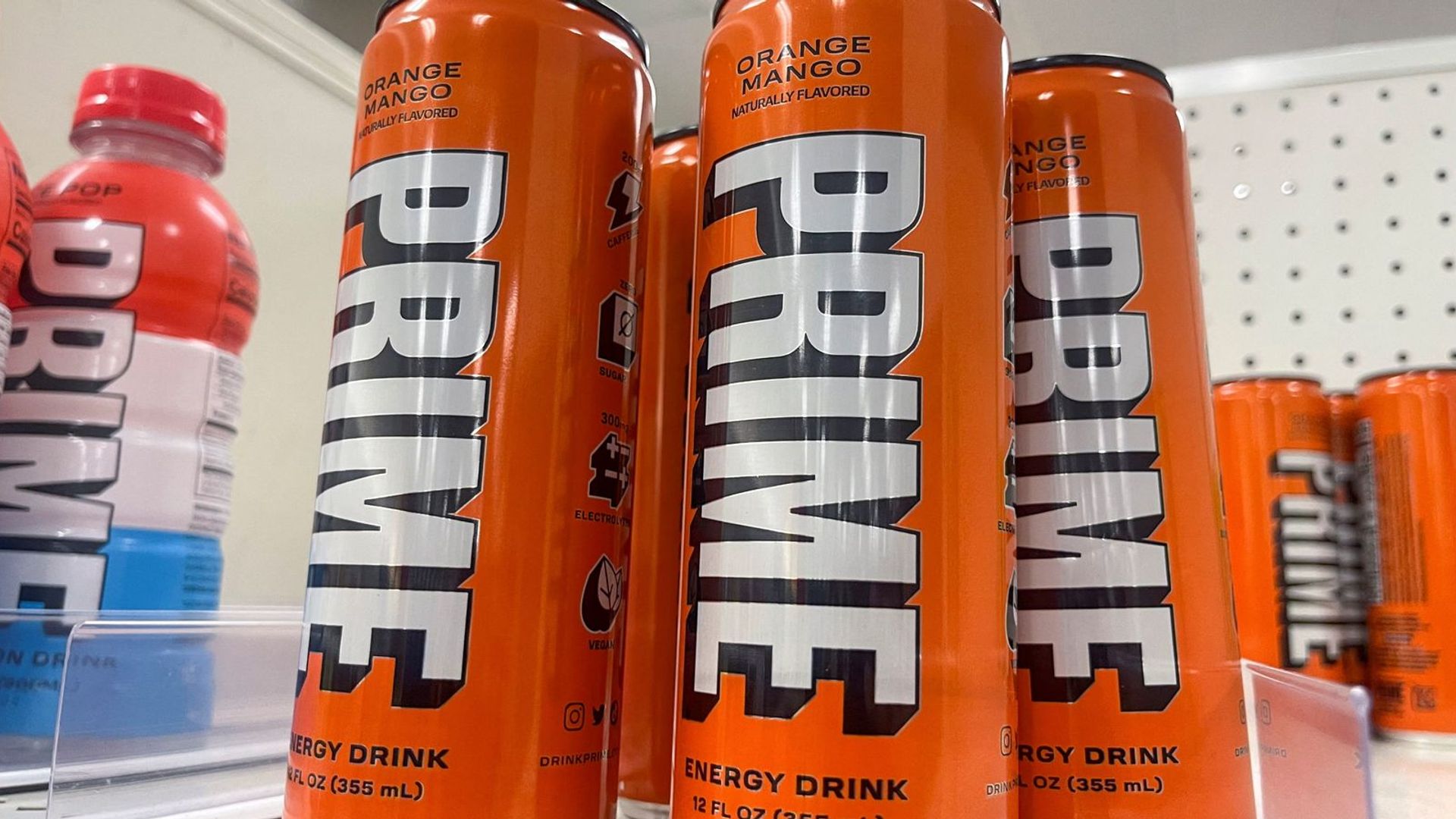
The neon aluminum can sits on the corner of the desk, sweating tiny beads of condensation onto a half-finished math worksheet. It is 8:15 AM.
Consider a hypothetical but entirely typical teenager named Leo. He is fourteen years old, sitting in a drafty classroom in Manchester, trying desperately to focus on quadratic equations. His eyes are heavy, the result of a late-night gaming session that bled into the early hours of the morning. To survive the school day, Leo did what roughly 100,000 other children in England do every single day. He walked into a corner shop, handed over a couple of coins, and bought a high-caffeine energy drink.
The first sip is sweet, a shock of artificial citrus and carbonation. The second sip brings the rush. Within twenty minutes, Leo’s heart is thumping a frantic rhythm against his ribs. His hands tremble slightly as he grips his pen. He feels awake, yes, but it is an unstable, brittle kind of alertness.
By third period, the artificial high begins to fracture. The energy vanishes, leaving a hollow, jittery exhaustion in its wake. Leo cannot concentrate. His chest feels tight with a sudden, unprovoked wave of anxiety. When the teacher asks him a direct question, he snaps, his irritability flaring before he can catch it.
We have treated these brightly colored cans as harmless adolescent fuel for years. We laughed at the ridiculous branding and ignored the heavy, chemical scent wafting through school hallways. But the experiment is ending.
The British government announced a sweeping piece of secondary legislation under the Food Safety Act 1990. Starting in April 2027, selling high-caffeine energy drinks to anyone under the age of 16 in England will be illegal. The restriction targets any beverage containing more than 150 milligrams of caffeine per liter. It covers every corner of commerce: supermarkets, high street shops, vending machines, and online retailers.
To understand why this matters, you have to look past the political announcements and into the biology of a developing brain.
The Chemistry of a Playground Crash
It is easy to minimize the impact of caffeine. Most adults rely on a morning coffee to function, so seeing a teenager with an energy drink can feel entirely normal. This is a profound misunderstanding of scale.
A single standard can of a popular energy drink can pack the same amount of caffeine as two strong espressos or four cans of traditional cola. When that payload hits the metabolism of a fourteen-year-old, the system goes into overdrive.
As someone who spent years working in youth community centers, I have seen the physical reality of this cycle up close. You can track the timeline of a afternoon delivery by the sudden shift in the room's volume. First comes the chaotic, screaming burst of hyperactivity. The kids bounce off the walls, loud and aggressive. Then, inevitably, comes the collapse. The room goes quiet, filled with slumped shoulders, dark circles under bloodshot eyes, and a palpable, low-simmering hostility.
Public Health Minister Sharon Hodgson noted that the evidence of harm to children's sleep, anxiety levels, and classroom concentration is now undeniable. This is not about a minor sugar rush. This is about a daily neurological rollercoaster that disrupts the basic foundations of learning and emotional stability.
Consider the mathematical reality of what is currently happening in the UK. Youth activists point out that while consultations and debates have dragged on, roughly five high-caffeine energy drinks have been sold to children every single second. That is a relentless, unrelenting river of stimulants flowing directly into playgrounds.
An Unequal Epidemic
The burden of this habit does not fall evenly across society. Data from the recent government consultation reveals a stark socioeconomic divide: children living in more deprived areas and households are significantly more likely to consume these high-caffeine drinks daily.
Why do energy drinks thrive in working-class neighborhoods? The answer is a mix of marketing, economics, and environment. When you are tired, stressed, and looking for a cheap calorie dense pick-me-up on the way to school, a pound coin spent on a cold, sweet can feels like a logical choice. The brands know this. They market aggressively through online influencers, gaming streams, and sports sponsorships, embedding these products into youth culture as symbols of status and vitality.
The cost, however, is extracted later. It is paid in the form of dental decay, chronic sleep deprivation, and a widening achievement gap in classrooms. A child who cannot sleep because they consumed 160mg of caffeine at 4 PM is a child who will fail their morning exam.
Many major supermarket chains had already instituted voluntary bans on selling these drinks to minors, recognizing the ethical tightrope they were walking. But voluntary measures are inherently leaky. A teenager turned away at a major supermarket checkout simply had to walk fifty yards down the road to a small independent convenience store or a poorly monitored vending machine to get their fix.
The new law levels the playing field. It places the legal responsibility squarely on the retailer, backed by the threat of trading standards inspections and fines reaching up to £2,500 per violation.
Drawing the Line
Predictably, any government intervention into what people eat or drink triggers immediate accusations of the "nanny state" overreaching its bounds. Critics ask where the line should be drawn. If we ban energy drinks, do we ban chocolate? Do we ban traditional soft drinks?
The legislation draws a highly specific, scientific boundary. Traditional sodas like Coca-Cola and Pepsi, alongside ordinary tea and coffee, are explicitly exempt from the ban. The law is hunting a specific predator: ultra-high-caffeine concoctions formulated to be consumed rapidly and in large quantities by young people.
This policy is not a sudden, knee-jerk reaction. It is the culmination of years of grassroots campaigning by parents, teachers, and public health advocates who have watched the classroom environment deteriorate. They have lived with the reality of trying to teach a room full of children who are simultaneously exhausted and wired.
When April 2027 arrives, the morning routine outside school gates will look different. The corner shop counters will no longer be a frictionless pipeline of cheap stimulants to minors.
Change is always uncomfortable, and enforcement will undoubtedly face hurdles in the initial months. Shopkeepers will have to ask for ID; teenagers will complain about the inconvenience. But as the neon cans disappear from backpacks and desks, a quieter, more stable environment will take their place.
Back in the Manchester classroom, Leo’s math worksheet remains incomplete. The bell rings, signaling the end of the period. He stands up, his muscles tense, his head throbbing with the familiar dull ache of a caffeine comedown. He tosses the empty can into the bin, where it clatters loudly against the metal rim. It is a small, hollow sound, but it represents a heavy habit that an entire generation is finally being forced to drop.

.png?width=1200&auto=webp&trim=0%2C0%2C0%2C0)