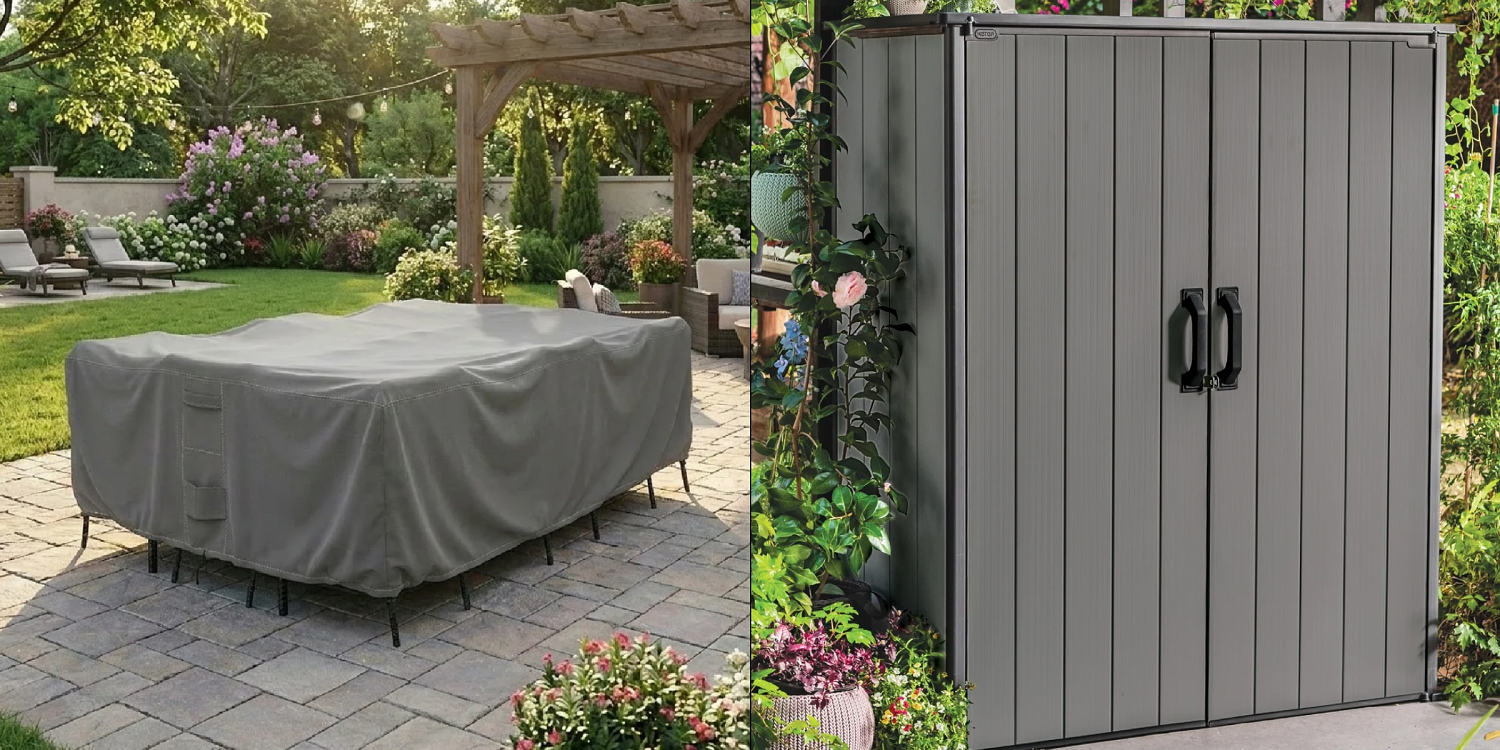
Every autumn, millions of homeowners wheel their patio chairs into the garage, flip their tables upside down, and toss a cheap plastic tarp over the pile. They think they are protecting their investment. They are usually doing the exact opposite.
Winter outdoor furniture storage is treated as an afterthought, an annoying chore executed in the brisk chill of late November before the first heavy snowfall. But behind the annual scramble for seasonal covers and discounted garage hooks lies a quiet financial drain. The retail industry loves this cycle. They sell cheap covers that trap condensation, promote mold, and degrade under UV stress within a single season, ensuring you return to the store every few years to replace what should have lasted a decade. Meanwhile, you can find other developments here: The Garage Experiment That Outlived Corporate America Bureaucracy.
Understanding how seasonal weather actually destroys materials reveals why standard winter prep fails. When moisture gets trapped beneath a non-breathable vinyl cover and temperatures plunge below freezing, that trapped water expands. Teak splits, powder-coated aluminum blisters, and synthetic wicker snaps under the pressure of expanding ice crystals.
The Material Breakdown
Different materials demand entirely different preservation strategies. Treating every piece of furniture the same way is the primary reason pieces fail prematurely. To understand the full picture, we recommend the recent report by Bloomberg.
Teak furniture is famous for its durability, courtesy of natural rubber and oil content. Left unprotected through a freeze-thaw cycle, the wood will silver and weather, which many owners actually prefer. However, untreated moisture trapped against the joints causes structural rot far more destructive than surface discoloration. If you leave teak outdoors uncovered, ensure the drainage holes are clear and the legs are elevated off resting snow packs.
Wrought iron and cast aluminum present a different vulnerability. While heavy iron handles winter weather well, a single microscopic scratch in the powder coat allows moisture to reach bare metal. Rust takes hold beneath the surface paint, expanding outward until entire sections flake away. Before storing iron furniture, inspect every joint for hairline fractures in the finish. A dab of rust-inhibiting touch-up paint in October prevents structural failure by spring.
Synthetic resin wicker has largely replaced natural rattan for good reason, but cheap polyethylene weaves are notoriously vulnerable to cold cracking. When temperatures drop below freezing, poor-quality plastic loses its plasticizers, becoming brittle. If a heavy snow load rests on a brittle synthetic wicker sofa, the strands snap under the weight. Storing these pieces in a shed or garage is non-negotiable if you want them to survive past year three.
The Cover Trap
The market is flooded with discounted winter furniture covers promising heavy-duty protection. Many of these products are engineered to fail.
Polyethylene tarps create a greenhouse effect. When the sun hits a covered patio set on a cold winter afternoon, the temperature beneath the tarp rises, drawing moisture up from the frozen ground or melting frost. When the sun sets, that moisture condenses against the underside of the plastic sheet, creating a constant bath for your cushions and frames.
High-performance storage requires breathable fabrics like marine-grade solution-dyed polyester paired with integrated vent flaps. These vents allow trapped vapor to escape while shedding rain and snow. Furthermore, flat covers pool water. If you must leave furniture on an open deck, prop the center of the cover up with an inverted bucket or specialized support pole to create a pitched roof, ensuring precipitation slides off rather than soaking through the seams.
Cushion Preservation Realities
Outdoor cushions are the most frequently ruined component of any patio setup during the off-season. Storing them in a damp shed or garage invites rodents and mildew.
Fabric fibers absorb ambient moisture even when stored indoors. If you pack cushions into airtight plastic bags while they retain a fraction of humidity, mold colonies establish themselves within days, destroying the foam core permanently. The correct approach requires thorough cleaning, complete drying in direct sunlight, and storage inside breathable canvas bags elevated off concrete floors where ground dampness can wick upward.
For urban dwellers with limited square footage, storing bulky sectional cushions becomes a geometric puzzle. Vacuum storage bags are frequently recommended, but compressing outdoor foam for months at a time can permanently deform the structure, ruining the loft and support. Invest in vertical storage racks or overhead garage pulley systems that keep cushions hanging loosely rather than crushed under heavy boxes.
Rethinking the Seasonal Cycle
The annual ritual of furniture storage is shifting as climate patterns become more volatile. Traditional demarcations of winter and summer are blurring, bringing unexpected freeze-thaw cycles into months that historically remained stable.
Rrelying on cheap end-of-season sales to replace degraded inventory is an expensive habit. Spending capital on commercial-grade covers, dedicated indoor storage space, or modular furniture that disassembles flat changes the financial equation entirely. Quality outdoor furniture should last twenty years, not four. Treating the off-season with the technical seriousness it requires stops the cycle of premature replacement and preserves the functional integrity of your outdoor living space.