The notification arrives at 7:14 AM, right between a lukewarm sip of instant coffee and the dull dread of a Tuesday morning commute.
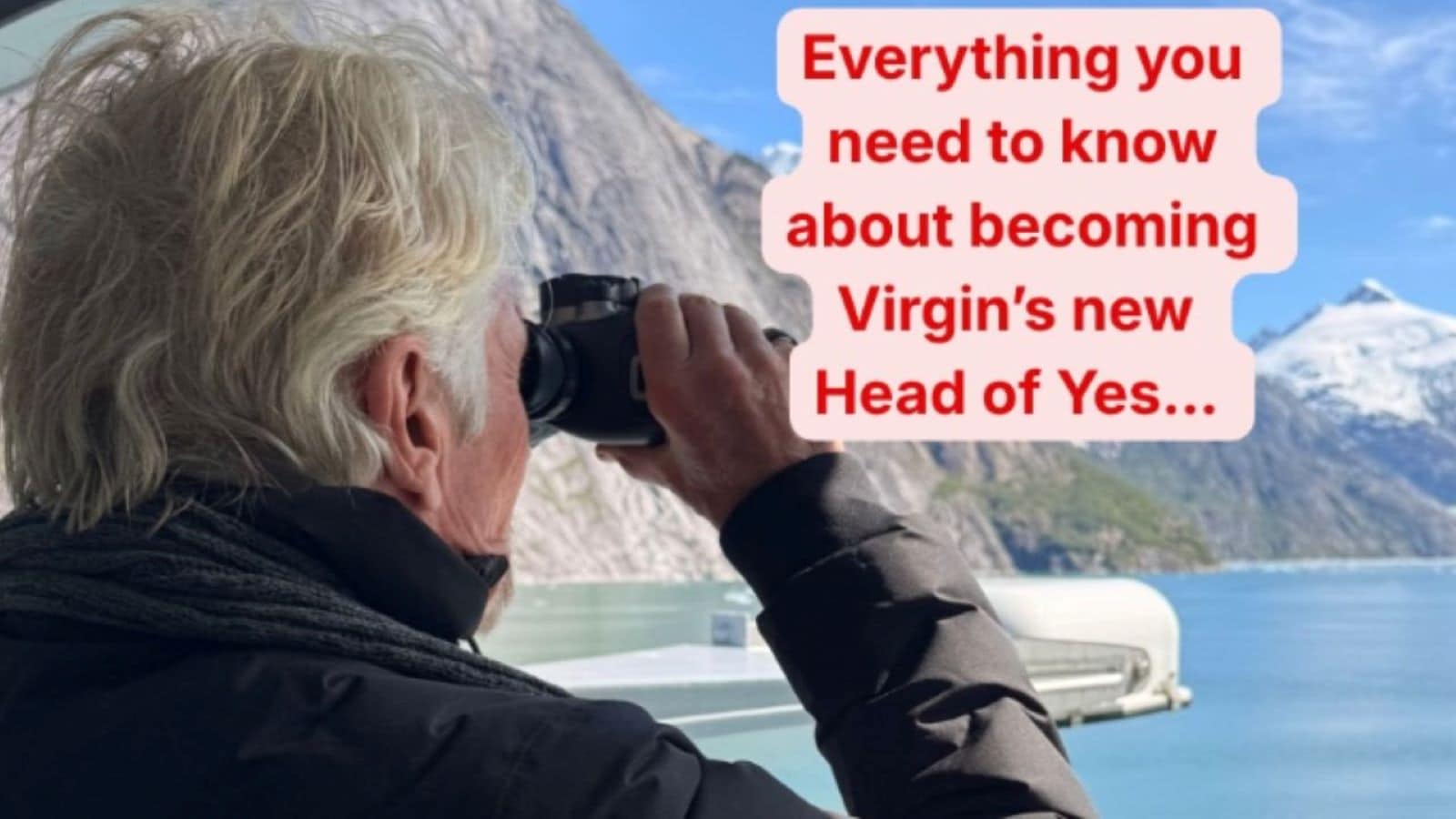
On your screen sits a headline that feels like a glitch in the simulation. Richard Branson—the billionaire with the permanent grin and a penchant for hot air balloons—wants to pay someone ₹95 lakh to travel the world for six months.
Stop.
Read that number again. Ninety-five lakh rupees. Roughly $115,000. Six months. No cubicles. No fluorescent lights humming like trapped hornets above your head. Just boarding passes, turquoise water, and a bank account that swells while you watch sunsets from places you usually only see on airport billboards.
For a brief, intoxicating second, your chest tightens. You imagine the resignation email. You picture the look on your manager’s face. You can almost smell the salt air of a Mediterranean port, feel the hum of a train cutting through the Swiss Alps, taste the street food in a night market you cannot yet pronounce.
Then reality clears its throat.
Because behind every viral "dream job" headline lies a quieter, sharper truth about what we are actually buying—and what we are selling—when we chase the ultimate escape.
The Anatomy of a Billionaire’s Bait
To understand why this offer hits us so hard in the ribs, we have to look at the math of modern exhaustion.
Consider a hypothetical character—let’s call him Rohan. Rohan is twenty-nine, works in mid-level operations in Bengaluru, and hasn’t taken a vacation longer than four days since 2022. When he sees the ₹95 lakh offer, his brain doesn't process it as a job posting. It processes it as a rescue mission.
In India, ₹95 lakh is not merely a salary; it is a generational pivot. It is the down payment on an apartment, the erasure of an education loan, the sudden, dizzying sensation of breathing room. Paired with six months of global travel, it sounds like someone offering you a winning lottery ticket and a first-class seat to paradise at the exact same time.
That is the hook.
Virgin’s brand has always been built on the theater of adventure. From transatlantic balloon crossings to commercial spaceflight, Branson understands a fundamental law of human attention: people do not share spreadsheets, they share escape hatches. When a billionaire attaches a life-changing sum of money to a six-month global itinerary, the internet does the marketing for free. Millions of people click, tag their friends, and spend forty-five minutes daydreaming instead of finishing their quarterly reports.
But here is what the glossy press releases rarely mention.
Nobody pays ₹95 lakh for you to relax.
If you are hired to travel the world for six months on someone else’s dime, you are not a tourist. You are a mobile production studio, a brand ambassador, and a full-time storyteller operating under relentless, invisible pressure.
What Six Months on the Road Actually Feels Like
I once spent four months living out of a single carry-on suitcase across eleven countries, convinced I had cracked the code to human happiness. By week six, the romance had curdled into something much stranger.
At first, every morning is electric. You wake up in a new time zone, your senses dialed to eleven. The coffee tastes different. The light hits the buildings at an unfamiliar angle. You feel alive in a way that makes your old life look like a black-and-white photograph.
Then the friction begins.
- Your internal clock shatters into pieces you cannot sweep back together.
- You spend three hours a day negotiating Wi-Fi passwords, power adapters, and delayed transfers.
- You eat dinner alone in vibrant cities, surrounded by laughing tables of locals, realizing that nobody within five thousand miles knows your middle name.
Now, add the weight of a ₹95 lakh contract to that backpack.
When you are paid to travel, every sunrise becomes a deadline. You cannot simply watch the fog lift off a fjord in Norway; you have to wake up forty minutes before dawn to set up a tripod, check the lighting, capture the b-roll, and write a caption that sounds effortless while your fingers are numb from the cold. You are not experiencing the moment. You are harvesting it.
Think of it like this: imagine being invited to the greatest banquet on earth, but your only job is to photograph the food for people who aren't allowed to eat it. By the third course, you are starving, and the sight of another gourmet plate makes your stomach turn.
The Invisible Stakes of the "Dream Job"
Why do we fall for it every single time?
Because we have been trained to believe that the antidote to burnout is geography. We think the problem is here—our desk, our city, our routine—and that the solution is there, somewhere across an ocean.
Behavioral economists have studied this for decades. It is a cousin of the "focusing illusion," a cognitive bias where we overestimate how much a single dramatic change—like moving to California or winning a six-month travel stipend—will improve our baseline happiness. We picture the highlight reel of the six months. We completely edit out the Tuesday afternoons spent sitting on an airport floor in Frankfurt with a dead phone battery and a stomachache.
Yet, dismissing the offer as a mere publicity stunt misses the point entirely.
The ₹95 lakh offer is real in the ways that matter most: it forces a confrontation with what we value. Even if only one person in a million actually boards that plane, the other 999,999 are left staring at a mirror.
Ask yourself honestly: if someone handed you ₹95 lakh tomorrow on the condition that you spend six months constantly moving, constantly documenting, and constantly performing joy for an audience of strangers, would you take it?
Most of us would say yes without blinking.
And that yes tells a story. It tells us how desperate we are for a break from the predictable. It reveals how deeply we crave a life where our time feels like our own, even if we have to rent it out to a billionaire to get a taste of it.
The Fine Print Nobody Reads
If you are genuinely considering throwing your hat into the ring for a global travel role like this, strip away the daydreaming for five minutes and look at the mechanics.
Companies offering massive stipends for six-month voyages—whether it is a cruise line, an airline, or a hospitality conglomerate—are looking for a very specific kind of human being. They do not want someone who wants a vacation. They want someone who treats wonder like a craft.
- Stamina over glamour. Can you smile through a fourteen-hour layover and still deliver coherent, charismatic video by 9:00 PM?
- Voice over vanity. Anyone can point a camera at a beach. The rare skill is making a viewer in a cramped apartment feel the grit of the sand between their toes.
- Adaptability under pressure. Flights cancel. Luggage vanishes. Local guides don't show up. The person who panics loses the shot; the person who pivots gets the story.
There is also the taxman, the visa labyrinth, and the strange, hollow thud of returning home.
Six months is long enough to outgrow your old life, but not quite long enough to build a new one. You come back with a hard drive full of footage, a healthier bank account, and a circle of friends who have moved on without you. You sit at your favorite neighborhood café, and everything looks slightly smaller than you remember.
That is the quiet tax of radical adventure. You never quite fit back into the box you climbed out of.
The Real Ticket Out
So where does that leave Rohan, sitting at his desk in Bengaluru with his cold coffee and a browser tab open to Richard Branson’s latest headline?
Maybe he applies. Maybe he spends his weekend filming a sixty-second audition tape in his living room, trying to convince a panel of judges in London or New York that he has the spark they are looking for.
And maybe, by some miracle, he wins.
Or maybe—and this is the part that actually changes his life—he doesn't win, and for the first time in three years, he realizes he doesn't need ₹95 lakh to stop living on autopilot.
He looks at the calendar. He books a four-day train trip to the coast. He leaves his laptop on the kitchen table. He sits on a wooden bench watching the tide roll in, with nobody paying him to film it, nobody waiting for an upload, and nobody owning a single second of his afternoon.
The plane ticket is already in your pocket. You just have to decide who gets to hold the camera.