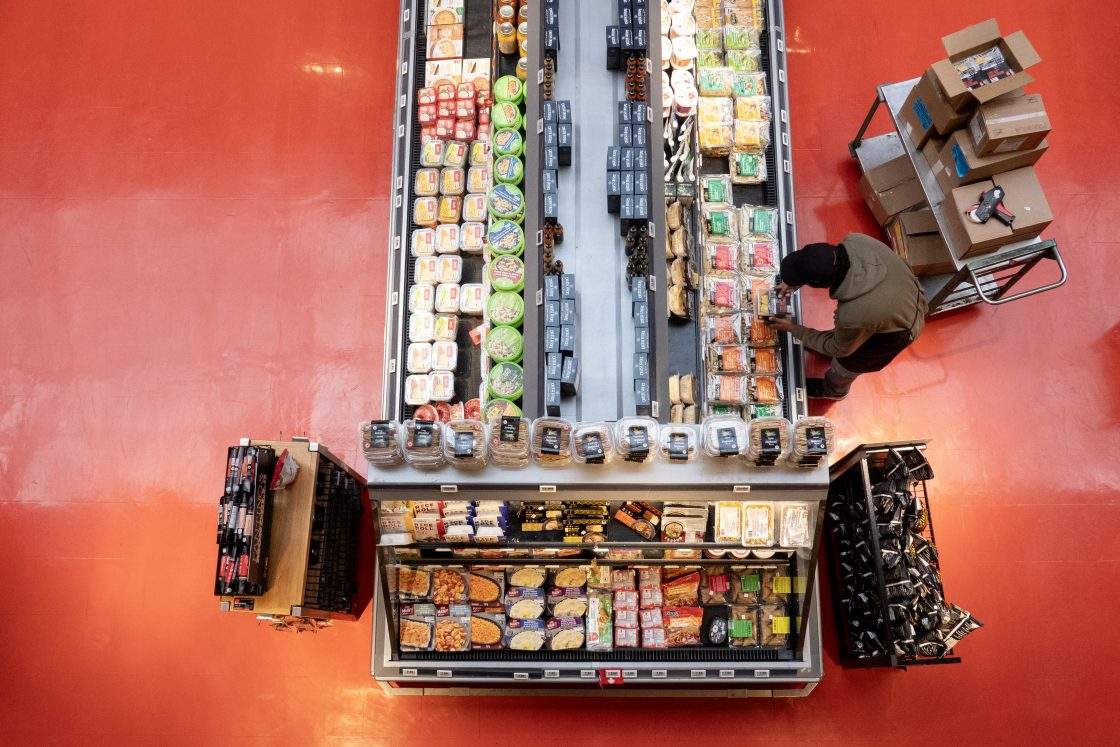
Food prices are heading toward another painful upward spike, and the primary catalyst has little to do with poor crop yields or seasonal weather patterns. A persistent shock in the diesel fuel market is quietly bleeding through the logistics skeleton of the global economy. When it costs significantly more to fill the tank of an 18-wheeler, a combine harvester, or a freight train, those expenses do not vanish into corporate ledgers. They migrate down the line until they land squarely on the supermarket receipt.
For months, mainstream coverage treated high fuel prices as a transient headline, a temporary fluctuation tied to crude oil ticks. That assessment misses the structural reality of modern supply chains. Diesel is the literal blood of physical commerce. Every head of lettuce, every crate of poultry, and every bag of grain travels multiple legs of a complex journey before reaching a retail shelf. Understanding how these fuel spikes translate into elevated grocery bills requires looking past the retail counter and examining the mechanics of freight economics. Don't forget to check out our previous article on this related article.
The Mechanics of the Freight Transmission Belt
To grasp why grocery prices respond so sluggishly—and then so stubbornly—to energy costs, one must examine the time lag inherent in supply chain logistics. When wholesale fuel spikes, the immediate impact hits independent truck drivers and mid-sized fleets who pay spot rates at the pump. Unlike massive logistics conglomerates that lock in long-term fuel hedging contracts, smaller operators absorb the cash-flow bleeding instantly.
Consider a hypothetical mid-western agricultural distributor running a fleet of ten refrigerated trucks. When diesel jumps sharply over a multi-week span, operating expenses surge before any contractual fuel surcharges can be recalculated or approved by corporate clients. Independent operators face an immediate choice: absorb the loss or park the trucks. Many cannot absorb the margin compression, leading to localized capacity contractions. To read more about the background here, The Motley Fool provides an excellent summary.
Freight rates adjust upward as available capacity tightens. Shippers pay more to move goods from farm to processing plant, and again from processing plant to regional distribution center. By the time the packaged food arrives at a national grocery chain, the raw commodity has accumulated multiple layers of transportation surcharges.
Economists tracking consumer price indices note that energy shocks typically take months to fully materialize in food categories. This delay creates a false sense of security during the early weeks of a fuel crisis. Consumers assume the economy has dodged a bullet because grocery tags remain stable while pump prices soar. In reality, the financial pressure is simply moving slowly through the pipeline, compounding at every single handoff.
Why Agriculture is Uniquely Exposed
Urban consumers often visualize supply chains beginning at the factory gate or the shipping port. In reality, the vulnerability begins deep in the rural interior. Modern industrial farming is intensely petroleum-dependent. Plowing, planting, irrigating, and harvesting all rely heavily on heavy machinery powered by off-road diesel.
When fuel prices elevate permanently rather than oscillating day-to-day, the cost structure of primary production changes. Fertilizer manufacturing and distribution similarly rely on energy-intensive processes and heavy transport. A farmer does not absorb a doubling of fuel input costs without shifting pricing expectations for the upcoming harvest.
Furthermore, cold-chain storage adds another layer of vulnerability. Perishable goods such as dairy, meat, and fresh produce require continuous refrigeration powered by diesel generators or fuel-consuming transport units during transit. A standard shipment of beef crossing state lines accumulates fuel costs not just from the engine pulling the semi-trailer, but from the auxiliary refrigeration units keeping the cargo from spoiling.
When these cumulative inputs rise, food processors face compressed operating margins. Large food manufacturers attempt to shield themselves by renegotiating supplier contracts or shrinking package sizes—a tactic commonly known as shrinkflation. Eventually, however, the threshold of absolute cost makes margin preservation impossible through packaging tricks alone. The sticker price must move.
The Corporate Resistence to Immediate Passthrough
Supermarket chains operate on notoriously razor-thin net margins, typically hovering between one and three percent. They resist raising retail prices whenever possible because consumer loyalty in grocery retail is notoriously fragile. A shopper who notices a sudden jump in the price of staple items like milk, eggs, or bread will quickly shift purchasing loyalty to a discount competitor.
This dynamic forces grocers to act as shock absorbers for as long as their balance sheets allow. They squeeze suppliers, delay capital expenditures, and accept lower quarterly profits. Yet, this defensive posture has a strict expiration date. When wholesale supplier price lists arrive with across-the-board increases driven by sustained freight and agricultural diesel expenses, retailers must pass those costs along to protect their own viability.
The resulting price adjustments are rarely temporary. Retailers discover that consumers eventually adjust to the new baseline, making price rollbacks rare even if fuel markets eventually stabilize. Inflationary pulses ratchet the price floor upward, permanently altering household budgeting realities.
The Compounding Threat of Duration
The single most critical variable in this economic chain is not the peak price of a gallon of diesel, but the duration of the elevation. A sharp spike that retreats within thirty days gets swallowed by corporate inventory buffers and smoothed out over fiscal quarters. A sustained, multi-quarter plateau forces structural adaptations.
When high fuel costs persist, logistics providers rewrite long-term service agreements, incorporate higher baseline fuel surcharge formulas, and bake elevated transport costs into multi-year contracts. At that stage, the shock is no longer a temporary anomaly. It has been institutionalized within the cost of doing business.
Lower-income households bear the disproportionate brunt of this structural shift. Because a larger percentage of their disposable income goes toward absolute essentials like food and basic transportation, they cannot easily substitute away from price increases. Discretionary spending can be pruned, but basic caloric intake cannot. When food and transport inflation run hot simultaneously, household savings rates contract sharply, leaving families increasingly vulnerable to minor economic disruptions.
Markets continue to price in the assumption that supply chains will effortlessly self-correct. Yet, the physical reality of moving heavy goods across vast geographic distances requires energy that cannot be easily substituted or digitized. As long as diesel markets remain under severe strain, the cost of feeding a population will continue its relentless upward climb, long after the initial headlines about fuel prices have faded from public view.

