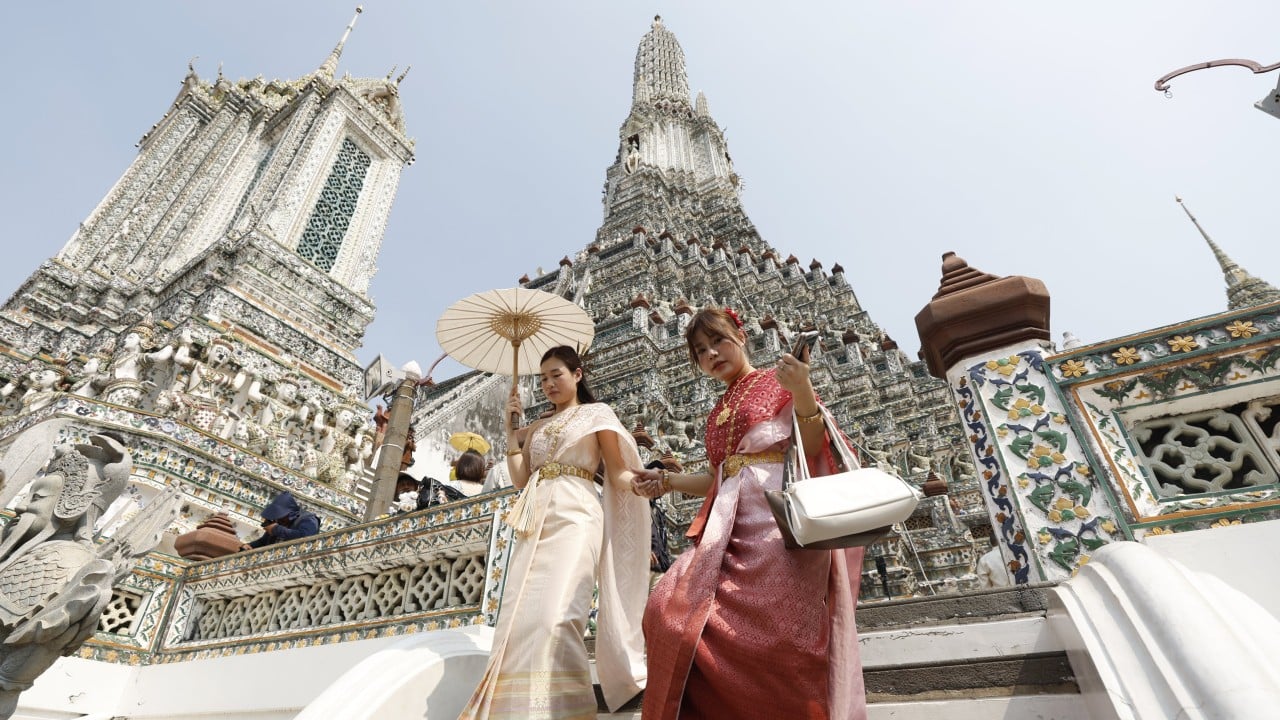
The train whistle blows at 6:14 a.m. in Hangzhou, and before the platform lights even finish dimming, three thousand people are already moving as a single, breathing tide.
Exhaustion.
That is the first thing you smell when you step onto a concourse at the start of China’s Golden Week. Not diesel, not fried noodles from the station stalls, not the sharp chemical tang of floor polish, though all three are there. It is the warm, heavy scent of hundreds of millions of people trying to compress an entire year of longing, family duty, and open road into seven frantic days.
I have stood in those stations. I have watched a grandmother press a thermos of lukewarm chrysanthemum tea into her son’s hand through a glass gate while a crowd surged behind him like water hitting a weir. I have felt the strange vertigo of paying four times the usual rate for a hotel room with paper-thin walls, only to lie awake listening to strangers argue in the hallway at two in the morning because their luggage got lost in a lobby the size of an airplane hangar.
On paper, Golden Week looks like a triumph. Hundreds of millions of domestic trips. Billions in retail and hospitality spending. Packed scenic spots, roaring highways, full flights, bustling restaurants. Economists point to the numbers and see a nation spending its way forward.
But numbers do not tell you what happens to a marriage when two exhausted people spend nine hours in a traffic jam on an expressway outside Suzhou. Numbers do not measure the ache in a hotel housekeeper’s lower back after turning over thirty-five rooms in a single shift because management refused to hire seasonal help until the week began. Numbers cannot price the quiet grief of a young engineer who only gets to see his aging parents twice a year and spends half of those precious days standing in line for a ticket to a mountain pagoda.
To understand what Golden Week really costs, we have to stop looking at the ledger and start looking at the lives pressed between the lines.
How a Seven-Day Break Became a National Stampede
Golden Week began in 1999 with a noble, practical impulse. After the Asian financial crisis of the late 1990s slowed regional trade and rattled confidence, policymakers in Beijing expanded the National Day holiday around October 1 and the May Day holiday around May 1 into seven-day breaks. The idea was straightforward: give people longer stretches of time off so they would travel, shop, dine out, and keep domestic consumption humming. (Over time, May Day’s seven-day stretch was shortened to a multi-day holiday, leaving the October National Day break and the Spring Festival around Lunar New Year as the flagship mass-travel windows.)
It worked. Almost too well.
Think of it like opening a floodgate on a dam that has been held shut for twelve months. When millions of workers share the exact same calendar window—and when paid annual leave across many industries remains uneven, hard to take in practice, or concentrated in short bursts—demand does not spread gently across the year. It crashes all at once.
Consider what happens next: because everyone leaves on the same day and returns on the same day, the entire country’s transport and hospitality grid is asked to perform a miracle for one week and then return to normal for the next fifty-one.
To make the human toll concrete, let’s trace a hypothetical scenario centered on a couple I’ll call Lin and Wei. They aren’t real people, and their story is invented, yet every detail comes straight from patterns I have witnessed firsthand across China’s peak travel seasons.
Lin works in graphic design in Shenzhen; Wei manages logistics in a quieter inland city. Both have demanding schedules where taking a random Tuesday off in November feels like a career risk. So when October arrives, Golden Week is their window. They book high-speed rail tickets the minute they go on sale, snatch up a boutique guesthouse near an ancient water town at nearly triple its off-peak price, and pack light—only to realize at the station that "light" still means weaving through dense crowds with rolling suitcases while children cry and loudspeakers bark reminders about baggage dimensions.
By day three, the romance of the getaway has thinned out. The water town’s narrow stone lanes are shoulder-to-shoulder. Taking a photo of a lantern-lit canal means waiting forty minutes just to stand on a bridge without forty strangers in the frame. Dinner takes two hours because every restaurant has turned away walk-ins and is running on a skeleton crew stretched past breaking point.
Lin snaps at Wei over a missed turn. Wei snaps back because his feet hurt and he hasn’t slept more than five hours a night since the trip started. Neither of them is a cruel person. They are just two tired humans trapped inside a bottleneck designed by timing.
The Invisible Bill Paid by Workers and Hosts
When travelers complain about Golden Week, they usually talk about crowds, prices, and delays. Those are real frustrations, and I won’t pretend otherwise—paying peak rates for a subpar experience stings, and standing packed like commuters on a subway car when you thought you were going on vacation is maddening.
Yet the steeper cost often falls on the people who keep the holiday running.
Running a hospitality business in China is already a high-wire act. Margins in many food-and-beverage and lodging operations can be razor-thin once rent, utilities, platform commissions, and ingredients are accounted for. A surge of Golden Week visitors can rescue a struggling restaurant or inn after a sluggish spring or summer. If you run a family guesthouse in a scenic village, those seven days can feel like the harvest season—you work until midnight, smile until your cheeks ache, and hope the revenue cushions the quieter months ahead.
There is a catch, though, and it’s a painful one.
Many small operators cannot afford to keep full-time staff idle for eleven months just to have extra hands for seven days. When the rush hits, existing workers absorb the shock. Dishwashers stay past midnight. Front-desk clerks handle angry guests whose flights were delayed or whose rooms aren’t ready because the previous occupants checked out late. Delivery riders and ride-hail drivers push longer hours to capture surge demand, trading sleep and safety for extra yuan.
I remember talking to a young hotel manager in Guilin after a holiday rush. She had dark circles under her eyes and a voice that sounded like sandpaper. "People think we’re printing money when the hotel is full," she told me quietly. "They don’t see the broken air conditioner we couldn’t get a technician to fix until tomorrow, or the three staff members who quit the week after because they couldn’t take the yelling."
That is the paradox that makes this topic so tangled—and honestly, a little unsettling to think through. If you’re a worker who gets one long break a year, you want Golden Week to exist. If you’re a small business owner trying to survive in a competitive market, you need the customer traffic. Condemning the holiday outright ignores real livelihoods and real joy. Celebrating the headline spending numbers without noticing the strain ignores real human wear and tear.
Both truths sit side by side. Pretending only one exists is lazy thinking.
Why Peak Travel Hurts the Places We Love Most
Travel is supposed to widen the world. Done well, it slows your pulse, sharpens your curiosity, and leaves a place slightly richer—or at least no worse off—for your having visited.
Peak-season mass tourism does the opposite. It turns places into stages.
Walk up a famous mountain trail or through a historic district during Golden Week and you feel the weight of sheer volume. Trash bins overflow faster than crews can clear them. Fragile ecosystems—alpine meadows, coastal paths, ancient stone steps—take years of foot traffic in a single week. Local residents step outside their front doors and find their quiet neighborhood alleys choked with tour groups, selfie sticks, and idling buses.
We can think of it like a garden hose cranked to full blast inside a delicate greenhouse. The water is life-giving in measured drops. At full pressure, it bends stems, washes away soil, and floods the floor. (That’s a metaphor, of course—ancient villages aren’t greenhouses, and travelers aren’t water—but the physics of pressure is remarkably similar.)
And what happens to the experience itself when everything is maxed out?
Prices climb. Airfares jump. Hotel rates spike. Attractions hit capacity limits, forcing visitors into rigid time slots and long security lines. Even the food can suffer: kitchens pre-prep massive batches to move volume quickly, trading nuance and care for speed. You end up paying more for less peace, less spontaneity, and less genuine connection with the place you traveled to see.
Sometimes, looking at a sea of heads stretching toward a monument, I catch myself wondering: Are we even here anymore, or are we just checking a box so we can say we went?
It’s a fair question, even if it’s uncomfortable to ask. Most people travel for good reasons—to rest, to reward themselves after months of grinding work, to give their kids a memory, to see something famous with their own eyes. Nobody sets out to feel like a sardine. Yet when millions of people are pushed into the exact same narrow calendar window, individual desire collides with collective congestion.
The Structural Knot Behind the Rush
Why hasn’t this solved itself? If everyone knows Golden Week is crowded and expensive, why do so many people still go?
Because individual choice rarely happens in a vacuum.
If your company gives you minimal paid leave—or makes taking days off feel like signaling a lack of commitment—then fixed national holidays aren’t just convenient; they are the only reliable way to take a real trip without burning your evenings and weekends. If your spouse works in education, healthcare, manufacturing, or retail, your schedules may only align during official breaks. If you live hundreds of miles from your parents, a seven-day holiday is one of the few stretches long enough to make the journey worthwhile rather than spending the whole weekend in transit.
Even when policies encourage staggered leave or flexible scheduling, workplace culture has a long memory. Habits around attendance, overtime, and availability don’t vanish overnight just because a memo is written.
There is also a deeper economic tension at play. For decades, rapid infrastructure expansion—especially high-speed rail and expressways—made long-distance travel dramatically faster and more accessible to hundreds of millions of citizens. Faster trains connected cities that used to feel worlds apart. They turned dreams of seeing the coast, the desert, or the mountains into weekend or week-long possibilities for ordinary families.
Infrastructure opened the door. The calendar still decides when everyone walks through it at once.
What Smarter Travel Looks Like When You Step Off the Treadmill
I am not going to pretend there is a single magic trick that fixes a national holiday overnight. Big systems change slowly, through policy, workplace norms, and economic shifts far larger than any one traveler.
Still, you are not completely powerless over how you experience travel—or how much of its hidden cost you absorb. Over the years, watching what works and what backfires during peak seasons has taught me a few practical lessons that can save your wallet, your energy, and your temper.
- Trade the "headline" destination for a secondary town. Famous landmarks absorb the brunt of Golden Week crowds. A lesser-known county seat or valley town thirty miles away often has similar scenery, better food at honest prices, and streets you can actually walk without bumping elbows.
- Travel in reverse or shoulder days when possible. Even shifting a trip by a day or two—or focusing on local and regional outings rather than long-haul flights and cross-country rail—can spare you the worst bottlenecks.
- Budget for friction, not just tickets. During peak windows, delays happen, lines stretch longer than estimated, and plans shift. Building buffer time and low-stakes backup options into your days keeps small hiccups from ruining the whole trip.
- Look closely at how you treat service workers. A patient tone, realistic expectations, and basic courtesy go a long way when a staff member is dealing with their hundredth stressed guest of the day.
None of these habits rewrites macroeconomic policy. They do something smaller and more immediate: they protect your humanity—and the humanity of the people serving you—when the clock is ticking loud.
Beyond the Suitcase
When I think back on the best trips I’ve ever taken, they rarely happened during the loudest, most crowded weeks of the year. They happened on ordinary mornings when a shopkeeper had time to chat, when a train car wasn’t bursting at the seams, when quiet space allowed a place to sink into my memory instead of rushing past my eyes.
Golden Week is a mirror held up to modern life. It shows how fiercely people crave rest, reunion, and wonder after long stretches of hard work. It also shows what happens when millions of people chase those same gifts through the exact same narrow gate at the exact same time.
The receipt for that week isn’t printed at the ticket counter or the hotel desk. It shows up in tired eyes, strained tempers, worn-out crews, and crowded lanes—a quiet reminder that time off only truly restores us when we aren’t sprinting just to claim it.
A suitcase sits open on a bedroom floor at midnight, half-packed with folded shirts and a charger, while outside the window the first pre-dawn trains begin to hum toward the horizon.