Imagine standing on the shoulder of Interstate 40 in Oklahoma. The wind rips across the red dirt, the sky stretches on forever, and asphalt shimmers in the heat. For nearly thirty years, this was the office of Lance Schroyer. He was an Oklahoma state trooper, a man whose daily routine involved flashing lights, speed traps, and the quiet tension of approaching a rolled-down driver’s side window.
Now, that same state trooper is being handed the keys to the most volatile, heavily funded enforcement apparatus in modern American history.
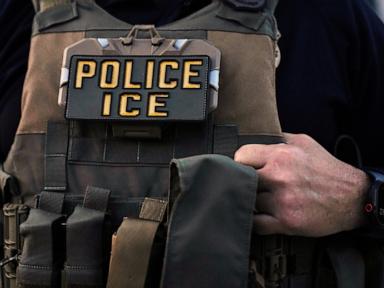
President Donald Trump announced on Truth Social that he is nominating Schroyer to be the next permanent director of U.S. Immigration and Customs Enforcement. The move fills a glaring, decade-long vacancy at the top of an agency that has been operating in a state of perpetual transition. Not since the final days of the Obama administration in early 2017 has ICE had a Senate-confirmed leader. For nine years, a revolving door of a dozen acting directors has managed the agency from the shadows of temporary appointments.
But temporary status is no longer an option for an administration that returned to Washington on an unyielding mandate for mass deportation. The stakes are immense, the financial backing is unprecedented, and the man chosen to navigate the storm is a former Marine who made his name policing the highways of America’s heartland.
The Operational Architect from the Heartland
Schroyer isn't a Washington insider. He isn't a federal attorney or a career bureaucrat from the Beltway. He is an operational law enforcement officer, a distinction that tells you everything you need to know about where the administration wants to take immigration enforcement.
To understand why Schroyer was picked, you have to look at his close relationship with the newly appointed Department of Homeland Security Secretary, Markwayne Mullin. Mullin, a former Oklahoma congressman who took over the top spot at DHS in March, has been quietly reordering his department. Earlier this month, Mullin brought Schroyer out on stage at a National Sheriffs’ Association event, introducing him as a "good friend" and a fresh addition to the DHS advisory roster.
The political alignment is exact. Trump carried every single one of Oklahoma's 77 counties in three consecutive elections. By plucking Schroyer from the Sooner State, Trump is signaling a shift away from federal gentility and toward the aggressive, boots-on-the-ground policing of the American West.
But Schroyer’s chief qualification in the eyes of the White House isn't just his 29 years in uniform. It is his mastery of a specific, controversial legal tool known as the 287g program.
Under Section 287(g) of the Immigration and Nationality Act, the federal government can essentially deputize state and local police officers, granting them the authority to act as immigration enforcement agents. In Oklahoma, Schroyer didn't just participate in this program; he spearheaded it. He ran large-scale operations that bridged the gap between local highway patrols and federal immigration databases, turning local traffic stops into the front lines of the deportation network.
Mullin praised the nomination by focusing entirely on this local-to-federal pipeline. He noted that Schroyer is coming "straight from the operational field" where he used local partnerships to remove undocumented individuals from Oklahoma communities. For an administration trying to scale operations across thousands of cities and counties, a man who knows how to turn local police into a force multiplier for ICE is an invaluable asset.
An Agency Awash in Cash and Chaos
If confirmed by the Senate, Schroyer will inherit an agency that bears little resemblance to the ICE of a decade ago.
Last year, Congress injected a staggering $75 billion into the agency. That historic cash influx has transformed ICE into an absolute juggernaut. The money allowed the agency to expand its detention bed capacity and hire an additional 12,000 enforcement officers. The machinery is built, the funding is secured, and the personnel are in place. What it has lacked is a singular, Senate-confirmed commander to direct the tide.
The vacancy at the top became acute at the end of May, when former ICE director Todd Lyons quietly resigned to take a lucrative position in the private sector. Lyons had spent over a year executing the initial phases of Trump's deportation crackdown. Since his departure, David Venturella, a former executive at a major private prison operator, has filled the void as acting chief. Venturella will remain at the helm until the Senate decides Schroyer’s fate, but the administration is urging Congress to act with absolute urgency.
Consider the reality waiting on the new director's desk. The public mood regarding aggressive immigration crackdowns has grown increasingly fractured and tense. The administration's strategy of sending surges of federal immigration officers into major American cities has provoked immense resistance.
Earlier this year, those tensions boiled over in Minneapolis. Massive federal sweeps resulted in chaotic standoffs, widespread protests, and the tragic, fatal shooting of two U.S. citizens during an enforcement action. The fallout from those deaths pushed ICE back into a defensive posture, stalling further funding packages in Congress as lawmakers debated strict new civil liberty protections, mandatory de-escalation training, and bans on racial profiling.
Secretary Mullin has promised to keep DHS out of the headlines, attempting to project a softer tone even as he aligns with the president's hardline mandates. Balancing those optics with the raw reality of mass deportation will be Schroyer's primary challenge.
The Road to Confirmation
The path through the Senate will not be a smooth ride. Legal experts and civil rights advocacy groups are already sharpening their arguments, questioning whether a state-level law enforcement official possesses the administrative depth to manage a massive federal bureaucracy with tens of thousands of employees and a $75 billion budget. Prior permanent directors have traditionally come from legal or high-level federal backgrounds.
Yet, some veteran immigration officials believe Schroyer’s outsider status might actually save him during confirmation hearings. John Torres, a former senior ICE official, pointed out that Schroyer comes to Washington without the institutional baggage that usually dooms federal appointees. He has never served in a controversial federal administration. He has never signed off on a contested federal policy. He was simply a Marine and a cop doing a job in Oklahoma.
Whether that midwestern pragmatism can survive the hyper-polarized meat grinder of a Washington confirmation hearing remains to be seen. Trump has demanded an immediate vote, posting that the Senate must "CONFIRM Lance, IMMEDIATELY — Do not delay."
The debate ahead will be fierce, loud, and deeply political. But back on the highways of Oklahoma, the asphalt still burns under the summer sun, indifferent to the shifting winds of power in the nation's capital. A man who spent three decades looking at America through a windshield is about to discover just how different the country looks from the command suite of the most powerful enforcement agency in the land.