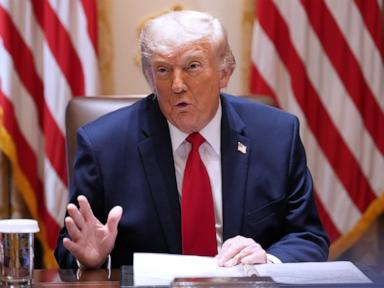
The collapse of the signature concert series for the upcoming 250th anniversary of the United States exposes a deeper systemic breakdown in how the nation plans to mark its milestone birthday. Within forty-eight hours of unveiling the musical lineup for the Great American State Fair on the National Mall, organizers watched their marquee attraction disintegrate as nearly every major artist withdrew from the event. The mass exodus turned what was marketed as a unifying civic celebration into a stark lesson in contemporary partisan branding. By Friday, the non-profit organization behind the event, Freedom 250, was left with a gutted schedule, a barrage of finger-pointing from legacy entertainers, and a president threatening to scrap the musical stage entirely in favor of a personal political rally.
The public meltdown on the National Mall is not merely a booking error or a public relations oversight. It is the predictable outcome of an intentional institutional pivot. Historically, major American milestones—such as the 1976 Bicentennial—were managed through long-planned, carefully balanced congressional commissions designed to resist the immediate gravity of whoever occupied the Oval Office. This time around, the official infrastructure was quietly bypassed. Freedom 250 emerged late last year as a lean, aggressive public-private vehicle championed directly by President Donald Trump and led by his former Under-Secretary of State, Keith Krach. By fusing the national birthday with a specific political brand, the administration created an apparatus that corporate talent agents and risk-averse musicians found impossible to navigate.
The Mechanics of the Booking Disconnect
The artists who walked away from the 16-day festival did not do so because they suddenly discovered a distaste for patriotism. They left because they realized they had been caught in a classic Washington bait-and-switch.
Interviews and public statements from the representatives of country star Martina McBride, rock frontman Bret Michaels, and legacy acts like the Commodores, Morris Day and the Time, and Young MC reveal a remarkably consistent operational failure. Universal Attractions, the talent agency representing a significant portion of the classic and legacy acts on the bill, pitched the gig to its clients as a traditional, wholesome civic exposition. Musicians were told they would be performing at a sprawling, World's Fair-style event featuring a 110-foot Ferris wheel and state-themed pavilions designed to honor veterans, teachers, and first responders.
[Announced Lineup] ---> [Public Awareness of Trump/Freedom 250 Ties] ---> [Mass Exodus]
       │                                                                      │
       └─► Martina McBride (Withdrew)                                         ├─► Vanilla Ice (Stayed)
       └─► Bret Michaels (Withdrew)                                           └─► Flo Rida (Silent)
       └─► The Commodores (Withdrew)
       └─► Young MC (Withdrew)
       └─► Morris Day (Withdrew)
The reality emerged immediately after the public rollout. The artists found their names integrated into a broader administrative promotional ecosystem. This ecosystem included white-house backed efforts to print the president's likeness on commemorative coins, stamps, and customized national passports. For a commercial artist, appearing on that stage was no longer an act of national celebration; it was a tacit endorsement of an active administration during a highly charged political cycle.
"The artists were never told about any political involvement with the event," rapper Young MC stated bluntly after pulling out of the scheduled "I Love the 90s" night. He noted that the initial paperwork structured the event as an independent, non-partisan cultural festival. It was only when industry trade publications began reporting on the deep organizational ties between Freedom 250 and the West Wing that the talent realized they had been drafted into a political production.
Martina McBride echoed this sense of professional betrayal, noting that what was presented as a grand version of a traditional state fair turned out to be something entirely different. The realization that her performance would be weaponized in ongoing cultural disputes prompted an immediate withdrawal.
For Bret Michaels, the frontman of Poison and a former winner of The Celebrity Apprentice, the calculation was even more immediate. Michaels, who has historically maintained an amicable relationship with Trump, cited rapidly escalating safety concerns for his crew and fans following the initial lineup announcement. When a civic celebration turns so toxic that an artist's security team flags credible risks before a single guitar chord is struck, the event has ceased to function as entertainment.
The Institutional Subversion of Civic Rituals
To understand how the Semiquincentennial devolved into a logistical trainwreck, one must examine the structural divergence from past national anniversaries.
When the United States celebrated its Bicentennial in 1976, the planning was overseen by the American Revolution Bicentennial Administration (ARBA). Created by an act of Congress, ARBA spent years coordinate local, state, and national events. It operated under a strict mandate to remain independent of partisan politics, ensuring that both Gerald Ford and Jimmy Carter could participate without the events feeling like campaign stops. The focus remained deliberately historical and local, diffusing tension by decentralizing the celebration.
The current administration took the opposite approach. Finding the existing, slow-moving congressional commission infrastructure too bureaucratic, the White House favored Freedom 250. This entity operates with the speed and opacity of a modern non-profit. It can secure private corporate sponsorships, bypass traditional federal procurement rules, and curate entertainment lineups without legislative oversight.
This model works exceptionally well for putting together a political convention or a high-dollar donor retreat. It fails spectacularly when trying to mount a consensus-driven national festival. By replacing traditional civic planning with a private-equity mindset, organizers overlooked the fundamental rule of major public performances: talent demands neutrality. High-profile, multi-platinum artists operate as corporations. They cannot afford to alienate half of their consumer base for a single performance fee on the National Mall.
The resulting lineup vacuum left the festival reliant on a dwindling handful of performers. Rapper Vanilla Ice, a frequent performer at Mar-a-Lago events, leaned into the controversy, declaring himself honored to play and urging critics not to take things too seriously. Meanwhile, the inclusion of 1980s pop duo Milli Vanilli descended into surreal logistical confusion. Surviving frontman Fab Morvan expressed an intent to perform, while the original studio vocalists who actually sang the tracks publicly stated they were shocked to see the group's name on the roster without their knowledge or consent. When an event's entertainment core relies on historical lip-sync controversies and polarizing internet personalities, it has lost its claim to representing the broader American cultural fabric.
The Counter-Argument and the Incompetence Debate
The reaction from the administration's allies was immediate, shifting between ideological outrage and intense internal criticism.
Conservative commentators quickly moved to frame the withdrawals as a coordinated act of cultural rejection. Critics labeled artists like McBride as capitulating to progressive pressure, arguing that a refusal to perform at an event organized by a sitting president amounted to a rejection of the country itself. This narrative suggests that the entertainment industry’s internal social pressures have become so rigid that artists would rather abandon an event honoring American history than risk the disapproval of peers.
Yet this ideological defense is complicated by sharp rebukes from within the conservative movement. Prominent figures expressed open frustration with the sheer logistical mishandling of the event. Sean Davis, the CEO of The Federalist, publicly questioned whether the organizers running Freedom 250 were actively sabotaging the administration or were simply out of their depth, calling the situation an embarrassment.
This internal critique gets closer to the operational reality. The failure was not a triumph of progressive boycotts; it was an organizational error by Freedom 250’s leadership. Experienced talent bookers know that navigating the political sensitivities of mainstream artists requires absolute transparency from day one. By attempting to obscure the political architecture of the Great American State Fair to secure signatures on a contract, the organizers guaranteed an explosive reaction once those details inevitably became public.
The Pivot to the Safe Harbor of the Rally
Faced with an empty stage and a collapsing cultural showcase, the president took to Truth Social to execute a familiar strategic pivot. Rather than attempting to salvage the musical lineup or rebuild bridges with the entertainment industry, Trump announced he was considering canceling the concert series entirely. In its place, he floated a familiar alternative: a massive personal speech and political rally on the National Mall.
In his social media post, the president brushed off the loss of the musical acts by declaring himself the top drawing card in the world, claiming audiences larger than Elvis Presley in his prime without needing a guitar.
This shift is more than a rhetorical defense mechanism. It represents the natural conclusion of the administration's approach to civic infrastructure. When a public event cannot be successfully executed under a traditional consensus model, it is stripped down and converted into a standard political rally. A rally eliminates the need for unpredictable mainstream artists. It replaces them with a highly reliable, self-selecting audience and a predictable media narrative.
For the administration, this is an operational win. A rally is cheaper to produce, easier to control, and guarantees enthusiastic coverage within favorable media spaces. For the broader public, however, the conversion of a national milestone into a standard campaign asset marks a distinct shift in how the country processes its history.
The Strategic Takeaways for Civic Planning
The collapse of the Freedom 250 concert series offers clear lessons for how large-scale public events must be structured if they are to survive a polarized media environment.
- Institutional Independence is Non-Negotiable: Major civic celebrations cannot be run out of entities tied to a specific administration. The moment a milestone birthday is linked to an active political brand, it loses the participation of mainstream corporate partners and talent.
- Transparency Drives Retention: Attempting to book talent under the guise of an independent state fair while planning a highly politicized national rollout is a short-term strategy that leads to long-term failure. Talent agencies will always protect their brands over a single government contract.
- The Privatization Model Has Limits: While public-private partnerships offer speed and flexibility, they lack the structural resilience of traditional congressional commissions. Without bipartisan oversight, these entities quickly turn into echo chambers that fail to anticipate broader market realities.
The Great American State Fair will likely still occur in some form come June 25, but its character has been fundamentally altered. The Ferris wheel will still turn on the National Mall, and the state pavilions will open their doors. But the grand cultural convergence that organizers promised has been replaced by a familiar political showdown. The chance to create a shared national moment has been traded for the predictable energy of a political rally, leaving the country to celebrate its milestone anniversary just as it lives every other day: deeply divided, fiercely dug in, and tuned to entirely different stations.