Two trains shouldn't end up on the same track facing each other. It’s the kind of fundamental system failure that’s supposed to be impossible in a country like Denmark, which pridefully markets its rail network as one of the most advanced in Europe. Yet, early Thursday morning, that’s exactly what happened near Hillerod.
A head-on collision at 6:30 a.m. left at least 18 people injured, five of them critically. While the local headlines are focusing on the "chaotic" rescue scenes and the shattered glass, the real story is much more concerning. This wasn't a freak act of nature or a derailed cargo car. This was a head-on impact on a commuter line used by students and office workers.
If you’re someone who taps your Rejsekort and trusts the signaling system to keep you alive, this accident is a massive wake-up call.
What Happened on the Tracks Near Kagerup
The collision occurred in a wooded area between Hillerod and Kagerup, roughly 40 kilometers north of Copenhagen. Two local trains, carrying a total of 38 people, were traveling toward each other on the same section of track.
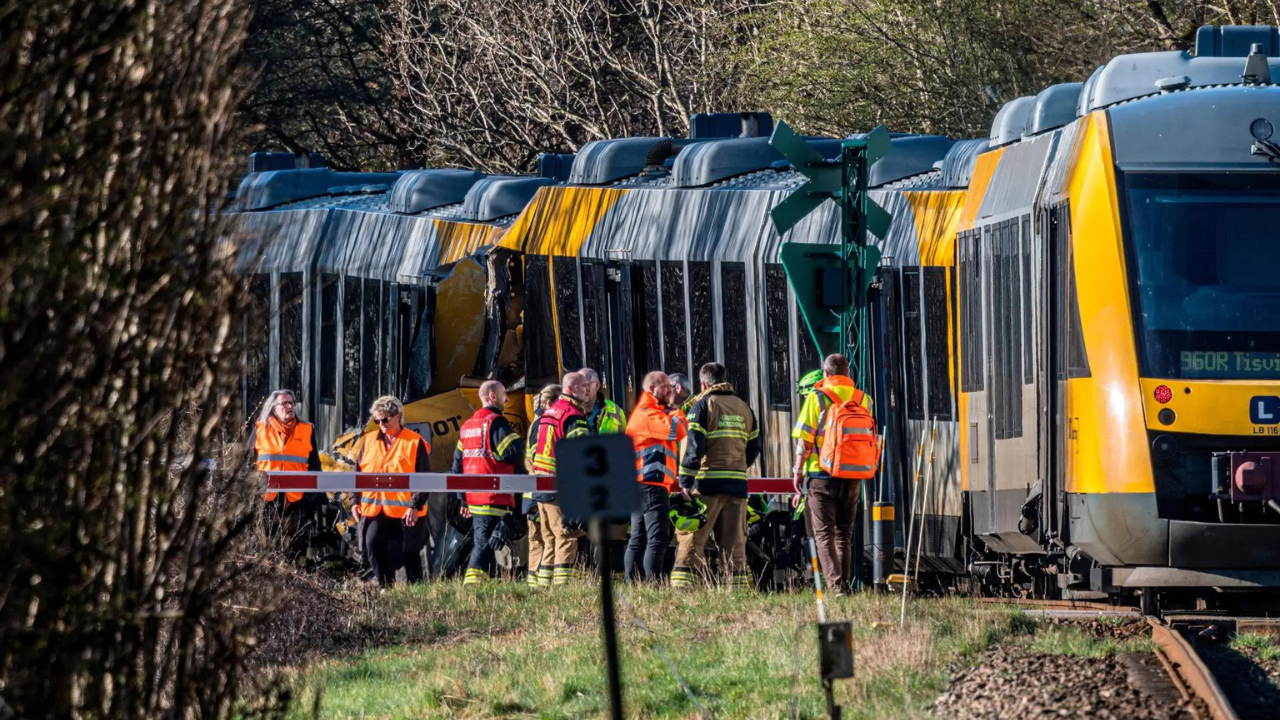
When they hit, the force was enough to accordion the front ends of the locomotives. Rescue workers described "chaotic" scenes inside the carriages. Glass was everywhere. People were thrown from their seats. Because the crash happened in a relatively rural, wooded spot near a level crossing, getting heavy medical equipment to the site wasn't instant.
The Casualty Breakdown
- 18 Total Injuries: A mix of passengers and crew.
- 5 Critical Conditions: These victims were airlifted or rushed to trauma centers; their status remains precarious.
- 13 Minor Injuries: Mostly lacerations from flying glass and blunt force trauma from the sudden stop.
By 9:30 a.m., North Zealand police confirmed that everyone had been evacuated. No one was pinned in the wreckage, which is a small miracle given how the photos of the crumpled yellow-and-grey cabs look.
The Signaling Mystery Nobody is Explaining Yet
We need to talk about why this happened. Danish rail safety is governed by strict protocols and, theoretically, automated systems that prevent two trains from entering the same block of track.
There are only three real possibilities here, and none of them look good for Banedanmark (the infrastructure lead) or the regional operators.
- Technical Signal Failure: The system "green-lit" both drivers into a single-track section. If this is the case, the entire regional signaling software needs an immediate audit.
- Human Error: One driver may have passed a "stop" signal (Signal Passed at Danger or SPAD). However, modern trains usually have automatic braking systems to prevent exactly this.
- Dispatching Conflict: A manual override or a scheduling error during track maintenance might have bypassed the automated safeguards.
Mayor Trine Egetved of Gribskov was quick to point out that this specific line is a lifeline for the community. When a "lifeline" becomes a hazard, the public trust doesn't just bounce back.
Is Denmark Losing Its Rail Safety Edge
Honestly, we’ve seen a pattern lately. While DSB and Banedanmark talk about "Future S-networks" and driverless trains coming in 2032, the current infrastructure is showing its age. Just last week, Zealand's rail traffic was paralyzed by overhead wire failures.
In 2019, we had the Great Belt Bridge disaster that killed eight people. Last year, a crossing accident took another life. Now, a head-on collision. For a small country with a high-density rail reliance, these aren't isolated "incidents." They're symptoms of a system under strain.
Investigators from the Danish Accident Investigation Board (Havarikommissionen) are currently on-site. They’ll be looking at the black box data from both trains. Don't expect an answer tomorrow—these probes usually take months to reach a "final" verdict, but the preliminary report should tell us if the signaling hardware failed.
How to Handle Your Commute This Week
If you normally take the line between Hillerod and Kagerup, don't expect a smooth ride anytime soon.
- Service Suspensions: The track is currently a crime scene and a technical investigation site. Buses are replacing trains for the foreseeable future.
- Check the App: DSB’s app is usually the first to update, but they’ve been criticized recently for poor communication during crises. Check Rejseplanen before you leave your house.
- Expect Delays on Connecting Lines: The ripple effect of a major crash often slows down the entire regional hub as equipment is redirected.
The immediate next step for the Danish transport ministry isn't just fixing the track; it's proving that the "Fail-Safe" systems actually work. If a head-on collision can happen in 2026, the current safety tech is clearly not as "safe" as we’ve been told. Keep an eye on the preliminary findings from the North Zealand police—they’ll likely be the first to hint at whether this was a computer glitch or a human mistake.