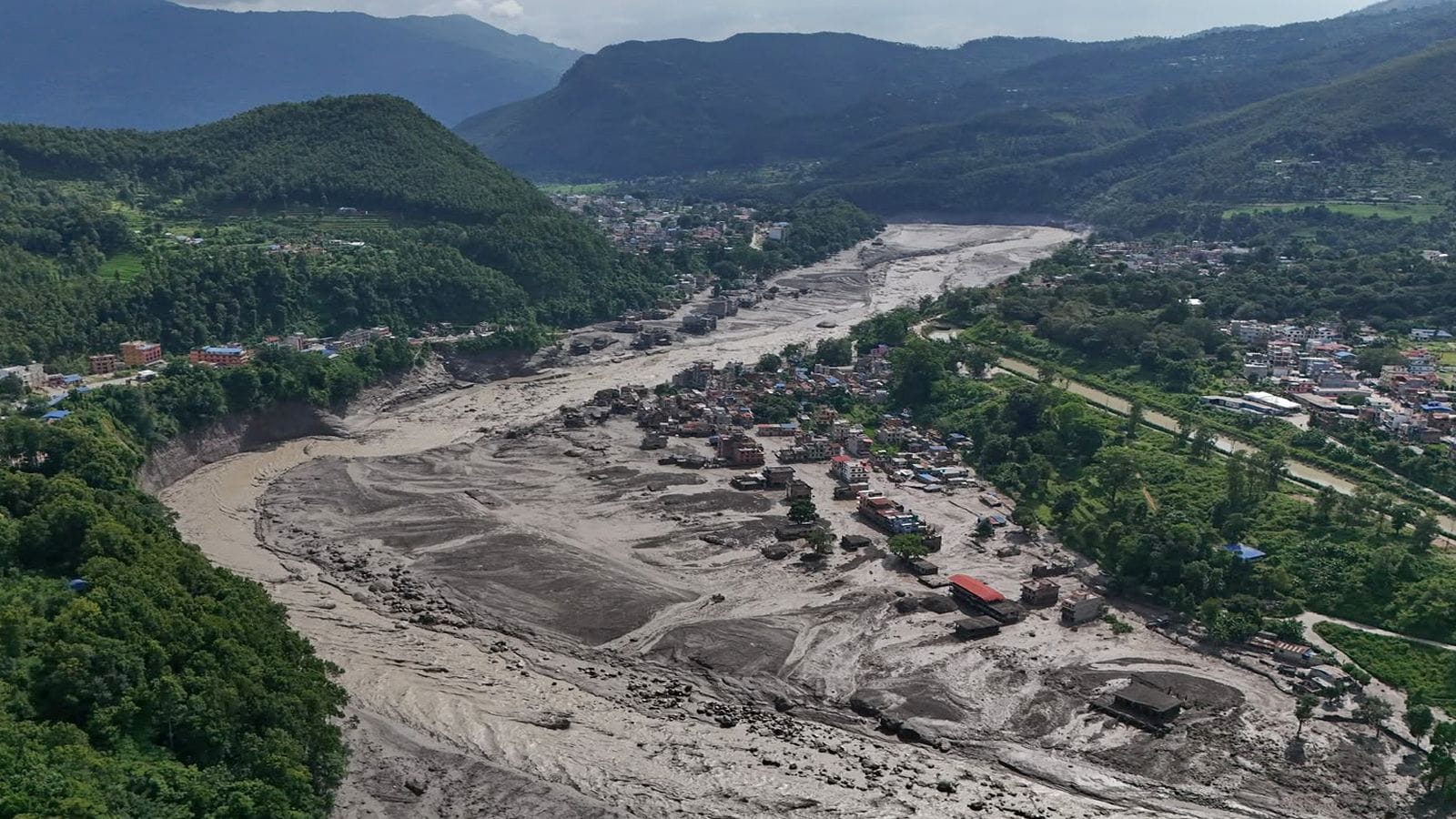
You hear about natural disasters on the news every week, but the scale of the destruction along the Himalayan frontier hits differently when you look at the numbers. A massive wall of mud, rock, and water tore through the rugged border region between Nepal and China's Tibet, leaving at least 160 people dead and hundreds more unaccounted for.
If you have ever traveled through high-altitude mountain passes, you know how fragile human infrastructure looks against raw geography. This disaster didn't happen in a vacuum. It exposes a terrifying reality about climate shifts in high-altitude zones, hitting remote valleys where rescue operations are nearly impossible to coordinate quickly. If you found value in this piece, you should check out: this related article.
What Triggered the Catastrophe
For hours, conflicting reports circulated about whether an earthquake sparked the disaster. The U.S. Geological Survey initially tracked seismic activity near the border, but subsequent data analysis clarified that the shaking was actually generated by a massive landslide of ice and rock.
An avalanche of debris broke loose roughly twenty kilometers northeast of the Rasuwagadhi border crossing. It slammed directly into the upper reaches of the Bhotekoshi River, known on the Chinese side as the Poiqu River. For another angle on this event, check out the latest coverage from NPR.
The water didn't just rise. It exploded downward.
Eyewitnesses in mountain villages like Timure described a sound resembling an earthquake right before a towering mass of sludge swallowed entire markets, police posts, and schools. Bridges vanished. Roads fractured into dust. Power grids and telecommunication lines connecting Tibet to Nepal's Rasuwa district went pitch black instantly.
The Human Toll and Missing Travelers
The timing of the flood compounded the tragedy. This rugged corridor acts as a vital transit route during the late summer months. Hundreds of foreign nationals and local residents were traveling through the area.
Nepal's Tourism Board and local authorities scrambled to process emergency logs, revealing that hundreds of tourists remained untraced. The missing list spans dozens of nationalities:
- Over a hundred Indian pilgrims traveling toward the sacred Mount Kailash and Lake Mansarovar region in Tibet.
- Dozens of travelers from Western nations, including the United States, Britain, Australia, and Canada.
- Construction personnel and engineers working on regional hydropower projects.
- Local Nepali trekkers and villagers caught unaware during the morning rush.
Governments worldwide activated emergency response protocols. Indian Prime Minister Narendra Modi spoke with Nepali Prime Minister Balendra Shah to coordinate immediate humanitarian relief and supply deliveries. Meanwhile, Chinese President Xi Jinping ordered all-out rescue operations centered around the blocked Gyirong port crossing, deploying hundreds of state security personnel and drone surveillance units.
Why This Danger is Escalating
Mountain communities face unprecedented threats from warming temperatures. Glacial thinning and shifting permafrost create unstable slopes that can fail with zero warning. Last year, a similar glacial lake overflow triggered localized destruction on the Bhotekoshi, but the sheer volume of this latest debris flow dwarfs previous events.
Experts from institutions like the International Centre for Integrated Mountain Development have warned about upstream blockages. When tons of rock and ice dam a narrow mountain river, a secondary flash flood remains a persistent threat for anyone remaining in the valleys below.
Rescue helicopters continue to battle heavy fog and swollen riverbanks in attempts to reach survivors stranded on isolated ledges. If you have loved ones traveling through the Himalayan region, monitor official advisories from local embassies immediately and avoid all rivers originating from the Tibetan Plateau.