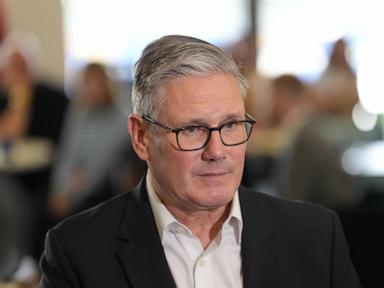
The heavy black door of Number 10 Downing Street has a way of silencing the world outside, but it cannot stop the floorboards from groaning under the weight of a crisis. Inside, the air is thick with the smell of floor wax and old paper, a scent that usually suggests stability. Today, it feels like a shroud. Keir Starmer sits at a desk that has seen empires rise and fall, staring at a resignation letter that isn't just a piece of paper—it is a crack in the foundation.
Politics is rarely about the grand speeches delivered at a mahogany lectern. It is about the quiet, devastating moments in the hallways. It is the sound of a phone vibrating on a silent desk at 3:00 AM. It is the look on a staffer’s face when they realize the boss might be losing the room. When a minister walks out, they don't just leave a job. They take a piece of the government’s soul with them.
The Anatomy of a Departure
Imagine a ship caught in a storm. The captain insists the heading is correct, but the first mate has just jumped overboard. That is the reality facing the Prime Minister. The resignation of a minister is a public declaration of a private failure. It signals that the internal arguments—the heated debates over policy, the whispered concerns about direction, the frantic attempts to steady the course—have failed.
The public sees a headline. The people inside the building see a void.
A minister’s exit creates a vacuum that nature, and the British press, abhors. It invites the question that every leader dreads: Who is next? Starmer remains defiant, his jaw set in that characteristic expression of a man who believes the law of logic can overcome the chaos of emotion. But logic is a cold comfort when your own ranks are thinning. The defiance isn't just for the cameras; it is a shield against the creeping realization that the mandate is fraying at the edges.
The Human Cost of High Office
We often talk about politicians as if they are chess pieces, moving across a board of polling data and legislative agendas. We forget they are exhausted humans working in a pressure cooker. When calls for resignation grow, they don't just echo in the House of Commons. They follow a leader home. They sit at the dinner table. They linger in the eyes of every person they meet in a corridor.
Pressure does strange things to a person. It can crystallize resolve, or it can cause microscopic fractures that eventually lead to a total collapse. Starmer is a man built on process. He is a creature of the courtrooms, where facts are king and the loudest voice doesn't always win. But the court of public opinion doesn't follow the rules of evidence. It follows the scent of blood.
Consider the hypothetical backbencher, let's call him David. David spent years knocking on doors in the rain, promising his constituents that a change in leadership would mean a change in their lives. Now, David sits in a sterile office, watching the news ticker, wondering if he has hitched his wagon to a falling star. His loyalty is not a bottomless well; it is a bank account that Starmer is drawing from every single day. If the balance hits zero, David won't be the only one walking away.
The Invisible Stakes
Why does this matter to the person waiting for a bus in Manchester or a nurse finishing a double shift in Cardiff? Because a government paralyzed by its own survival is a government that isn't governing. When the focus shifts from the cost of living to the cost of staying in power, the country pays the interest.
The invisible stakes are the policies gathering dust on desks because the people meant to sign them are too busy checking their flank. It is the lost momentum on housing, the stalled talks on infrastructure, and the general sense of drift that settles over a nation when its leaders are locked in a cage match with their own shadows.
Starmer’s defiance is framed as strength. He stands his ground. He refuses to blink. But there is a thin line between standing your ground and being stuck in the mud. The longer the calls for resignation persist, the louder they become, creating a feedback loop that drowns out actual policy. It becomes a ghost story the government tells itself every night.
The Weight of the Crown
History is littered with leaders who thought they could outlast a storm only to be swept away by a sudden gust. The British political system is brutal in its efficiency. It rewards the winners and discards the losers with a coldness that would make a Roman emperor blush.
Starmer knows this. He has spent his life studying systems and power. He knows that power is a liquid—it is hard to grab and even harder to hold onto once it starts to leak. The minister who quit didn't just resign; they opened a valve.
The calls for resignation are now coming from within the house. It is no longer just the opposition shouting across the dispatch box; it is the muffled voices behind closed doors. The Prime Minister is fighting a war on two fronts: one against a skeptical public and another against an increasingly nervous party.
In the quiet hours, when the cameras are off and the aides have gone home, the silence in Downing Street must be deafening. You can hear the ghosts of predecessors who sat in that same chair, convinced they were the exception to the rule. They all thought they had more time. They all thought the next speech, the next reshuffle, or the next show of defiance would turn the tide.
The floorboards in Number 10 continue to groan. Outside, the world moves on, oblivious to the frantic energy contained within those brick walls. But the cracks are visible now. They run through the cabinet, down the hallways, and right to the feet of the man at the desk. He remains defiant, holding the door shut against a wind that is only getting stronger.
A leader can survive a scandal. They can survive a policy failure. They can even survive a bad election. But it is nearly impossible to survive the slow, agonizing loss of faith from the people who are supposed to be holding the shield beside you. The letters are on the desk. The voices are in the hall. The clock on the mantle keeps ticking, marking the time between the defiance of today and the reality of tomorrow.