The heavy oak doors swung open at last, but the silence inside felt heavy, almost suffocating.
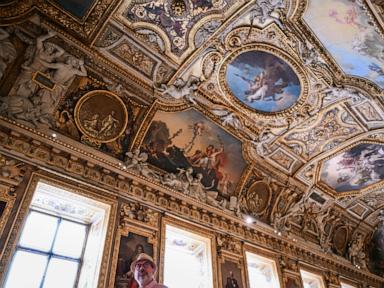
Visitors pressed past the security checkpoints, stepping into the gilded expanse of the Galerie d'Apollon. They looked up at the glittering ceiling painted by Eugène Delacroix, mesmerized by the gold leaf lining every arch. But as their eyes dropped back to eye level, the awe vanished. It was replaced by a strange, hollow sense of confusion.
The glass display cases stood empty.
Shadows. Dust outlines. Nothing else.
The Silence Where Gold Used to Be
When news broke that Paris had reopened one of its most famous halls following a brazen, daylight heist, art lovers expected a triumph. They envisioned a triumphant return to normal, a statement that culture had prevailed over crime. Instead, they walked into a gallery of ghosts.
Consider what happens next when you take away the soul of a room. The Apollo Gallery was never just a hallway; it was built to showcase the French Crown Jewels, physical symbols of centuries of power, excess, and breathtaking craftsmanship. The Regent Diamond, the Crown of Louis XV, and priceless sapphire brooches were the true anchors of the space.
Without them, the room is just a polished shell.
To understand why this feels like such a gut punch, you have to picture the sheer audacity of what happened. Thieves didn't sneak in at midnight with ropes and laser cutters like a scene from a Hollywood movie. They moved with terrifying efficiency, exploiting a brief window of vulnerability, smashing reinforced glass, and disappearing into the Parisian traffic before the alarm could even finish echoing through the marble halls.
The jewels were gone in minutes. Hundreds of years of history, vanished.
Ghosts on Display
Walk down the long parquet floor today and you will notice something peculiar. People aren't looking up at the high ceilings anymore. They are staring at the blank velvet linings inside the cases.
Some visitors whisper. Others take photos of the empty glass, as if documenting a crime scene. A tourist from Tokyo leans close, searching for a sign, a plaque, anything to explain why the museum chose to open the doors before replacing the treasures.
The museum's stance is subtle, yet stark. Reopening the gallery sends a message that the institution will not be held hostage by criminals. It claims the space itself—its architecture, its history, its light—holds value independent of the gems it once protected.
But does it?
Standing in the center of the hall, the absence feels louder than any tour guide's speech. The missing jewels act as a glaring reminder of human fragility. We build massive stone fortresses, hire guards, and install state-of-the-art security systems, convinced we can freeze history in place and protect it forever. Then, in a single afternoon, a few calculated moves shatter that illusion entirely.
What We Truly Lose When History Is Stolen
When a diamond is stolen, the loss isn't really about the monetary value of the carbon structure. Insurance companies can write a check for millions of euros, but a check cannot recreate the precise hammer marks of an eighteenth-century goldsmith. It cannot restore the physical connection to the hands that wore those gems through revolutions, coronations, and wars.
When history is taken, a piece of our collective memory goes dark.
Curators work in the shadows now, analyzing security tapes, re-evaluating protocols, and hoping for a breakthrough from law enforcement. The reality of stolen high-profile art is grim. Most items of this caliber cannot be sold on the open market. They are often broken down, stones recut, gold melted down into anonymous ingots—effectively destroying their historical identity forever to turn a quick, dirty profit.
That is the true tragedy looming over the Apollo Gallery. The fear isn't just that the jewels are in someone else's hands; it's that they may no longer exist as the masterpieces we once knew.
Standing in the Light
The sun still filters through the tall arched windows, casting warm light across the gilded moldings. Visitors keep walking in, filling the grand hall with the soft shuffle of their shoes.
They come looking for brilliant sparkle, for history made tangible, for proof of human genius preserved through time. Instead, they leave with something far more complex: a quiet, sobering confrontation with how easily the things we treasure can disappear.
The empty cases remain, waiting.