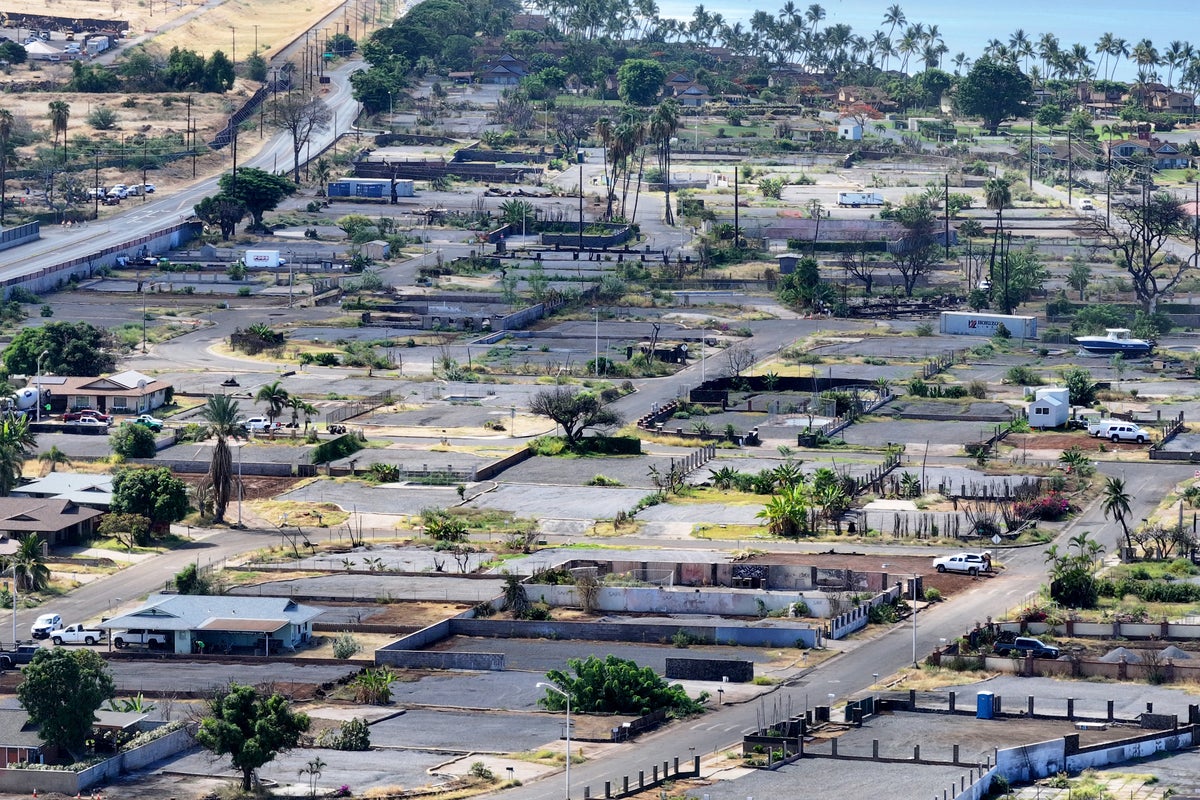
The wind didn't just carry the fire; it carried the sound of a world dissolving. If you talk to anyone who was in Lahaina on August 8, they don’t start with the statistics or the litigation. They start with the smell of the asphalt melting and the way the birds went silent before the sky turned the color of a bruised plum.
For months, the survivors lived in a state of suspended animation, moving between hotel rooms and the ruins of their lives, waiting for a number. They waited for the legal machinery of the state to grind out a value for the centuries of history, the family heirlooms, and the very soil that had been scorched down to the bedrock. When the number finally arrived—$4.037 billion—it sounded like a victory. It sounded like enough to fill the crater left behind.
It isn’t.
The Mathematics of Loss
Consider a hypothetical family: the Silvas. Before the fire, they owned a modest home that had been in the family for three generations. It wasn't a mansion, but it was theirs, and in the hyper-inflated Maui real estate market, it was their only path to staying on the island. When the firestorm leveled their neighborhood, the Silvas didn't just lose a roof; they lost their anchor.
To understand why $4 billion is a drop of water on a lava flow, you have to look at the line of people standing at the bank. There are over 10,000 individual plaintiffs. There are the insurance companies, hovering like vultures to recoup the money they’ve already paid out. There are the businesses that vanished. When you divide that massive sum among the thousands who lost everything, the math turns cruel.
By the time the lawyers take their cut—standard contingency fees often hover around 33%—and the subrogation claims from insurance giants are settled, a family like the Silvas might walk away with a check that wouldn't cover a down payment on a new home in today’s Hawaii.
The $4.037 billion settlement is a collective sigh of relief for the defendants—Hawaiian Electric, the state, the county, and Kamehameha Schools. It offers them "finality." It caps their liability. It allows their stock prices to stabilize and their boards to breathe. But for the person who lost a child or a grandmother in the smoke, finality is a luxury they cannot afford.
The Invisible Stakes
There is a specific kind of grief that comes with being told your life has a ceiling. The settlement was designed to avoid years of agonizing trials that could have tied up the recovery for a decade. In that sense, it is a mercy. Speed is a form of justice when people are living out of suitcases.
But speed has a price.
The "Global Settlement" operates on a brutal logic of pragmatism. It assumes that a partial recovery today is better than a full recovery that might never come. This is the "bird in the hand" philosophy applied to a humanitarian catastrophe. However, the cost of rebuilding in Lahaina has skyrocketed. Construction materials must be shipped in. Labor is scarce. The new building codes, designed to prevent another disaster, add tens of thousands of dollars to the cost of every single structure.
When the dust settles, we are looking at a Great Displacement.
If the payout doesn't cover the cost of a new life, the survivors are forced into a secondary disaster: exile. We are already seeing it. Families who have called Maui home for generations are packing crates and moving to Las Vegas, to Texas, to anywhere where the ground doesn't cost a million dollars an acre. The "Hollow Promise" of the settlement is that it might provide just enough money to help people leave, but not enough to help them stay.
The Shadow of the Subrogation War
The most galling part of this narrative is the invisible war happening in the background. It’s a word most people don’t know until their lives fall apart: subrogation.
When an insurance company pays you for your burnt house, they often gain the legal right to sue whoever caused the fire to get their money back. In the Maui settlement, insurance companies are fighting for a piece of that $4 billion pie. They want to be "made whole" before the people who lost their family photos and their sense of safety.
It is a clash between the cold, contractual rights of global corporations and the raw, bleeding needs of a community. If the insurers win a larger slice, the survivors get the crumbs. The legal battle over this specific point is the difference between a survivor being able to rebuild a bedroom or being forced to rent for the rest of their lives.
The Weight of History
Lahaina was once the capital of the Hawaiian Kingdom. It was a place of deep spiritual significance, where the water met the shade of the ulu trees. You cannot put a price on the loss of a cultural soul. How do you value the archival records of a kingdom? How do you value the bones of ancestors that were disturbed by the heat?
The settlement doesn't try. It can't. It treats the destruction of Lahaina like a massive car accident—a liability to be managed, a spreadsheet to be balanced.
But the people of Maui aren't entries on a ledger. They are a living, breathing culture that is currently being asked to accept a fraction of what they lost so that the rest of the state can move on. There is a palpable fear that the "New Lahaina" will be a playground for billionaires who can afford the new costs, while the people who made the town what it was are priced out by the very disaster that took their homes.
The Ledger of the Unpaid
We often think of settlements as the end of a story. The gavel drops, the checks are mailed, and the news cycle moves to the next tragedy. In reality, this is where the hardest part begins.
The $4 billion is a collective acknowledgment of guilt, but it is not a restoration. It is a triage. In a hospital, triage isn't about making everyone healthy; it’s about deciding who can be saved and who is too far gone.
The survivors are now looking at their individual shares and realizing they are being asked to perform a miracle. They are being asked to take a settlement that represents perhaps thirty or forty cents on the dollar of their actual loss and turn it into a future.
The math is simple, and the math is devastating. If you lost a $1.2 million home and you receive a $400,000 payout after fees and insurance leans, you aren't "breaking even." You are $800,000 in the hole with no walls to keep out the rain.
The fire took their past. The settlement, in its insufficiency, is threatening to take their future.
As the sun sets over the West Maui Mountains, the charred skeletons of the town still stand, silhouetted against the Pacific. The gold-leaf promises of the courtroom feel very far away from the red dirt of the burn zone. People are still looking for answers in the ash, realizing that while the lawyers have found their "finality," the residents of Lahaina are still just trying to find a way to go home.
The checks will arrive. The bank accounts will flicker with temporary life. But for those who remember the smell of the ulu trees and the sound of the town before the sirens, no amount of billions will ever be enough to replace the warmth of a home that no longer exists.