Most people assume Hollywood movie magic happens entirely behind a computer screen or on a green-screen stage. When casting directors needed someone to swing a tennis racket like a future legend for the 2021 biographical drama King Richard, they didn't just look for an actress who could fake a forehand. They found Thea Frodin.
You might remember the film chronicling the upbringing of tennis icons Venus and Serena Williams. Frodin spent weeks on set acting as Serena's body double, replicating the precise mechanics, footwork, and fierce competitive fire of one of the greatest athletes to ever live. It is a wild career footnote for anyone. For Frodin, it turned out to be just a warm-up act.
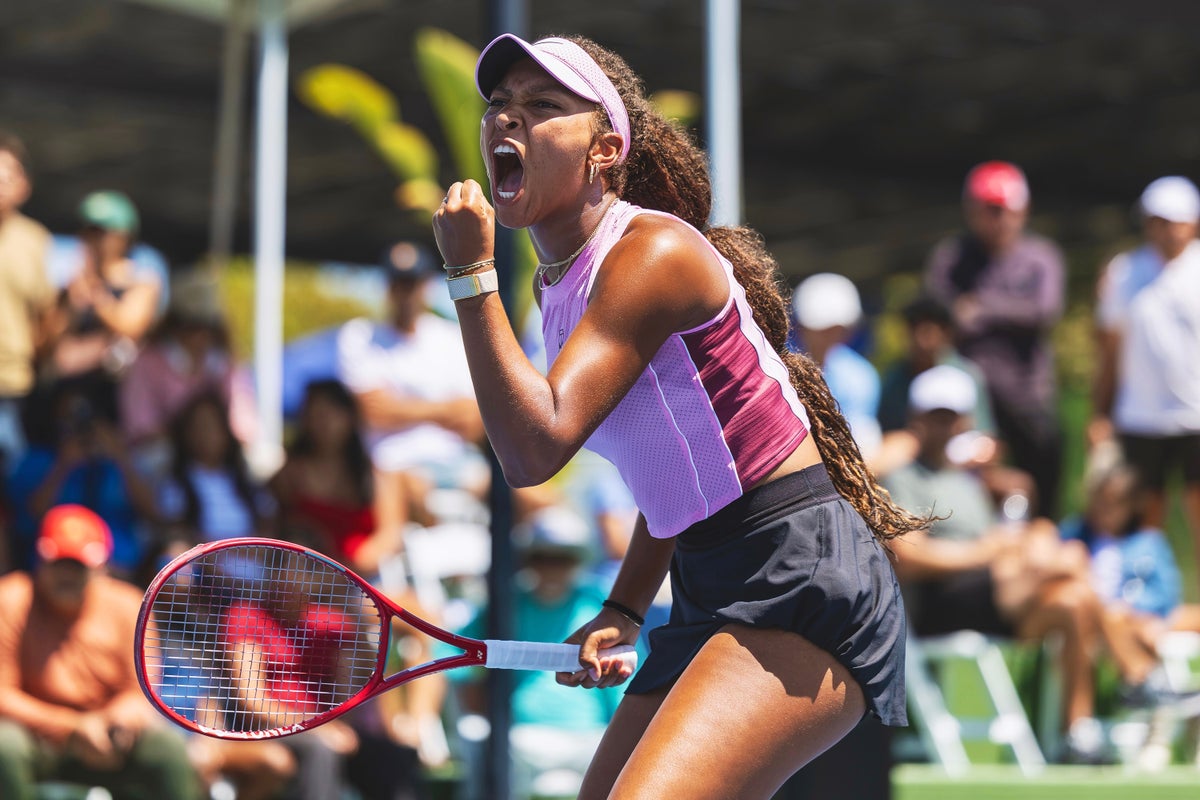
Now, she isn't acting anymore. She is actually competing on the grandest stages in tennis, stepping into the spotlight of the US Open and turning a bizarre cinematic detour into a legitimate professional athletic journey.
The Reality of Hollywood Tennis Doubles
Working as a sports double in a major motion picture sounds glamorous until you realize how grueling the physical demands actually are. Frodin wasn't just standing around looking the part. She had to mirror Serena Williams' distinct right-handed playing style down to the micro-adjustments in posture and swing velocity.
Movie sets operate on brutal schedules. You might hit the exact same cross-court winner fifty times from four different camera angles just to get one usable three-second clip. That requires an absurd level of ball control and consistency. Most casual fans don't appreciate how hard it is to mimic a Hall of Fame athlete while dozens of crew members stare at you under sweltering production lights.
Frodin had the junior tennis background to pull it off. But trading competitive tournaments for movie sets can easily derail a young player's momentum. Many athletes who step away from the grueling junior circuit to chase outside opportunities never find their way back to serious competition.
She took a different path.
Building a Collegiate Foundation
Instead of letting Hollywood consume her athletic prime, Frodin used her tennis talents to secure an NCAA playing career. She competed at the University of Southern California, battling through the intense landscape of Division I college tennis.
College tennis destroys players who lack mental toughness. You play a grueling dual-match format where every single point impacts the team score, and the pressure is relentless. It strips away the individual ego and forces you to learn how to grind out ugly wins when your strokes feel terrible.
That collegiate crucible forged the resilience she needed once she transitioned to the professional tour. The gap between a good junior player and a tour-level competitor is massive. College bridge years provide the physical maturation and tactical maturity required to survive the professional grind.
When you watch Frodin play now, you see that exact tactical discipline. She constructs points patiently rather than going for flashy winners on every shot.
Breaking Through at the US Open
Earning a spot at the US Open is a brutal war of attrition. Whether fighting through grueling qualifying rounds or securing a wildcard entry, nobody hands you a main draw appearance. You have to earn every single inch against opponents who want your ranking points just as badly as you want theirs.
When Frodin stepped onto the grounds for the US Open, the narrative practically wrote itself for the media. Headlines naturally focused on her cinematic past. Reporters wanted to talk about Will Smith, movie sets, and what it felt like to wear Serena's signature braided beads.
Yet, reducing her to a Hollywood trivia fact misses the entire point of her athletic climb. Movie doubles do not accidentally qualify for Grand Slam events. Hollywood can buy you a wardrobe and a makeup artist, but it cannot hit a 90-mile-per-hour baseline winner under pressure when you are serving to stay in the match.
Her game speaks for itself. Her serve lands with authority, her court coverage is punishing, and her emotional control on the court shows a player who understands the stakes without letting them paralyze her.
What Young Players Can Learn From Her Journey
If you are tracking unconventional pathways in sports, Frodin's trajectory offers a masterclass in adaptability. Rigid career timelines ruin careers. People think if you do not turn professional by age eighteen, your window slams shut forever.
That myth stops here.
Athletic development happens on a nonlinear timeline. Some players peak early and burn out by twenty-two. Others take longer to build the physical strength, tactical awareness, and emotional armor required to compete against the world's best.
Frodin's experience on a major film set also gave her a unique psychological edge. When you have performed complex athletic tasks under the intense scrutiny of a Hollywood film crew, playing a tennis match in front of a noisy stadium crowd feels manageable by comparison. She learned how to block out external noise, handle long delays, and execute under pressure long before she faced match points on a professional court.
Stop waiting for the perfect, traditional roadmap to pursue your goals. Take the weird opportunities that cross your path. Use them to build skills, fund your ambitions, or gain perspective. Then return to your core craft with a sharper edge.
Keep your head down, trust your training, and let your work on the court silence the cinematic comparisons.