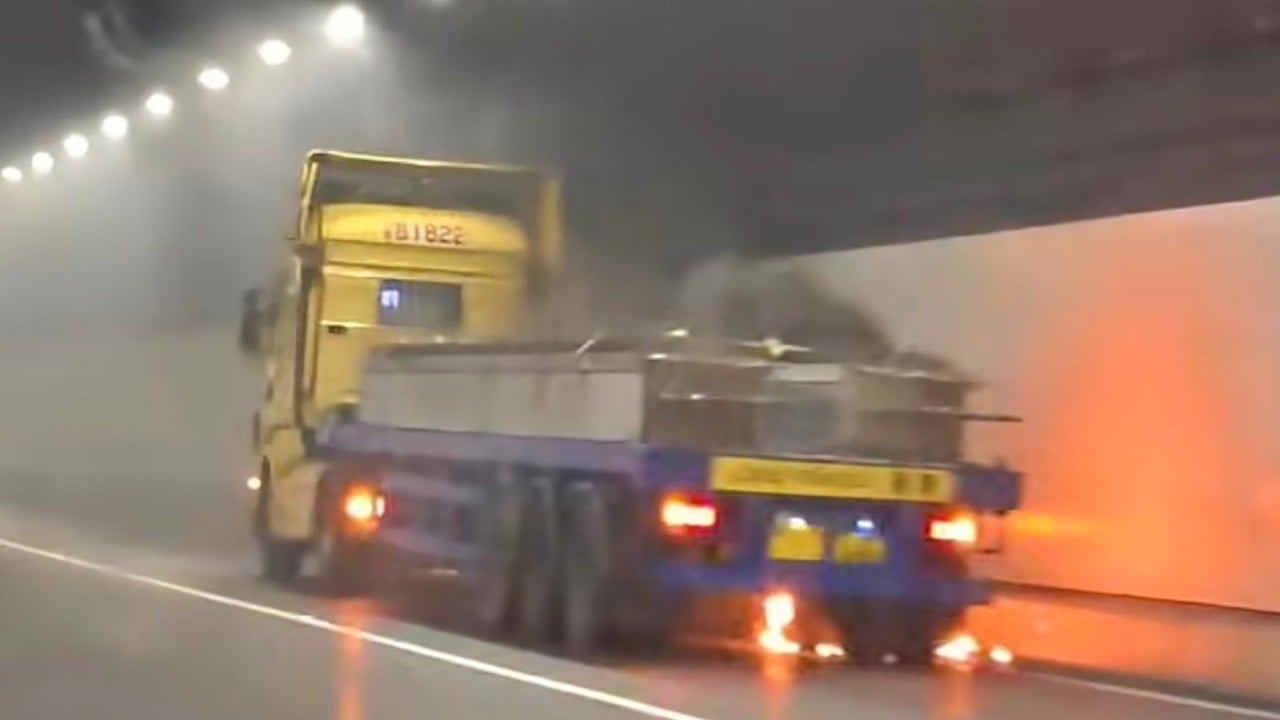
Driving through a long tunnel feels safe until it isn't. You're locked in a concrete tube. There's nowhere to go. When a truck caught fire inside the tunnel of the Hong Kong-Zhuhai-Macau Bridge, it wasn't just a traffic inconvenience. It was a massive stress test for one of the world's most expensive infrastructure projects.
Most commuters don't think about tunnel fires until they see the smoke. They assume these mega-projects have ironclad safety protocols. Yet, when a heavy vehicle ignites, the reality hits fast. The air turns toxic. Visibility drops to zero. Evacuation becomes a nightmare. This incident forces us to look at how we actually handle emergencies on these massive engineering marvels.
Real Dangers Inside Mega Tunnels
We often fetishize the scale of structures like this bridge. It's the longest sea-crossing in the world. It’s an engineering beast. But scale brings unique vulnerabilities. When a truck burns in a tunnel, it’s not the same as a breakdown on an open highway.
Heat builds up rapidly. It can reach over 1,000 degrees Celsius in minutes. At those temperatures, concrete spalls. Steel reinforcements weaken. The structural integrity of the tunnel itself faces a direct threat. Engineers design for this, but real-world chaos rarely follows the simulation models.
Smoke is the silent killer. In a closed environment, it can't dissipate. It traps drivers who don't act instantly. The Hong Kong authorities have sophisticated ventilation systems meant to push smoke away, but those systems need to be activated perfectly and instantly. Any delay turns a contained fire into a mass casualty event.
Why Infrastructure Security Needs Better Transparency
We rely on automated systems to keep us safe. Traffic management centers monitor these tunnels around the clock. When they get a sensor alert, they hit the buttons. They shut down traffic flow. They trigger the fire suppression systems.
But what about the drivers? You’re in your car. You see flickering lights. You smell burning rubber. Do you stay in your car? Do you run for the emergency exit? Most people have no clue. The training for standard drivers on how to handle a major tunnel emergency is basically non-existent.
Authorities need to prioritize public education over just building bigger roads. It's not enough to have a state-of-the-art fire suppression system if the people inside the tunnel panic and block the emergency lanes. During the recent fire, the primary issue wasn't just the blaze itself; it was the gridlock. When you block the access for emergency responders, you’re essentially helping the fire spread.
The Cost of Efficiency Over Safety
We prioritize speed. We want to get from Point A to Point B as fast as possible. This puts pressure on traffic managers to keep lanes open even when warning signs pop up. We need to flip that mindset.
If a truck is smoking, the tunnel should be cleared immediately. No waiting for confirmation. No hoping it's just a blown tire. Every minute of hesitation costs lives in a tunnel fire.
This incident reminds us that maintenance isn't a suggestion. It’s a requirement. You have to check sensors. You have to test the water mist systems. You have to ensure that emergency communication channels aren't just working, but are actually audible over the roar of a panicked crowd.
What You Should Actually Do in a Tunnel Emergency
Stop relying on the authorities to save you every time. Take control of your own survival. If you are stuck in a tunnel and see fire or heavy smoke:
- Turn off your engine. Staying put often allows for better air quality near the floor.
- Leave your keys in the ignition. Responders might need to move your vehicle.
- Grab your emergency kit and move to the nearest emergency exit. Do not try to save your luggage or your car.
- Stay low. The air is always cleaner closer to the ground.
- Follow the illuminated exit signs. They are there for a reason, even if you think you know a better way out.
Don't wait for a news report to think about your safety. If you use these long-span tunnels, know the location of the emergency exits on your daily route. It sounds paranoid until you're the one smelling smoke in the dark.
Infrastructure will always fail at some point. The human element makes the difference between a minor incident and a disaster. Pay attention, stay calm, and always prioritize getting out over protecting your property.