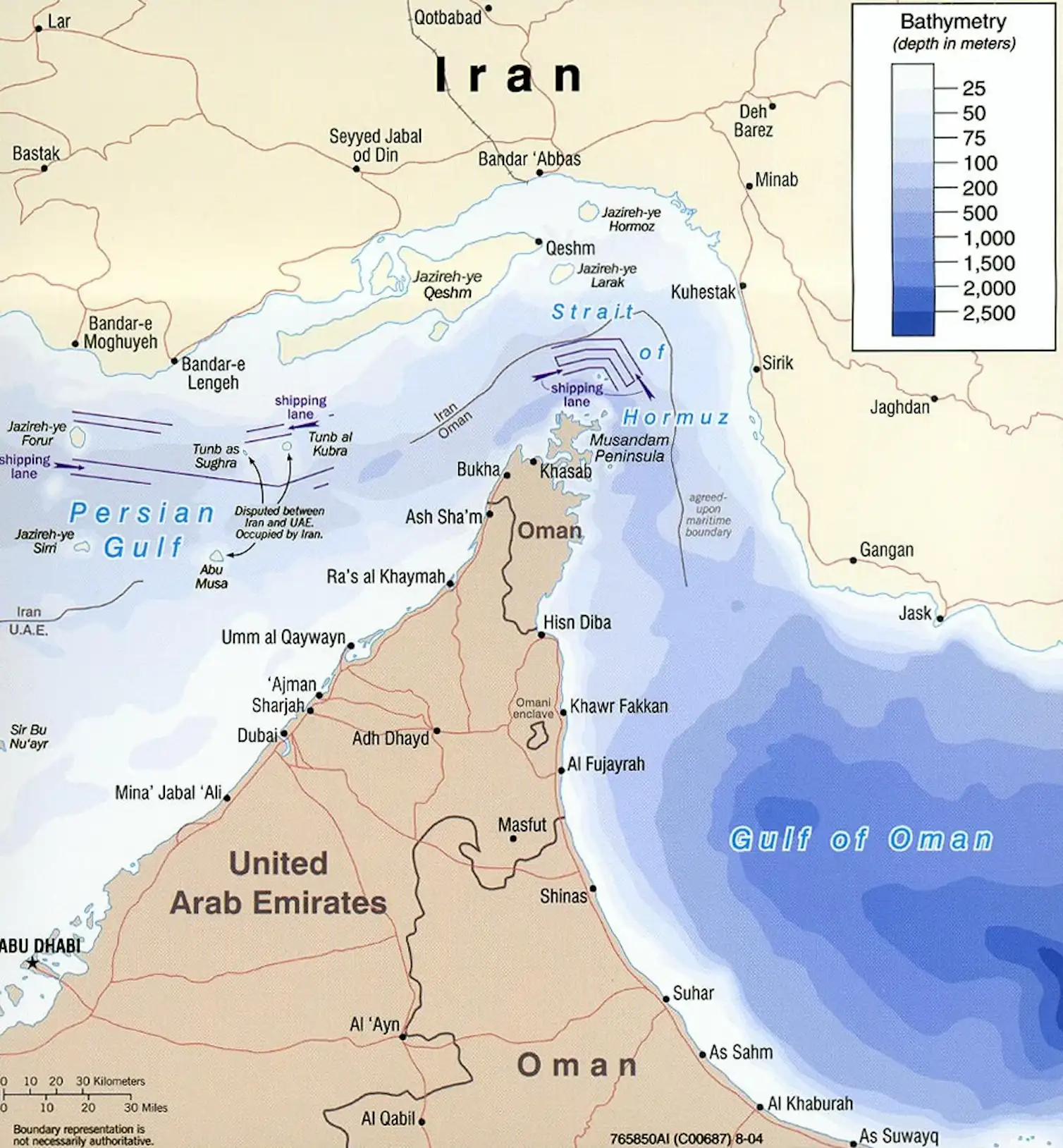
Oil traders are currently addicted to a fantasy. Every time a drone buzzes near the Persian Gulf or a diplomat scowls in Tehran, the "Strait of Hormuz Risk Premium" gets slapped onto every barrel of Brent like a mandatory tax. The media treats the closing of the Strait as an existential threat to modern civilization. They call it the world’s most important chokepoint. They talk about $200 crude and the collapse of the global economy.
They are wrong.
The obsession with Hormuz is a relic of 1970s trauma, a ghost story told by analysts who haven't updated their models since the Tanker War. The reality is that the Strait of Hormuz is no longer the kill-switch it once was. If Iran actually tried to shut it down, they wouldn't just be committing geopolitical suicide; they would be proving exactly how irrelevant their primary leverage has become.
The Myth of the Unplugged World
The standard narrative suggests that if 20 million barrels of oil per day (bpd) are "trapped" in the Gulf, the lights go out in London and New York. This assumes the world is a closed circuit with no bypasses. It ignores the massive, underutilized infrastructure designed specifically to make Hormuz an optional route rather than a mandatory one.
Consider the East-West Pipeline in Saudi Arabia. It has a nameplate capacity of roughly 5 million bpd. During "peace time," it’s often running well below its limit. Then look at the Abu Dhabi Crude Oil Pipeline, which bypasses the Strait entirely to reach the Gulf of Oman. These aren't just pipes; they are insurance policies that the market refuses to price in because fear sells more subscriptions than stability.
When "experts" scream about a total supply cutoff, they are ignoring the Strategic Petroleum Reserve (SPR) dynamics of 2026. Global coordination through the IEA has reached a level of sophistication where a 30-day total blockage—a physical impossibility given the US Fifth Fleet's proximity—would be met with a release of stocks that would floor the price faster than the initial spike raised it.
The market isn't afraid of a shortage. It’s afraid of a headline.
Why Iran Will Never Pull the Trigger
Let’s talk about the "Madman Theory" of Iranian foreign policy. The consensus says Iran is a "rational actor" until it isn't—that they might close the Strait out of pure spite. This ignores the basic math of the Iranian budget.
Iran is increasingly dependent on "dark fleet" exports to China. If Tehran closes the Strait, they aren't just blocking Saudi or Kuwaiti oil. They are blocking their own lifeline. They are also blocking the very Chinese VLCCs (Very Large Crude Carriers) that keep their economy breathing.
Do you think Beijing, which views energy security as a domestic stability requirement, will give Iran a pass for spiking their internal manufacturing costs? Absolutely not. Closing the Strait isn't an attack on the West; it’s an attack on Iran's only remaining superpower patron. It’s a bluff that everyone at the poker table has already called, yet the betting continues.
The Death of the Peace Hope Premium
The competitor piece laments the "ebbing hopes" of US-Iran peace. This is the most exhausted trope in energy reporting. Peace was never the baseline. Friction is the status quo.
The market has already baked in a "permanent friction" model. We have lived with sanctions, sabotage, and proxy wars for decades. The idea that oil prices should fluctuate based on the "mood" of a diplomatic meeting in Vienna or Geneva is absurd.
True price discovery happens in the Permian Basin and the offshore rigs of Guyana and Brazil. Non-OPEC supply growth is the real story that the "Hormuz Alarmists" want you to ignore. Every time a headline claims the Middle East is on the brink, a driller in West Texas adds a completion crew. We are drowning in oil, but the "geopolitical risk" industry needs you to believe we are one boat-sink away from walking to work.
The Math of a Blockade (A Reality Check)
Let’s run a thought experiment. Imagine Iran attempts a physical blockade using naval mines and fast-attack craft.
- The Tactical Failure: Modern minesweeping technology and carrier-based electronic warfare make holding the 21-mile-wide shipping lane "closed" a tactical nightmare. You can disrupt it for 72 hours. You cannot close it for a month.
- The Insurance Trap: The real "closure" happens via Lloyds of London. Insurance premiums skyrocket, and tankers refuse to enter. This is a financial blockade, not a physical one.
- The Response: In this scenario, the US and its allies don't just "escort" ships; they dismantle the coastal infrastructure that allows the disruption.
The "Strait of Hormuz Standoff" is a choreographed dance. Both sides know the limits. The only people getting hurt are the retail investors buying the top of the "war scare" spike and the consumers paying an extra 40 cents at the pump for a crisis that exists primarily in the imagination of commodity algorithms.
Stop Asking About the Strait
People always ask: "What happens to my portfolio if the Strait closes?"
You’re asking the wrong question. You should be asking: "Why am I paying a 15% premium for a risk that has a 0.01% chance of lasting longer than a week?"
The real threat to oil prices isn't a lack of supply from the Gulf. It’s the massive, looming overhang of supply from everywhere else. If you want to be a "contrarian" who actually makes money, you look at the rig counts in North America and the softening demand in the Chinese industrial sector.
The Hormuz narrative is a distraction. It’s a shiny object used by hedge funds to justify volatility. While the world stares at a map of the Middle East, the real shift in energy power is happening in the Atlantic Basin.
The Actionable Truth
If you are an institutional player or a serious observer, you should be shorting the "conflict spikes." History shows these geopolitical pops are almost always sold off within 14 days. The "peace hopes" don't need to be high for the price to drop; the "war reality" just needs to be boring. And in 2026, there is nothing more boring than a predictable threat that never manifests.
The Strait of Hormuz is the world's most effective psychological weapon, but as a physical barrier to the global economy, it’s a paper tiger. The real "standoff" isn't between the US and Iran. It’s between the reality of oversupply and the myth of scarcity.
The myth is losing.