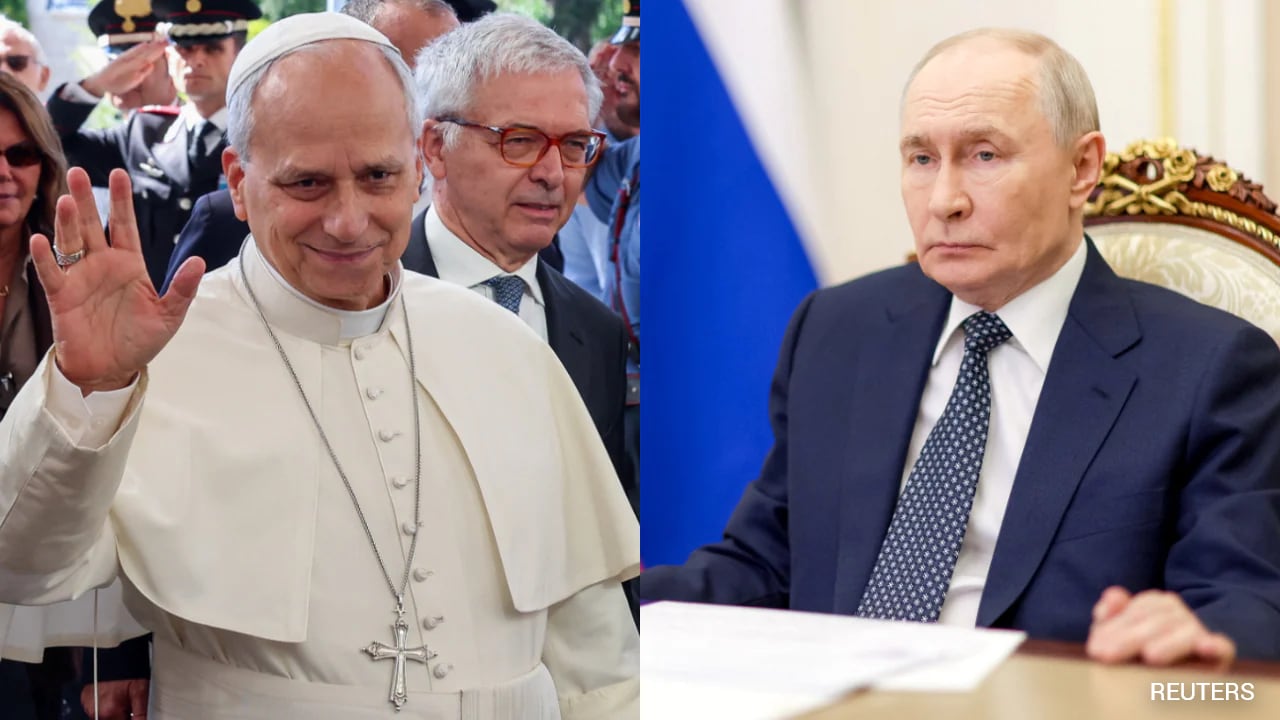
A sick pontiff dials the Kremlin. Headlines flare. Hopes rise.
Nothing changes on the front line. For a more detailed analysis into this area, we suggest: this related article.
When the lazy consensus sees a headline like Pope Leo Speaks To Putin From Hospital, Seeks Russia-Ukraine Ceasefire, it reaches for the same tired script. Moral authority meets raw power. A bedside plea tugs at the conscience of a hardened autocrat. Peace, supposedly, becomes a matter of persuasion.
That script is a fantasy. It confuses moral theater with strategic leverage. For further context on the matter, comprehensive analysis can be read at TIME.
The Russia-Ukraine war is not a misunderstanding waiting for a compassionate mediator. It is a grinding conflict driven by territorial ambition, regime survival, security guarantees, and industrial attrition. A phone call from a hospital bed—no matter how emotionally charged or globally televised—does not alter troop deployments, artillery production, sanctions enforcement, or battlefield calculus.
Asking whether the pope can convince Vladimir Putin to halt the war is already the wrong question. The real question is why observers keep mistaking spiritual appeal for geopolitical force—and what diplomatic instruments actually move the needle when guns are firing.
The Myth of the Bedside Breakthrough
Watch how coverage of high-profile diplomatic calls unfolds. Every pause in shelling gets read as a sign of softening. Every polite phrase from Moscow gets spun as a crack in the wall.
I have watched political analysts, commentators, and policy observers burn credibility for years chasing these illusions. They treat diplomatic outreach like a dramatic turning point when it is usually just noise. A leader in a hospital ward calling a head of state makes for compelling television. It signals concern. It reminds the world of the human toll.
What it does not do is create costs for the Kremlin.
In international relations, statesmen rarely move because someone asks nicely, even if the person asking holds centuries of moral prestige. Think of scholars like Thomas Schelling or Robert Jervis, who spent careers analyzing coercion, bargaining, and signaling in high-stakes crises. Bargains stick when incentives shift, when credible threats exist, or when domestic political survival demands an exit. Moral appeals operate on a different plane altogether. They speak to conscience, not cost-benefit spreadsheets.
Putin is not making decisions based on pastoral guidance. He is calculating military capacity, Western resolve, domestic stability, and long-term leverage over neighboring states. A hospital call does not threaten his power base or degrade his forces. Treating it as a serious ceasefire mechanism misreads how hard power works.
What People Actually Mean by a "Ceasefire"
Whenever a call like this makes news, people rush to search for answers to a predictable set of questions. Most of those questions rest on shaky assumptions.
Can the Vatican mediate a lasting peace between Russia and Ukraine?
Not on its own. The Vatican has real diplomatic channels and historical experience as a quiet go-between, especially on humanitarian files like prisoner swaps or the return of abducted children. Those are real, valuable efforts. Yet mediation requires trust, leverage, or enforcement capacity. Moscow views the conflict through an existential lens where sovereignty and sphere-of-influence claims collide head-on. A spiritual institution without hard security guarantees cannot police a truce along hundreds of miles of contested terrain.
Does a pope speaking from a hospital carry extra moral weight?
It carries extra media weight. Illness frames a message around vulnerability and urgency, which captures public attention fast. Still, geopolitics is notoriously unsentimental. Leaders who order prolonged military campaigns have already proven willing to absorb heavy human and economic costs. Sympathy for a hospitalized leader rarely overrides strategic objectives.
Why push for a ceasefire right now if fighting is still ongoing?
Many people assume any pause in shooting is automatically good. In reality, an unverified or one-sided ceasefire can freeze favorable positions for an aggressor, give exhausted forces time to regroup, and leave core disputes unresolved until the next round of fighting. Timing and terms matter more than the word "ceasefire" itself.
Why Moral Authority Hits a Wall in Modern War
To understand why a hospital call falls short, define the terms cleanly. Moral authority is influence drawn from ethical standing, tradition, or humanitarian concern. Strategic leverage is the ability to impose costs, grant vital security assurances, or alter the material balance on the ground.
Confusing the two is one of the oldest mistakes in foreign affairs. Moral authority can shape public sentiment. It can rally humanitarian relief. It can keep human costs visible when news cycles drift elsewhere.
It cannot compel an army to stand down.
Imagine a scenario where a respected global figure appeals directly to a wartime leader to halt offensive operations for humanitarian reasons. Suppose the appeal is eloquent, sincere, and broadcast worldwide. If the offensive leader believes continuing the campaign brings territorial gains or political security—and sees no decisive obstacle stopping the advance—the appeal goes into a filing cabinet. Conscience loses to calculus.
That does not make moral voices pointless. It means we have to put them in the right lane. When observers expect a phone call from Rome to substitute for sanctions enforcement, air defense supply, or credible deterrence, they set themselves up for disappointment—and distract from the messy work that actually shapes outcomes.
The Blind Spots of My Own Skepticism
Being blunt about the limits of moral appeals carries its own risks. Cynicism is easy. Dismissing every diplomatic gesture as theater can blind an analyst to subtle shifts beneath the surface.
Sometimes quiet channels matter. Humanitarian openings occasionally start in places nobody expects. Even a symbolic gesture can test how a counterpart responds, reveal internal messaging priorities, or keep a line open when formal talks are frozen. A leader who refuses direct engagement with Western capitals might still take a call from a religious figure to project an image of openness to non-Western or undecided audiences.
If I treat every diplomatic call as pure zero-value noise, I risk missing how information and signaling move through indirect routes. The mistake is not noticing a call happens. The mistake is mistaking a call for a settlement.
What Actually Moves a Wartime Stalemate
If bedside diplomacy won't end the fighting, what will? Not slogans. Not wishful thinking. Concrete mechanics.
First, material balance on the ground. Wars grind down when one side sees its objectives slipping out of reach or its costs rising faster than its gains. Ammunition supply, logistics, industrial output, and defensive depth determine what happens on the map far more than speeches.
Second, credible enforcement and guarantees. Any durable pause requires answers to a simple question: what happens the day after the shooting stops? Without clear monitoring, deterrent backing, and defined consequences for violations, a truce is just intermission.
Third, domestic political incentives. Leaders weigh how ending or continuing a war affects their grip on power at home. Economic strain, elite cohesion, casualty tolerance, and leadership stability shape whether compromise looks dangerous or necessary.
Actionable Steps for Readers Following the Conflict
If you want to track this conflict without getting whiplash from every dramatic headline, change how you read the news.
- Separate headlines from leverage. When a high-profile call or statement breaks, ask a single question: Does this change who controls territory, who has weapons, or who faces new costs tomorrow? If the answer is no, lower your expectations immediately.
- Watch humanitarian files separately from peace talks. Prisoner exchanges, medical evacuations, and family reunifications can move forward even when broader political peace is nowhere near reach. Treat them as distinct tracks.
- Follow enforcement, not just announcements. Ceasefire pledges are cheap. Look for verification mechanisms, troop pullback rules, and clear accountability before treating any pause as real.
- Ignore "breakthrough" framing unless terms are public. Until concrete conditions are on the table and backed by real enforcement, dramatic language is mostly atmosphere.
A phone call from a hospital bed is a human moment, not a strategic turning point. Stop mistaking sympathy for leverage.