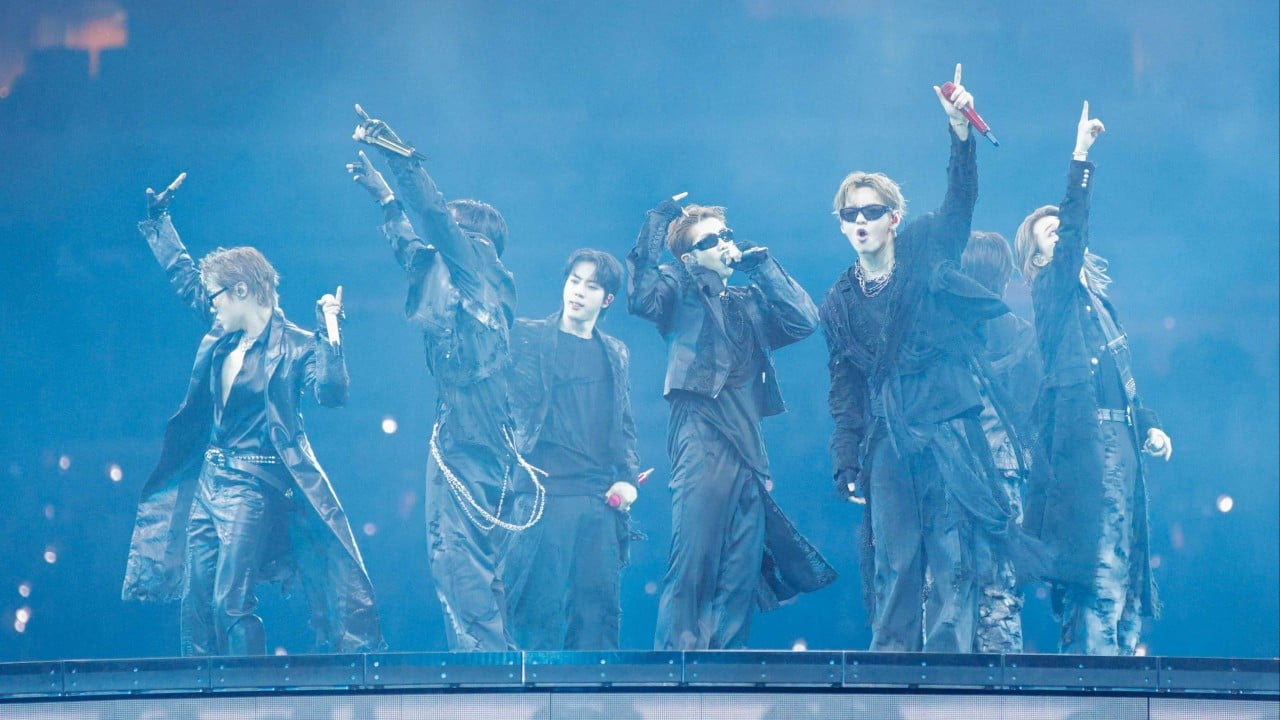
The mobilization of 50,000 individuals within a five-hour window at the Palacio de los Deportes in Mexico City is not a fluke of fandom; it is a clinical demonstration of high-density market saturation and a friction-minimized distribution funnel. While superficial reporting focuses on the emotional fervor of BTS fans (ARMY), a structural analysis reveals that this event serves as a benchmark for asymmetric demand-to-supply ratios in the Latin American entertainment sector. The speed of this "sell-out" or "draw" indicates a consumer base that has internalised rapid-response protocols, effectively turning a localized event into a stress test for urban infrastructure and digital ticketing systems.
The Triad of Viral Mobilization
The success of the Mexico City event rests on three discrete pillars that convert passive digital engagement into physical presence.
- Network Density and Proximity: Mexico City (CDMX) represents one of the highest concentrations of K-pop consumers globally. The geographical layout of the city, coupled with a highly centralized public transport system, allows for rapid physical aggregation.
- The Scarcity Multiplier: Because K-pop tours often prioritize East Asia and North America, the infrequent "touchpoints" in Latin America create a high-stakes environment. When an event is announced, the perceived "perishability" of the opportunity forces immediate consumer action.
- Peer-to-Peer Communication Architecture: The fan organization operates with a military-grade information hierarchy. Once the "trigger" (the event announcement) is pulled, the information cascades through WhatsApp, X (formerly Twitter), and Discord, bypassing traditional media latency.
Measuring the Velocity of Demand
Standard metrics often track total ticket sales over a 24-hour period. In the case of the BTS draw in Mexico City, the metric that matters is Velocity of Conversion (VoC).
To quantify this, we must examine the Conversion Pressure Index (CPI). In a market where 50,000 people appear in under five hours, the CPI is maximized because the "Cost of Inaction" (missing the event) far outweighs the "Transaction Friction" (travel time, queuing, or site lag). The event at the Palacio de los Deportes suggests that the K-pop market in Mexico has reached a state of permanent readiness, where the consumer's decision-making process has been pre-solved before the product is even offered.
The Logistics of Physical Aggregation
The Palacio de los Deportes has a seated capacity of roughly 17,500 to 20,000 for concerts, meaning a "draw" of 50,000 implies a significant overflow or a multi-day engagement expectation. The logistics of managing this volume of people involve:
- Flow Rate Control: The ability of the venue's entry points to process humans per minute. 50,000 people in five hours requires a processing rate of approximately 166 people per minute across all available gates.
- Security Saturation: A high-density crowd creates a "crush risk" that increases exponentially rather than linearly with every 1,000 people added.
- Informal Economy Integration: Large-scale events in Mexico City trigger an immediate secondary economy (merchandise, food, transport) that operates in the periphery of the venue, often providing the "buffer" space needed to manage crowd overflow.
The LatAm K-Pop Arbitrage
Mexico City acts as a hub for the wider Spanish-speaking K-pop market. A significant portion of the 50,000 individuals likely traveled from suburban hubs or neighboring states like Estado de México, Puebla, and Querétaro. This creates a Regional Gravity Well.
The "Mexico City Effect" is driven by a lack of decentralized touring. If promoters were to analyze the data, they would find that the demand in Mexico City is actually an aggregation of several smaller, underserved markets. By forcing all demand into a single geographic point (the Palacio), the organizers create a "pressure cooker" effect that guarantees high-speed sell-outs but also risks operational failure due to extreme density.
Digital Infrastructure Bottlenecks
The primary constraint on these mobilizations is rarely the fans' willingness to pay, but the Digital Throughput of ticketing platforms. When 50,000 people attempt to access a single portal or physical location simultaneously, it creates a "distributed denial of service" (DDoS) effect, even if unintentional.
The mechanism at play here is Competitive Queueing. Fans are not just competing against a clock; they are competing against each other's bandwidth and hardware. This creates a stratified fan base where those with high-speed internet or the ability to physically reach the venue first become the "elite" tier of the consumer base.
The Lifecycle of a K-Pop "Event" in Mexico
- Signal Propagation: The official announcement hits social media.
- Instantaneous Aggregation: Within 30 minutes, localized clusters (fan clubs) activate meeting points.
- Infrastructure Stress: Physical transit to the Iztacalco borough (where the venue is located) spikes.
- Market Saturation: The 50,000-person threshold is met, and the event shifts from "acquisition" to "management" mode.
Strategic Vulnerabilities in High-Density Mobilization
While 50,000 fans in five hours is a marketing win, it exposes significant operational vulnerabilities.
- Public Safety Elasticity: Urban infrastructure is rarely designed to handle 50,000 people appearing without a 48-hour lead time. The strain on the Metro Line 9 and surrounding arteries (like Circuito Interior) creates a negative externality for the rest of the city's population.
- Brand Fatigue vs. Brand Scarcity: There is a delicate balance between maintaining the "event" status of these draws and over-saturating the market. If these events happened weekly, the velocity of the draw would likely stabilize or slow down as the "scarcity premium" evaporates.
- Transactional Transparency: In high-speed environments, the risk of fraud and scalping (the "Bot Tax") increases. The faster an event sells out, the less time there is for verification protocols to identify and purge non-human buyers.
Optimization of the Latin American Tour Circuit
The data from the Mexico City draw suggests that the current model of "Mega-Events in Primary Hubs" is profitable but inefficient in terms of market penetration.
The next evolution of this strategy involves Predictive Geographic Load Balancing. Instead of 50,000 people at one venue in CDMX, the logic dictates a split-load across Monterrey, Guadalajara, and Mexico City. This would reduce the "Scarcity Multiplier" but would increase the "Total Addressable Market" (TAM) by capturing consumers who cannot afford the logistics of traveling to the capital.
The "50,000 in five hours" headline is a lagging indicator of a market that has been under-served for a decade. The K-pop industry is not creating new demand in Mexico; it is finally building the pipelines to harvest existing demand that has been pooling in digital spaces since the early 2010s.
Enterprises looking to replicate this level of mobilization must move away from traditional "promotion" and toward Community Infrastructure Building. The goal is to create a consumer base that does not need to be "convinced" to buy, but rather "directed" toward a point of sale. This requires an investment in localized fan leadership and a deep understanding of the transit and digital habits of the target demographic.
The move for promoters in the LatAm region is to stop treating Mexico City as a one-off "victory" and start treating it as the anchor for a high-frequency, multi-city logistics network that can sustain this volume of traffic consistently. The infrastructure of the Palacio de los Deportes is the bottleneck; the fan-base is the untapped reservoir. Increasing the number of "taps" is the only logical path toward maximizing the lifetime value of the Latin American ARMY.