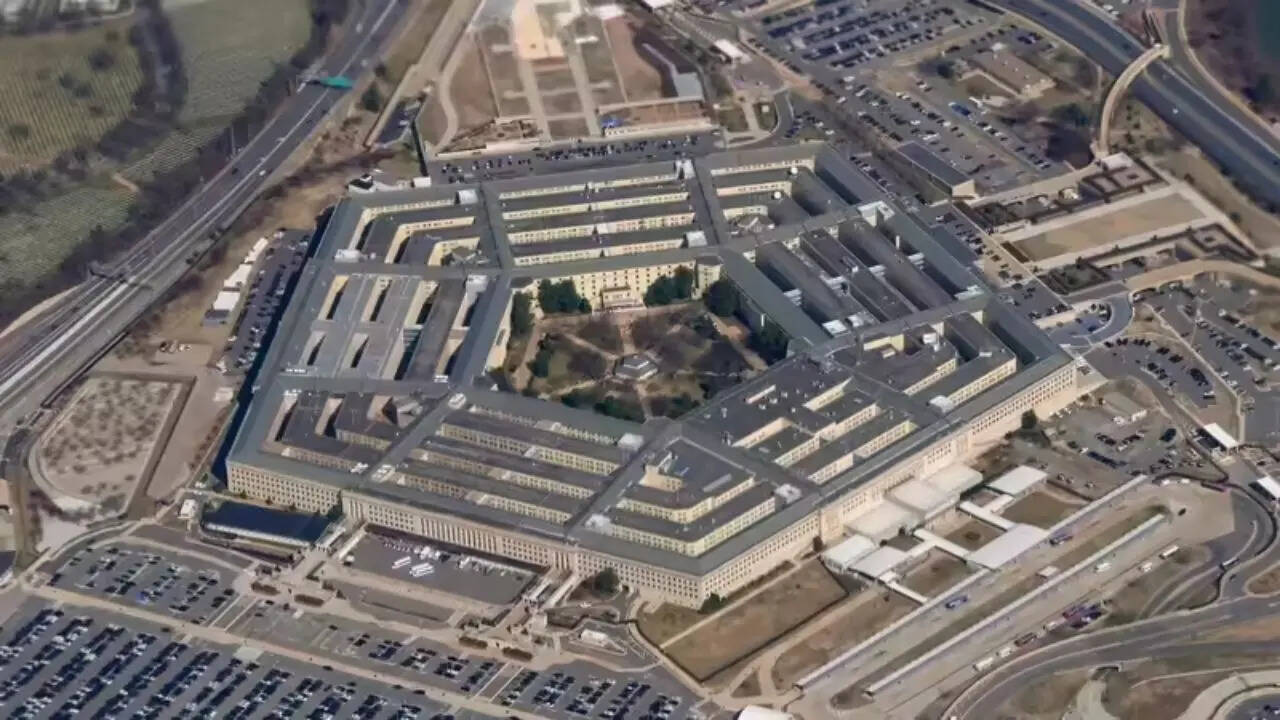
The Pentagon is currently engaged in a masterclass of strategic theater. They tell you we are defenseless against hypersonic threats. They claim the "Golden Dome" is a fantasy. They point at Russia’s Khinzal and China’s DF-ZF with a practiced shudder, suggesting that our multibillion-dollar carrier groups are sitting ducks for Mach 5+ projectiles.
It is a lie. Not because the physics are wrong, but because the definition of "defense" has been corrupted by a procurement-industrial complex that profits more from fear than from function.
The narrative that we have "no defense" is a budgetary tactic, not a tactical reality. We are witnessing the intentional devaluation of existing kinetic interception to pave the way for a trillion-dollar spending spree on space-based sensor layers and directed energy. The truth? Hypersonic missiles aren't invincible; they are just expensive, finicky, and currently overrated.
The Mach 5 Myth
Most reporting on hypersonics treats Mach 5 as a magic threshold where physics breaks. It doesn’t. We have been intercepting objects moving faster than Mach 5 since the Cold War. An Intercontinental Ballistic Missile (ICBM) re-enters the atmosphere at speeds approaching Mach 23. We can hit those.
The "problem" isn't speed. It is maneuverability and the "low" altitude of the flight path. A Hypersonic Glide Vehicle (HGV) skips along the upper atmosphere, staying below the reach of traditional mid-course interceptors like the SM-3, but staying above the dense air where traditional terminal defenses like the Patriot (PAC-3) thrive.
The media calls this a "blind spot." I call it a choice.
We have the technology to close this gap. We simply haven't deployed it because a "perfectly defended" nation doesn't justify a $900 billion annual defense budget. To keep the gears turning, the threat must always be one step ahead of the shield.
Why the Golden Dome is a Terrible Idea (But Not for the Reasons You Think)
Donald Trump’s "Golden Dome" rhetoric is often mocked by the beltway intelligentsia as a simplistic misunderstanding of missile defense. They argue that a physical "dome" is impossible. They are right, but their smugness blinds them to the actual failure of the concept.
The failure isn't the engineering; it’s the economics.
If you build a $500 billion defense system, your adversary will build 5,000 $100,000 decoys. Missile defense is a losing game of "cost-per-kill" ratios.
- Interceptor Cost: $10 million to $50 million per shot.
- Offensive Missile Cost: $1 million to $5 million.
- The Result: You go bankrupt long before you run out of incoming targets.
The "Golden Dome" isn't a bad idea because it’s "technically impossible." It’s a bad idea because it treats the symptom rather than the disease. We are obsessed with the "kill chain" at the point of impact, when we should be disrupting the "kill chain" at the point of launch.
The Plasma Stealth Scam
You will often hear "insiders" whisper about plasma stealth—the idea that at hypersonic speeds, the air in front of the missile ionizes into a sheath of plasma that absorbs radar waves, making the missile invisible.
This is a half-truth that serves the "we are helpless" narrative.
While plasma can attenuate certain radar frequencies, it also emits a massive infrared signature. A hypersonic missile is essentially a man-made meteor. It is screaming across the sky at several thousand degrees Celsius. You don't need a sophisticated X-band radar to find it; you just need an infrared sensor that isn't from the 1980s.
The Pentagon claims we can't track them because our current satellites are looking in the wrong place. This isn't a "capability" gap; it's a "we didn't bother to look" gap.
Dismantling the "Unstoppable" Argument
Let’s look at the actual performance of these "unstoppable" weapons in the field.
In Ukraine, Russia’s "invincible" Kinzhal missiles have been knocked out of the sky by Patriot batteries—a system designed in the late 70s. The Russian response? "It didn't happen." The American response? A quiet admission that, yes, maybe the threat was slightly exaggerated.
Hypersonic missiles suffer from three massive, rarely discussed flaws:
- Terminal Guidance Degradation: When you are moving at Mach 8, the friction creates a boundary layer of superheated gas. Sensors struggle to "see" through this. This makes hitting a moving target—like a carrier—notoriously difficult.
- Structural Fragility: A slight course correction at Mach 10 puts G-force loads on the airframe that would shred most materials known to man. These missiles cannot "zig-zag" like a fighter jet; they make wide, predictable arcs.
- The Thermal Signature: You can't hide heat. A hypersonic missile is the brightest object in the theater.
The Real Defense is Digital, Not Kinetic
The obsession with "hitting a bullet with a bullet" is a 20th-century mindset. If we want to defend against hypersonics, we stop trying to blow them up in the last 30 seconds of flight.
We focus on "Left of Launch."
This means cyber-intrusion into the command-and-control nodes. It means electronic warfare that blinds the missile’s internal navigation the moment it leaves the rail. If the missile doesn't know where it is, it doesn't matter how fast it's going. It’s just a very expensive lawn dart.
The Pentagon won't tell you this because you can't build a flashy, multi-billion dollar "dome" out of code and jamming frequencies. There are no ribbon-cutting ceremonies for a successful hack.
The Pivot to "Distributed Lethality"
The "Golden Dome" advocates want to protect stationary assets—cities, bases, ports. This is a fortress mentality in an age of mobile, high-velocity warfare.
The counter-intuitive solution to the hypersonic threat is to stop having things worth hitting.
Instead of one $13 billion aircraft carrier, we should have 500 autonomous, missile-carrying drone ships. You can't use a $20 million hypersonic missile to take out a $5 million drone. The math doesn't work. By de-concentrating our forces, we make the hypersonic missile obsolete without ever having to intercept one.
The Hard Truth About Proliferation
Everyone is worried about China and Russia. No one is talking about the fact that the United States is intentionally lagging in offensive hypersonic deployment while screaming about defensive gaps.
Why? Because if we deploy a functional hypersonic arsenal, the "vulnerability" narrative dies. If we have the best offense, we have to admit the defense isn't that hard to figure out.
The Pentagon is playing a game of "Strategic Vulnerability." By appearing weak, they secure the funding to become untouchable. It is a cynical, brilliant, and dangerous game that relies on the public—and the politicians—believing that we are one Mach 6 missile away from total annihilation.
Stop Asking if We Can Stop Them
The question "Can we stop a hypersonic missile?" is the wrong question. It’s a distraction.
The right question is: "Why are we spending billions to stop a weapon that can be defeated by a $50,000 electronic jammer or a decentralized fleet?"
We don't need a Golden Dome. We need to stop building targets. We don't need more interceptors; we need better math. The hypersonic threat is a paper tiger wrapped in a plasma sheath, designed to scare you into signing a blank check for a defense system that will be obsolete before the first concrete is poured.
The "limited capability" the Pentagon warns about isn't a lack of technology. It's a lack of imagination. They are trying to solve a 21st-century problem with 20th-century hardware and 19th-century strategy.
If a Mach 10 missile hits a target that isn't there, did it even happen?
Stop looking at the sky for a dome. Look at the balance sheet. That’s where the real war is being lost.