When you think of a factory strike, you probably picture workers demanding higher hourly wages, better health insurance, or safer conditions on the assembly line. But the high-stakes standoff at Hyundai Motor Co. shows that the old playbook is officially dead.
For the second consecutive year, tens of thousands of Hyundai workers have launched a partial walkout. While the public headline points to a massive battle over corporate profit-sharing, the real undercurrent of this strike isn't just about cash. It's a preemptive war against the commercial deployment of humanoid robots and artificial intelligence on the shop floor.
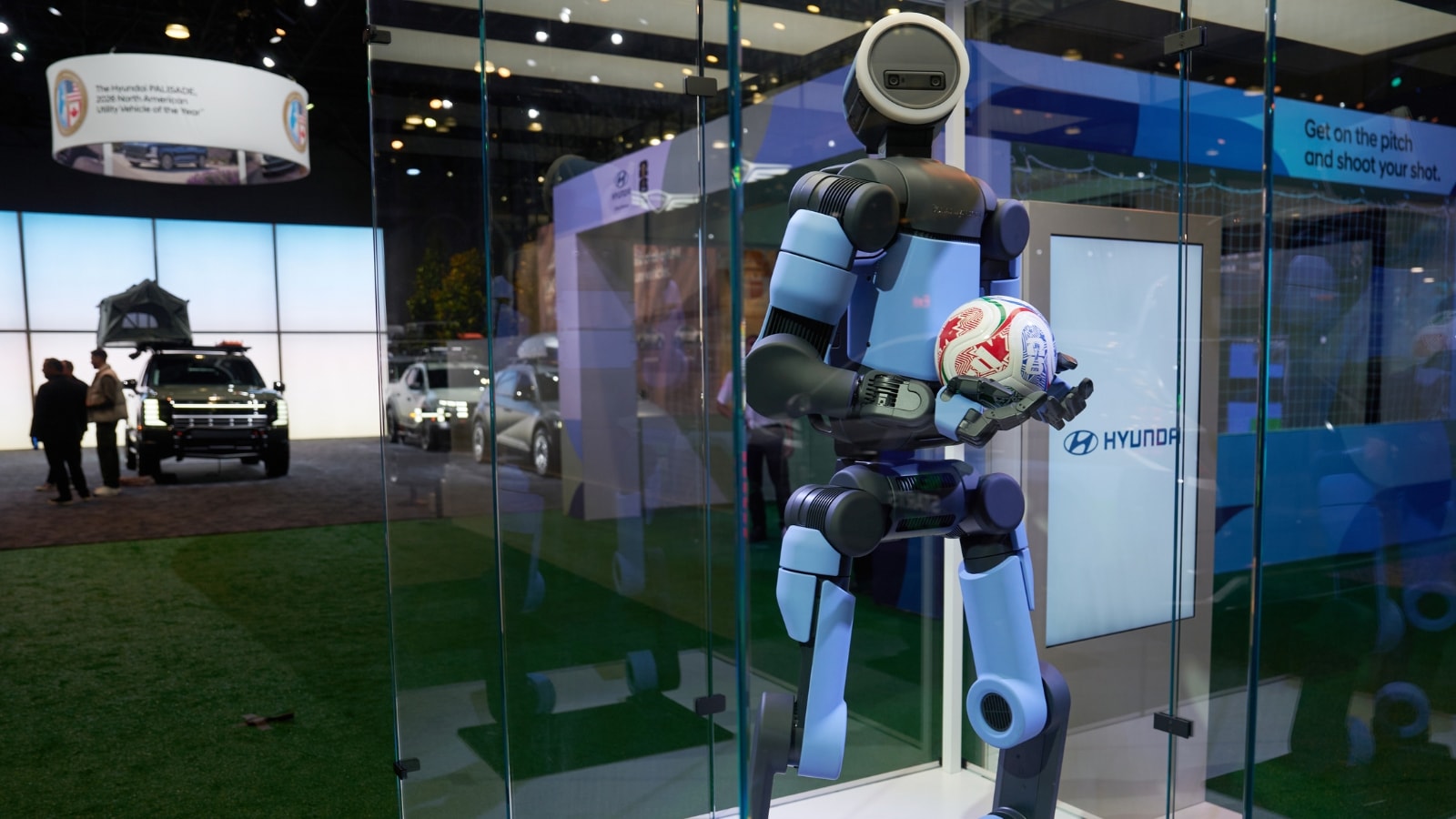
The Korean Metal Workers’ Union (KMWU) branch at Hyundai represents nearly 40,000 members. They aren't just fighting management anymore; they're wrestling with the looming presence of Boston Dynamics' new Atlas robot. This situation marks a historic shift where digital transformation meets physical labor unrest, and it sets a massive precedent for the global manufacturing sector.
The Trigger Has a Name: Atlas
You can't blame the assembly workers for feeling anxious. Hyundai isn't merely experimenting with automation; they own a controlling stake in Boston Dynamics. The latest iteration of the Atlas humanoid robot, showcased heavily for its factory readiness, can lift 100-pound loads and work continuous, grueling shifts without taking a coffee break.
Internal projections suggest Hyundai intends to build roughly 30,000 Atlas units annually by 2028, routing a massive chunk of those directly into Hyundai and Kia production lines. Corporate executives pitch this as a safety win—letting robots handle the dull, dirty, and dangerous tasks like heavy parts sequencing. But if you look at the economics from the factory floor, a single robot costs less to maintain over its lifecycle than two years of a human worker's salary.
That realization led the union to issue a stark mandate: not a single humanoid robot steps onto the line without active labor-management consultation and approval. The union wants structural guarantees that human workers won't be pushed out the door as the AI transition accelerates.
The 30 Percent Profit Clarior Call
While automation security forms the structural barrier, a massive bonus dispute provided the immediate fuel. The union demands a performance bonus equivalent to 30% of Hyundai's 2025 net profit, which reached 10.36 trillion won (about $6.75 billion).
If management caved entirely, that single demand would siphon over $1.9 billion into employee payouts. Industry observers point out that this aggressiveness didn't happen in a vacuum. A landmark deal at Samsung Electronics earlier set the corporate landscape ablaze when the chipmaker established a special bonus pool totaling 10.5% of operating profit for its semiconductor division.
Furthermore, South Korea's controversial "Yellow Envelope Act," which expanded the legal scope of justifiable labor disputes to include management decisions affecting working conditions, gave the union the regulatory teeth it needed to strike over profit distribution.
Management’s latest offer—a package featuring an 89,000 won base monthly salary bump, a 350% performance bonus plus 10 million won, and 15 company shares—was flatly rejected as insufficient by union delegates.
Redefining How Factory Payouts Work
The underlying mechanisms of factory compensation are shifting fundamentally. Because automation naturally reduces the number of hours human workers spend turning wrenches, an hourly pay structure becomes a direct financial risk for employees.
To counteract this, the union is fiercely advocating for a "full monthly salary" system. This structure guarantees a fixed income regardless of production adjustments or robot deployments, ensuring that efficiency gains don't result in shrinking paychecks for the remaining human crew.
Meanwhile, management claims these structural rigidities threaten long-term viability. The global automotive sector requires massive capital allocations for electric vehicles, software-defined mobility, and autonomous driving tech. Locking in fixed-percentage net profit bonuses limits the emergency capital required to compete with aggressive global players.
What Happens Next on the Shop Floor
The three-day partial strike halts operations for four hours daily across the morning and afternoon shifts. While it seems short, a prolonged dispute like last year’s 16-hour walkout can quickly trigger hundreds of millions of dollars in production losses and delay thousands of vehicles from leaving the factory.
If you manage a manufacturing supply chain or track labor strategy, this dispute is your blueprint for the near future. Here are the immediate realities to prepare for:
- Watch the Precedent: If Hyundai workers successfully secure an explicit veto over robot deployments, expect auto unions globally to copy this language word-for-word in upcoming contract cycles.
- Audit Your Compensation Models: If your operation relies heavily on hourly wages, start modeling how a fixed monthly salary system impacts your baseline cost structure before labor groups force the conversation.
- Include Labor Early in Automation: Dropping new automated systems onto a factory floor without transparent worker integration plans is no longer just a technical challenge—it's a corporate risk that can trigger immediate industrial action.