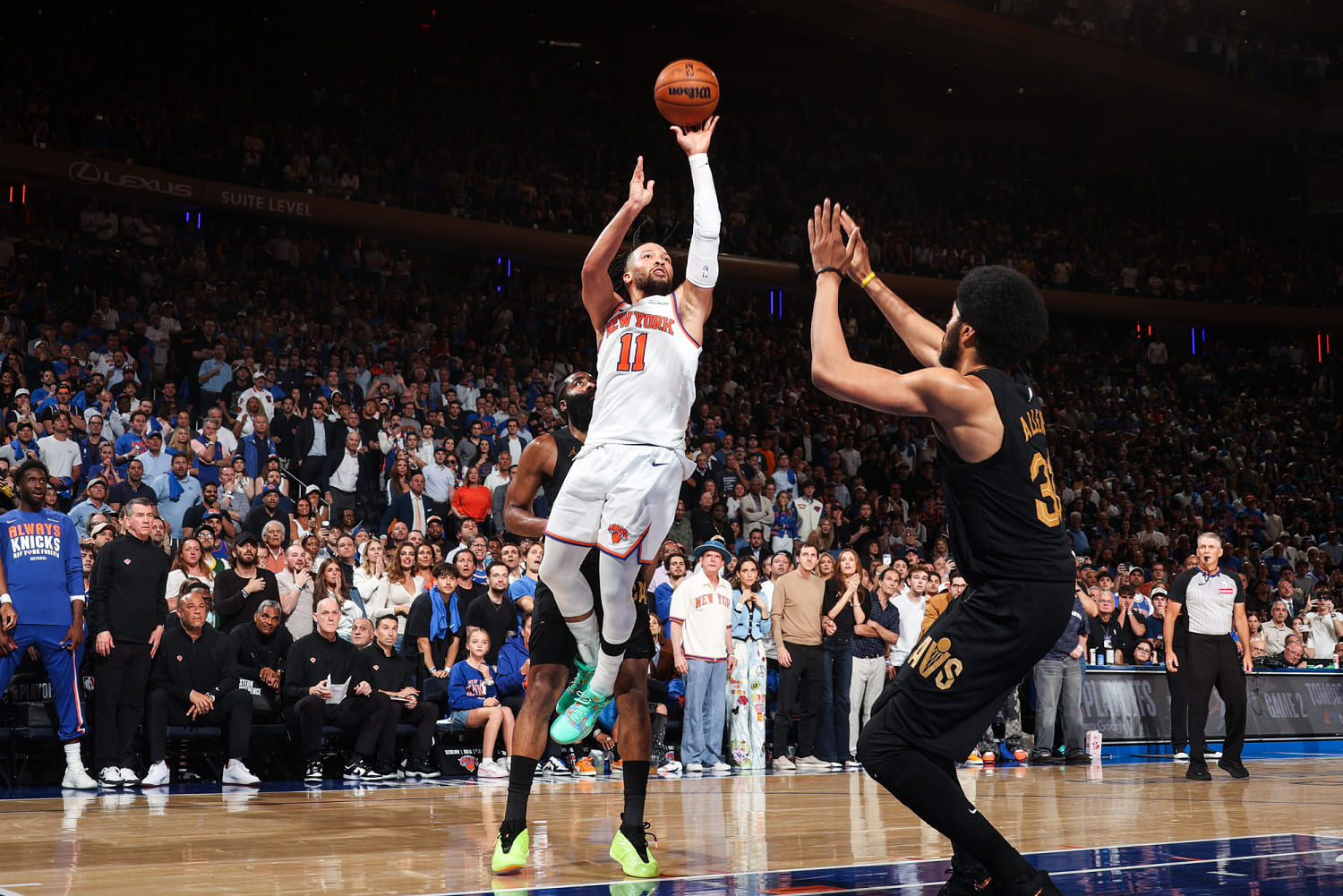
The final score of Game 1 reads New York Knicks 115, Cleveland Cavaliers 104. To the casual observer, or the breathless columnist hunting for easy narratives, it was a classic Madison Square Garden miracle. Jalen Brunson scored 38 points, New York erased a 22-point fourth-quarter deficit, and the building shook with the familiar, desperate joy of a fanbase that has waited a quarter of a century for this kind of postseason relevance.
But calling this a miracle is cheap journalism. It lets the losers off the hook, and it misdiagnoses exactly what is happening in the Eastern Conference Finals. Building on this theme, you can find more in: The Shaolin Myth: Why Victor Wembanyama's Monastic Marketing Won't Save His Ankles.
The Knicks did not win this game by magic. They won it because Tom Thibodeau turned the final eight minutes of regulation into an absolute structural meat grinder, exposing the exact flaws that have plagued the Cavaliers all season. Cleveland led 93-71 with 7:52 remaining in the fourth quarter. Teams trailing by 22 or more points in the final frame of a playoff game were a combined 1-594 since 1997. Now they are 2-594. The historic 44-11 run that closed out the night was a clinic in execution, fatigue, and tactical stubbornness.
The Isolation Trap That Broke James Harden
To understand how a 22-point lead vanishes in the span of half a quarter, you have to look directly at the James Harden problem. For the first three quarters, Cleveland played fluid, opportunistic basketball. Donovan Mitchell was lethal, finishing with 29 points and six steals, while Evan Mobley anchored a defense that looked completely prepared for New York's physical style. Analysts at ESPN have provided expertise on this situation.
Then the momentum stalled. The Cavaliers stopped moving the ball, reverting to a slow, predictable isolation offense designed to milk the clock.
Thibodeau smelled blood. He adjusted his defense to isolate Harden, forcing the veteran guard into high-pressure decision-making scenarios under heavy duress. The result was catastrophic for Cleveland. Harden finished the night with six turnovers, several of which occurred during an 18-1 New York run that flipped the psychology of the entire game. When the floor shrank, Harden’s lack of burst became a liability against a Knicks perimeter defense that simply refused to concede an inch of paint.
Brunson, meanwhile, did the exact opposite. He targeted Harden on the other end of the floor, hunting the matchup relentlessly.
The strategy was simple but exhausting. Brunson used high screens to force Harden into lateral movement, chipping away at the guard's energy until the Cavaliers' defense completely fractured. Of his 38 points, 17 came during the final minutes of regulation and the overtime period. It was a masterclass in modern playoff target-hunting.
The Bench Unit That Nobody Counted On
While Brunson will rightfully capture the headlines, the comeback was actually fueled by a highly specific lineup combination that caught Cleveland completely off guard. OG Anunoby returned to the lineup after a multi-game hamstring injury, looking sluggish for the first 36 minutes. He shot poorly and lacked his usual defensive sharpness.
Yet, Thibodeau kept him on the floor alongside Landry Shamet, Josh Hart, Miles McBride, and Karl-Anthony Towns.
Shamet was the unsung catalyst. In 17 minutes off the bench, he hit three crucial three-pointers, finishing with a plus-minus of +25. His corner triple with 45 seconds remaining in regulation tied the game at 99, capping off a 30-8 closing run that felt entirely inevitable by the time the ball left his fingertips.
The lineup worked because it maximized floor spacing around Brunson while maintaining New York's signature rebounding identity. Towns finished with 13 points and 13 rebounds, battling through a difficult seven-turnover night to control the defensive glass when it mattered most. Cleveland's frontline of Mobley and Jarrett Allen, which had dominated the interior for three quarters, suddenly looked gassed. Allen grabbed six offensive rebounds early on, but during the fourth-quarter collapse, the Cavaliers could not secure a single second-chance opportunity.
Overtime and the Evaporation of Cleveland Depth
By the time the game headed into the extra five-minute session tied at 101, Cleveland was already beaten. Psychological deflation is real, but physical exhaustion is measurable.
The Cavaliers went 0-for-4 with a turnover to start overtime. New York opened with a 9-0 run, anchored by two quick free throws from Anunoby and another dagger from Shamet. The Knicks outscored Cleveland 14-3 in the extra period, exposing a stark contrast in depth and conditioning.
Cleveland played its primary pieces heavy minutes after a grueling seven-game second-round series against Detroit that ended just 48 hours prior. Mitchell played 41 minutes, Mobley played 40, and Harden logged 42. By contrast, the Knicks entered the series completely rested after sweeping the Philadelphia 76ers on May 10. That rest differential manifested in the fourth quarter. New York looked like the team with fresher legs, beating Cleveland to loose balls, closing out faster on shooters, and attacking the rim with a violence that the Cavaliers simply could not match.
The regular season numbers suggested this would happen. New York entered the series with the third-ranked offensive rating in the league, while Cleveland's defense ranked just 15th. When a team relies on a mediocre defensive infrastructure, its margin for error under pressure is razor-thin. When the shots stopped falling for Sam Merrill and Max Strus late in the game, the Cavaliers had no foundational defensive identity to fall back on. They panicked, turned the ball over, and watched a historic victory slip through their fingers.
This series is far from over, but Game 1 provided a blueprint that cannot be ignored. If Cleveland cannot find a way to manage Harden's late-game usage and protect him from Brunson's hunting, the Eastern Conference Finals will be incredibly short. The Knicks didn't need a miracle to win Game 1. They just needed the Cavaliers to become themselves under pressure.