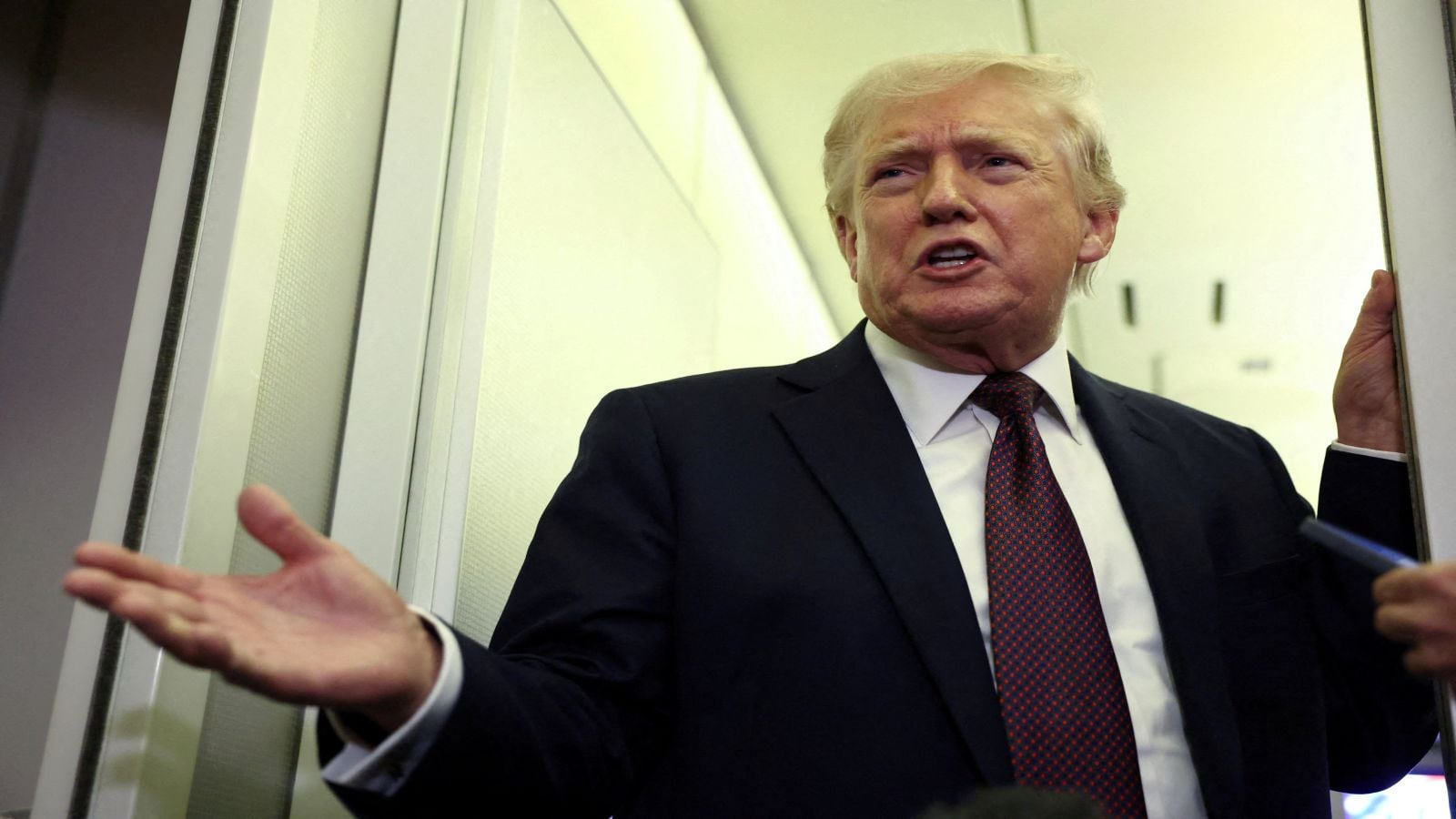
The white house is aggressively walking back reports that the united states will sponsor a 300 billion dollar fund to rebuild iran following the end of their recent military conflict. President donald trump took to truth social to blast the claims as a fabrication designed by political opponents, maintaining that tehran has agreed to permanent non-proliferation without receiving an american payout. Yet the public denial hides a deeper diplomatic reality where both sides are manipulating the structure of an incoming multi-billion dollar investment vehicle to save face at home.
The baseline truth is straightforward. Washington is not cutting a check to its long-time adversary. Vice president jd vance clarified that the multi-billion dollar framework discussed during back-channel talks in qatar is an international investment vehicle financed primarily by gulf arab states and private enterprise, not american taxpayers. If you enjoyed this piece, you might want to read: this related article.
But the disagreement over this money exposes the fragile foundation of the newly minted islamabad agreement. While Washington frames the financial package as a performance-based reward for total disarmament, tehran is telling its domestic audience that the money represents mandatory war reparations for months of heavy american naval blockades and airstrikes.
The Friction Between Performance and Reparations
The geopolitical theater exploded when iranian state media circulated a 14-point draft memorandum of understanding. In tehran's telling, the agreement requires the west to lift its maritime blockade, unfreeze 24 billion dollars in restricted assets, and immediately present a 300 billion dollar reconstruction master plan. For another angle on this event, check out the recent coverage from The New York Times.
The response from the administration was swift and chaotic. The president ridiculed the reports, writing that the story of the united states paying iran was completely false. Interestingly, his social media post initially cited a figure of 300 million dollars instead of the 300 billion dollar sum dominating international headlines, a typical rhetorical blur that allowed him to bypass the finer details of the corporate investment pipeline his own envoys helped map out.
The administration has spent years hammering previous administrations for sending cash to tehran. They cannot afford the political optic of a massive bailout. Consequently, the white house is using a strict performance-based framework to explain the economic package. Under this strategy, western and regional capital will only enter the iranian market if the country permanently alters its behavior.
A look at the actual five-point memorandum signed by top negotiators reveals a stark contrast to the sprawling document published by iranian state media.
| Iranian State Media Claims | Verified U.S. Security Demands |
|---|---|
| Immediate 300 billion dollar western reconstruction fund | International private investment managed via a corporate clearinghouse |
| Unconditional unfreezing of 24 billion dollars in foreign assets | Phased asset releases tied strictly to verified uranium elimination |
| Immediate, permanent lifting of all unilateral energy sanctions | Temporary 60-day sanctions pause during comprehensive disarmament talks |
| Retaining local rights to low-level uranium enrichment | Total removal or dilution of existing enriched stockpiles |
Shifting the Burden to Gulf Capital
The secret to understanding the 300 billion dollar figure lies in who actually owns the money. Western envoys have spent weeks coordinating with corporate leaders in south korea, japan, and europe, alongside sovereign wealth funds in the gulf. The goal is to build an external investment syndicate that functions like a financial carrot, rather than a direct state subsidy.
The strategy aims to make the iranian economy dependent on international stability. If tehran complies with rigorous inspection schedules over a multi-year timeline, international sanctions will lift sequentially, unlocking private corporate interest in the country’s massive oil, gas, and petrochemical sectors.
It is a clever accounting trick. By routing the capital through multinational joint ventures and private infrastructure projects, washington can claim it hasn't spent a single penny of domestic public money. Meanwhile, iranian leadership can point to the massive inflow of industrial capital as a victory that validated their resistance.
Yet this setup contains a fundamental flaw. Private capital does not operate like a political slush fund. Major multinational firms will not risk capital in an unstable jurisdiction simply because a political memorandum was signed in switzerland. The money cannot flow until there is an absolute guarantee that host facilities will not face future kinetic strikes.
The Nuclear Stumbling Block
Even if the financial mechanism can be built, the underlying technical demands remain unresolved. The administration claims that iran has committed to completely eliminating its highly enriched uranium stockpile and opening its doors to unprecedented international inspection teams.
Tehran’s foreign ministry is already offering a very different interpretation of the text. Iranian diplomats insist that any required dilution or down-blending of fissionable material must happen exclusively within their own borders, keeping the specialized infrastructure intact. They are treating the 60-day ceasefire extension as a window to bargain from a position of strength, rather than a timeline for compliance.
A performance-based peace deal is a gamble on institutional transparency in a country that has spent decades mastering the art of asymmetric deception.
If the white house yields on domestic enrichment monitoring to keep the maritime trade routes open, it will face intense domestic backlash from defense hawks and regional partners who argue the agreement does not go far enough. If the administration refuses to permit phased economic relief during the early stages of verification, the iranian state will likely resume its disrupted enrichment programs, rendering the entire diplomatic effort useless.
The next critical phase will occur during the upcoming G7 meetings, where western ministers will attempt to formalize the rules governing this private investment syndicate. The white house has made it clear that the current naval blockade remains firmly in place, serving as a direct economic lever while negotiators try to turn a vague statement of intent into a binding, verifiable treaty.
The 300 billion dollar fund is not fake news, nor is it a done deal. It is a massive, unhedged financial option dependent entirely on an autocracy surrendering its most valuable geopolitical asset.