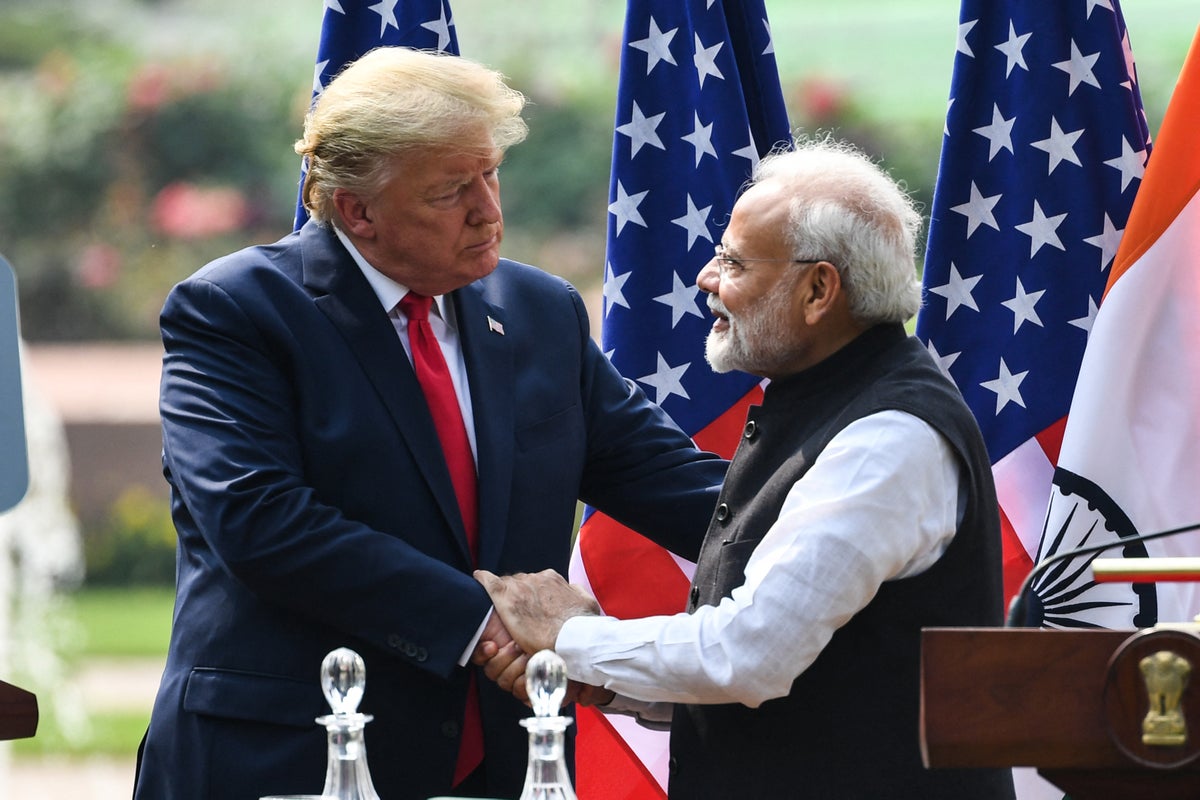
Don't let the public displays of affection fool you.
When Donald Trump stood in the Oval Office on Thursday and declared his love for Indian Prime Minister Narendra Modi, he wasn't offering a discount. He was setting the stage for a hard-nosed, transactional business deal.
"We will get to a deal because I like your prime minister a lot," Trump told reporters. "He is a good friend of mine. We get along great."
It's the kind of quote that makes for fantastic headlines. It sounds warm. It sounds like two global leaders cutting through bureaucratic red tape over a couple of coffees. But if you look past the "good friend" rhetoric, the reality of the impending US-India bilateral trade agreement is incredibly complicated, intensely calculated, and driven entirely by leverage.
The truth is, Washington and New Delhi are nearing the finish line of an interim trade pact. A high-level US delegation from the Office of the United States Trade Representative just wrapped up four days of intense negotiations in New Delhi. Both sides are saying all the right things about "pragmatism" and "cooperation."
But make no mistake. This isn't a friendship pact. It's a calculated recalibration of global economic ties where both sides are fighting for every single percentage point.
The Leverage Game Behind the Modi Trump Chemistry
If you want to understand why a deal is actually close, you have to look at how Trump views the history of US-India commerce. He doesn't view it as a partnership. He views it as a historical heist that he's currently fixing.
In the exact same breath that he praised Modi, Trump threw a punch at India’s historical trade policies. He claimed that for years, India took advantage of American openness by charging massive tariffs on US products while paying nothing to access the American market.
"Now it is the exact reverse," Trump boasted. "And we are making a lot of money with India."
This isn't just typical political grandstanding. It's a window into how the White House is using aggressive tariff threats as a blunt instrument to force concessions. We saw this play out vividly just a few months ago. The administration slapped an additional 25% tariff on Indian imports, explicitly citing New Delhi’s massive appetite for discounted Russian crude oil, which Washington argued was funding Moscow's military operations.
Did India push back with fiery diplomatic rhetoric? Sure. But then they quietly made a deal. According to a White House fact sheet, the US dropped that 25% penalty only after India committed to halting its purchases of Russian oil.
That is how this relationship works now. It's a sequence of pressure, pain, and ultimate concession.
The 12.5 Percent Cloud Hanging Over New Delhi
Even as US Ambassador Sergio Gor and Indian Commerce Minister Piyush Goyal claim that negotiations are down to finalising the "commas and full stops," a massive wrench threatens to jam the gears.
The USTR just released findings from a Section 301 investigation concerning forced labor. Washington flagged 60 economies, including India, for failing to effectively prohibit and enforce bans on imports made with forced labor from third countries.
The penalty? A proposed blanket tariff hike.
- 10% duty for nations that have implemented a forced labor import prohibition.
- 12.5% duty for nations with no such mechanism.
India currently sits in the 12.5% bucket.
This proposal didn't drop by accident right as a trade deal was being finalized. It’s a classic tactical squeeze. The Trump administration is under heavy pressure to replace its current 10% universal tariff—which is set to expire next month and faces serious legal vulnerabilities in the US Court of International Trade—with a more legally defensible framework. By using a Section 301 forced labor probe, the US gives itself a massive new hammer.
If implemented, this 12.5% surcharge would absolutely hammer Indian exporters in labor-intensive sectors like textiles, cotton, seafood, apparel, and aluminum. It completely threatens to upend the framework hashed out in February, where the US agreed to slash baseline tariffs on Indian goods from 50% down to 18%.
So, how do you solve a 12.5% threat when you're supposed to be celebrating a new trade partnership? You negotiate a carve-out. India's Commerce Ministry is already scrambling to submit written comments before the July 6 deadline, aiming to show enough regulatory alignment to at least drop down to the 10% tier, or bypass it entirely through the final text of the bilateral trade agreement.
What Both Sides Actually Want from This Deal
Strip away the political theater, and the actual mechanics of what's being negotiated come down to basic market access.
India wants its baseline tariffs dropped to that promised 18% floor. They want predictability for their engineering goods, generic pharmaceuticals, and textiles entering American ports. They need to ensure that their exports don't end up costing more than goods coming out of Pakistan or Bangladesh, which would decimate their competitive advantage.
The US, on the other hand, is hunting for specific wins. They want India to drop its notoriously high tariffs on American industrial products, medical devices, and high-end agricultural goods. They want to sell more cherries, more pork, and yes, those famous Harley-Davidson motorcycles that Trump loves to bring up. Furthermore, Washington is pushing New Delhi to align its digital economy policies, data localization laws, and intellectual property rights much closer to US corporate standards. There are even reports floating around Capitol Hill that India has quietly committed to purchasing up to $500 billion worth of American goods over the next five years to keep the peace.
The Looming June 17 Russian Oil Deadline
There is another ticking clock that nobody in the celebratory press conferences wants to talk about. The US State Department is currently reviewing a critical sanctions waiver that allows India to purchase Russian oil through specific global supply channels.
That waiver expires on June 17.
Secretary of State Marco Rubio told Congress this week that the exemption was always meant to be a temporary fix to stabilize global energy markets during disruptions in West Asia. "We would like to end it as soon as we possibly can," Rubio stated flatly.
If the US refuses to extend that waiver on June 17, India's energy security takes a hit, or they risk triggering a whole new wave of secondary American sanctions. It's highly likely that the final signatures on this interim trade deal are intimately tied to exactly how that June 17 deadline is handled behind closed doors.
How to Read Between the Lines Moving Forward
If you're doing business between the US and India, or just trying to figure out where the global economy is heading, you need to ignore the political speeches and watch the calendar.
Do not panic over the aggressive public threats, and don't celebrate the gushing compliments. They are two sides of the exact same coin.
Exporters and supply chain managers should prepare for a volatile summer. Watch the June 17 Russian oil waiver decision first. Then, track the USTR public hearings on the Section 301 tariffs scheduled for July 7. If India successfully secures an exemption or an accelerated path to the lower tariff tier within the framework of the new trade deal, it will signal that the bilateral pact is officially locked in.
The deal is coming because both leaders need the economic win. Just remember that in this era of geopolitics, a handshake from a "good friend" always comes with a bill attached.