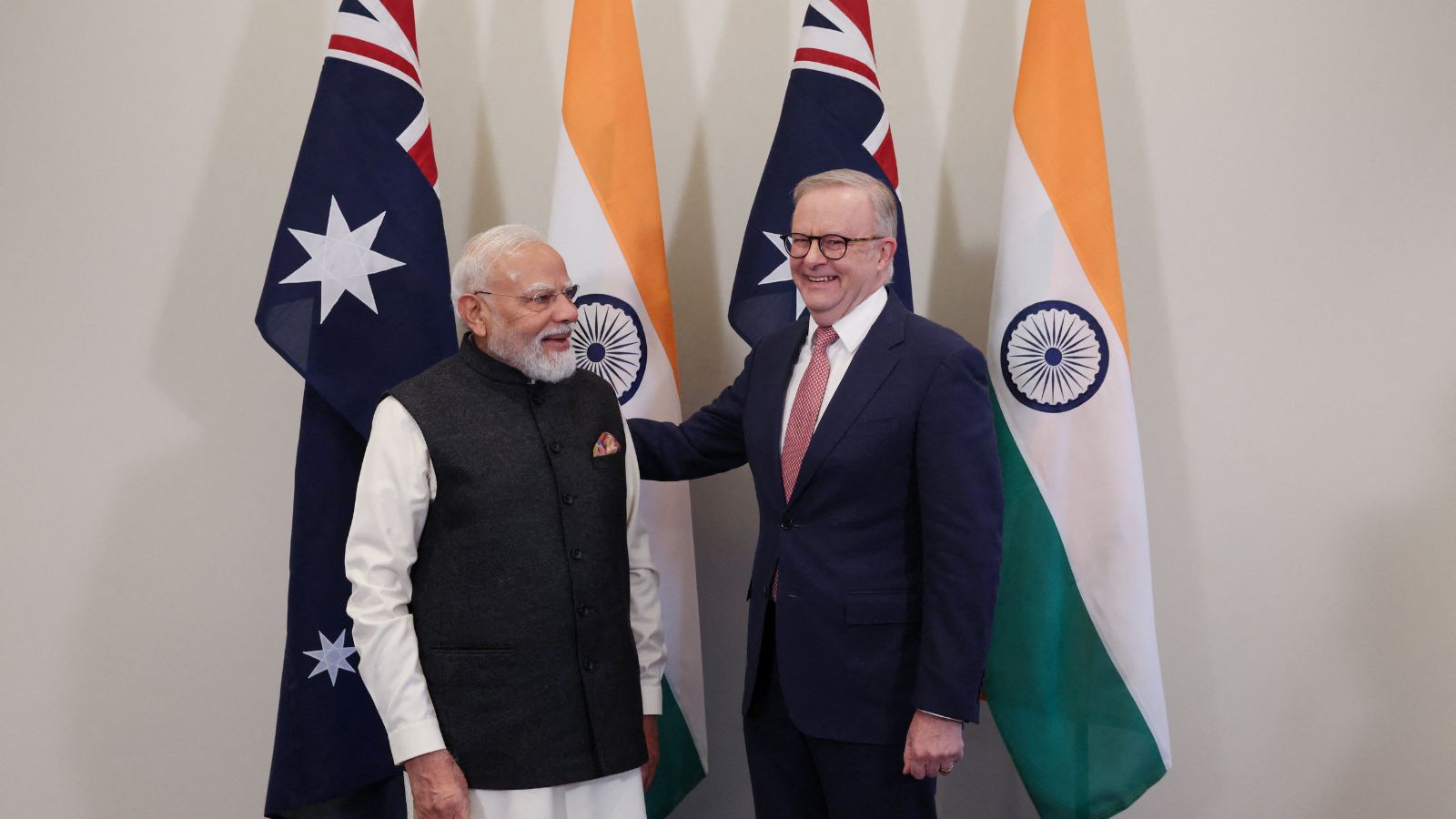
India wants uranium. Australia has nearly a third of the world's supply sitting in the ground. For over a decade, a massive diplomatic logjam kept the two countries from doing anything meaningful about it.
That just changed in Melbourne.
Prime Minister Narendra Modi and Australian Prime Minister Anthony Albanese just sealed a major commercial uranium supply pact. It marks a dramatic shift in how these two Indian Ocean powers handle energy and security. While the mainstream press is focusing heavily on the rockstar reception Modi received from 20,000 diaspora members at Marvel Stadium, the real story lies in the paperwork signed behind closed doors. This meeting wasn't just a routine diplomatic photo-op. It fundamentally rewrites the trade dynamics in the Indo-Pacific.
Turning the Nuclear Key
To understand why this uranium deal is a big deal, you have to look at India's staggering energy math. The country is racing to build massive data centers to fuel its artificial intelligence ambitions. At the same time, industrial manufacturing is booming. You can't run an AI-driven economy on wishful thinking or intermittent renewables alone. India needs massive, continuous baseline power.
To solve this, New Delhi plans to build 18 new nuclear reactors by 2032. The country aims to hit 100 gigawatts of nuclear capacity by 2047. But India has a massive bottleneck. It lacks domestic uranium.
Australia holds roughly 28 percent of known global uranium resources. The two nations actually signed a basic civil nuclear framework back in 2014, but it sat frozen for years. Australia had strict anxieties about tracking safeguards, ensuring the fuel only went to civilian power grids rather than weapons programs. The newly signed agreement clears those regulatory hurdles. It sets up a direct, streamlined commercial pipeline. It means Australian mining companies can finally cash in on India's massive reactor expansion.
Moving Past Raw Commodities
The economic relationship between Canberra and New Delhi has historically been dull. Australia dug stuff out of the ground—mostly metallurgical coal for steel production—and shipped it off to Indian ports. In fact, coal shipments jumped nearly 40 percent year-on-year by late 2025. But both leaders want to move past this basic dig-and-ship model.
Look at the new Critical Mineral Corridor established during this summit. India is desperate for lithium, cobalt, and rare earth elements to power its electric vehicle manufacturing plants. Australia has these in abundance. Instead of just buying raw dirt, Indian entities are now co-investing in Australian midstream processing and refining infrastructure.
The financial muscle is showing up too. AustralianSuper, the biggest pension fund in Australia, announced a fresh A$500 million investment into India's National Investment and Infrastructure Fund. When a fund managing four trillion dollars starts deploying serious capital into Indian infrastructure, you know the corporate alignment is real.
The New Defense Architecture
Outside of energy, the biggest shifts happened in defense. The strategic environment in the Indo-Pacific is getting increasingly tense. Friction points are multiplying, highlighted by recent naval clashes near the Strait of Hormuz. While both countries belong to the Quad alliance alongside the US and Japan, New Delhi and Canberra are quietly building bilateral safeguards in case Washington pulls back.
The leaders launched a new defense innovation corridor during the talks. This initiative links defense startups and manufacturers in both countries to co-produce military hardware. They also finalized a comprehensive Maritime Security Roadmap. This isn't just about sharing academic papers. It establishes a framework for joint coastal surveillance and enhanced undersea domain awareness across the Indian Ocean.
Human ties are keeping pace with hardware. For the first time, an Indian Army officer is being deployed directly to the Australian Defence College to build long-term institutional familiarity.
The Complex Realities
It isn't all smooth sailing. The relationship faces real domestic pressures on both sides. In Melbourne, protests flared outside the diplomatic venues. Activists raised vocal concerns regarding minority rights in India, while separate local groups held demonstrations protesting high levels of Indian migration to Australia.
Furthermore, Canberra faces a delicate balancing act with Beijing. China remains Australia's top trading partner by a wide margin. Ramping up defense pacts and critical mineral supply chains designed specifically to bypass Chinese dominance requires a careful diplomatic dance. Albanese has to manage these domestic and regional tensions while trying to capture a slice of India's historic growth.
The strategic layout is simple. India needs resources to feed its economic engine. Australia needs to diversify its trade dependencies away from a single dominant neighbor. By locking in uranium, creating a defense corridor, and securing pension investments, both nations have moved past the old Cold War-era hesitations. They are building a highly practical, transactional partnership designed to handle an increasingly volatile world.