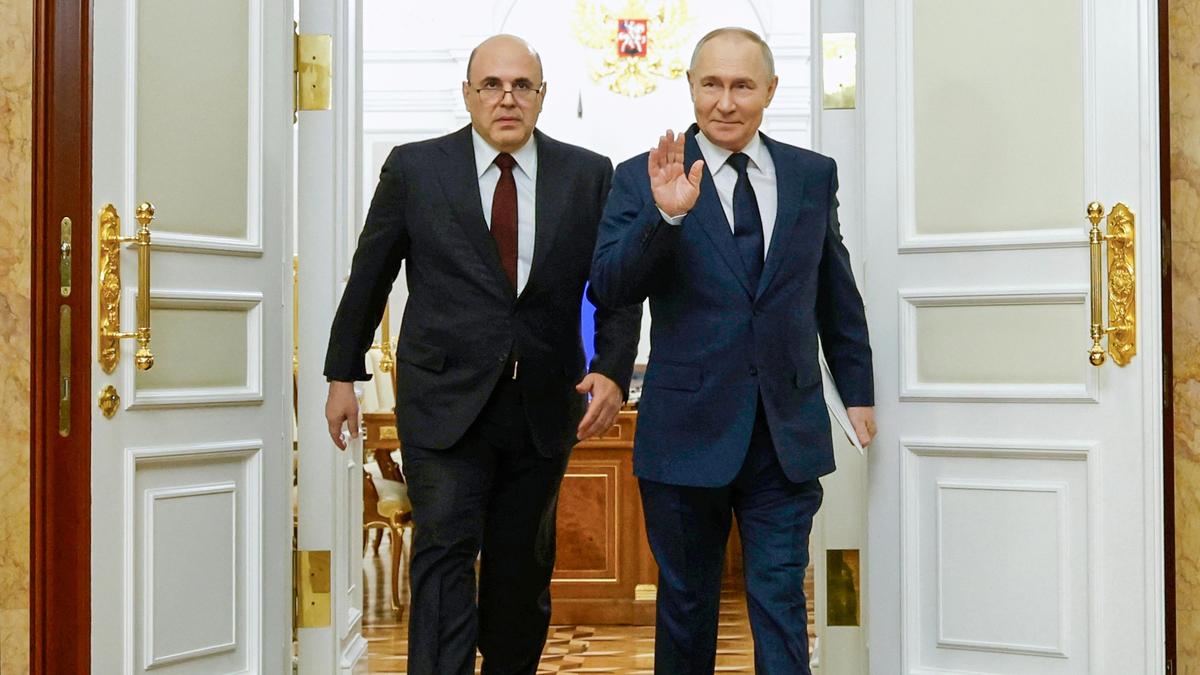
Western sanctions were supposed to isolate Moscow and cripple its economy. Instead, they triggered one of the fastest trade realignments in modern economic history. When Russian Prime Minister Mikhail Mishustin announced that India has solidified its position among Russia's top foreign trade partners, he wasn't just making a diplomatic statement. He was stating a massive, numbers-backed reality.
Think about this. In 2021, total bilateral trade between India and Russia hovered around a modest $13 billion. Fast forward to the financial year 2024-25, and that figure skyrocketed to an all-time high of $68.7 billion. That is nearly a five- to six-fold increase in just four years. Moscow has successfully rewritten its economic playbook, and New Delhi is right at the center of it. Learn more on a connected topic: this related article.
If you think this massive commercial spike is just a temporary phase of India buying cheap crude oil, you are missing the bigger picture. This shift is reshaping global supply chains, banking systems, and geopolitical alliances.
The Real Story Behind Russia's Trade Realignment
Moscow didn't just survive Western pressure. It aggressively redirected its entire export engine toward what it calls friendly nations. According to Mishustin, the share of these friendly countries in Russia's total trade turnover has hit a record-breaking 86%. The main drivers behind this surge are China, Belarus, India, and Kazakhstan. More reporting by The Motley Fool explores similar perspectives on the subject.
The shift happened fast. Russia's energy exports to its core group of backbone countries doubled over a three-year period, making up 80% of its energy exports by the first half of 2025. This structural pivot highlights a deeper trend in the global economy. Power is moving away from traditional Western blocs. Mishustin pointed out that the economic weight of the G7 is actively shrinking, while the Global South and the BRICS bloc are picking up the slack.
But this massive trade volume brings a massive headache. How do you pay for tens of billions of dollars in goods when Western financial networks like SWIFT are completely off-limits?
Ditching the Greenback for Good
You can't talk about India-Russia commerce without talking about the death of the US dollar in their bilateral dealings. For decades, global commodities relied on the greenback. Today, India and Russia have essentially decoupled from that system.
Mishustin revealed that the share of national currencies, meaning roubles and partner currencies like the Indian rupee, in Russia's trade turnover with all nations hit 85% over a recent 10-month period. That blows past their original target of 70%. Even more striking is that the Russian rouble now accounts for over half of all these settlement transactions.
Russian Foreign Minister Sergey Lavrov backed this up during a bilateral conference, noting that an astonishing 96% of trade specifically between India and Russia is now handled entirely in national currencies.
Ditching the dollar sounds great on paper, but it creates a massive practical issue for Indian policymakers. India imports vast amounts of Russian crude but exports relatively little back. This imbalance has left Russian banks sitting on billions of Indian rupees that they struggle to spend. To keep the gears turning, both nations have been forced to look past the oil fields and find new ways to balance the ledger.
Moving Beyond Crude Oil
Let's look at what is actually moving across the borders. India's imports from Russia are heavily lopsided. Out of more than $40 billion in imports during the current fiscal cycle, crude oil alone accounted for a massive $35.76 billion. Indian refiners have consistently gorged on Russian crude, sometimes snapping up over 2 million barrels per day. This fulfills a huge chunk of India's energy needs while offering a reliable revenue stream for Moscow.
But look closer at the rest of the import basket. India relies heavily on Russia for critical agricultural inputs and manufacturing materials:
- Fertilizers: Over $2 billion to fuel India's massive agricultural sector.
- Vegetable Oils and Fats: Nearly $1 billion.
- Industrial Infrastructure and Project Goods: Worth $564 million.
- Iron and Steel: Clocking in at $343 million.
On the flip side, India's exports to Russia are much smaller but highly strategic. India shipped roughly $3 billion worth of goods to Russia in the same period, led by high-value manufactured items and essentials:
- Machinery and Mechanical Appliances: Valued at $479 million.
- Pharmaceuticals and Biological Formulations: Worth $319 million, keeping Russian pharmacies stocked amid Western pullouts.
- Organic and Inorganic Chemicals: Combining for over $310 million.
- Electrical Equipment and Telecom Instruments: Providing vital supply chain alternatives for Russian industry.
The two countries aren't content with these numbers. Indian Commerce Minister Piyush Goyal and his Russian counterparts have set an ambitious bilateral trade target of $100 billion by 2030. Reaching that goal requires moving completely away from a simple oil-for-rupees transaction model.
The Logistics Problem and What Comes Next
If you want to understand where this relationship is going, watch the infrastructure. Shipping goods between Russia and India through the traditional European maritime routes is slow, costly, and vulnerable to sanctions. That is why both nations are pouring resources into alternative transit corridors.
The focus has turned to the International North-South Transport Corridor (INSTC), a multi-mode transit network spanning ship, rail, and road routes through Iran. They are also actively developing the Eastern Maritime Corridor, which connects India's eastern port of Chennai directly to Russia's Vladivostok in the Far East. Opening up the Russian Far East gives India direct access to untapped critical minerals, coking coal, and energy reserves, while giving Russia an open gateway to the Indo-Pacific.
India's External Affairs Minister S. Jaishankar has repeatedly emphasized that the relationship between New Delhi and Moscow remains one of the steadiest globally. India refuses to compromise on its strategic autonomy. Despite immense pressure from Washington and European capitals, New Delhi has made it clear that its primary duty is to its own economic development and energy security.
For businesses and trade strategists, the message is clear. This economic corridor is permanent. The trade pattern has shifted from a crisis-response mechanism into a deliberate, long-term economic strategy. If you want to capitalize on this expanding corridor, focus on the sectors outside of energy. Look toward pharmaceutical supply chains, chemical manufacturing, agricultural tech, and joint infrastructure development in the Russian Far East. The trade targets for 2030 prove that the economic relationship is expanding, and the financial infrastructure to support it is already in place.