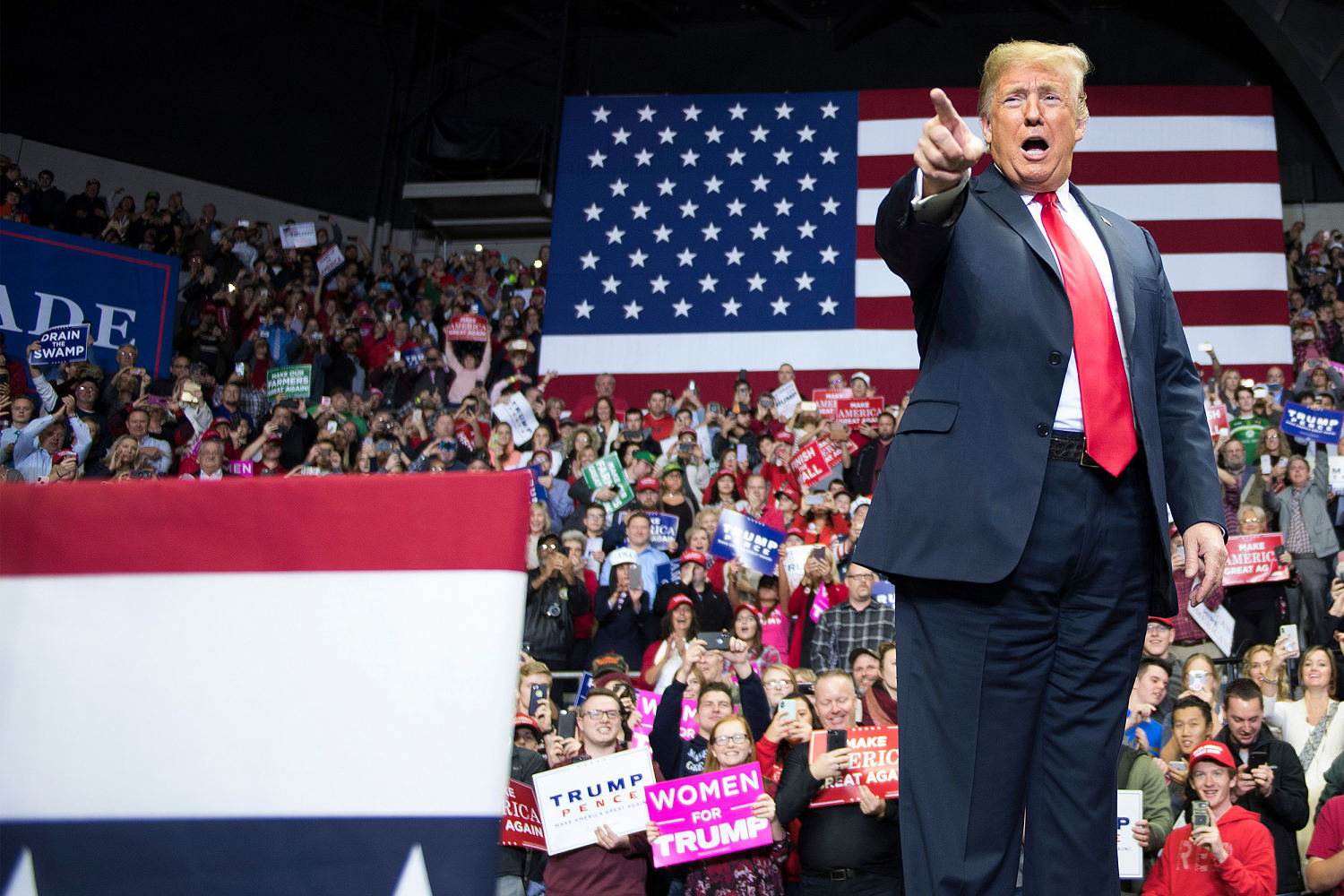
The national media is currently hyperventilating over Tuesday’s Indiana primary, framing it as some grand "payback" mission for Donald Trump. They want you to believe that a few social media posts and a "RINO" label are enough to topple the Republican establishment in a state that prides itself on quiet, methodical conservatism.
They are wrong.
The lazy consensus suggests that because Trump won Indiana by double digits in 2024, his endorsement is a lightning bolt that incinerates any incumbent it touches. In reality, the 2026 Indiana primary is revealing the exact opposite: the MAGA endorsement has become a devalued currency, and the "payback" narrative is a desperate attempt to maintain an illusion of control that no longer matches the data on the ground.
The Redistricting Myth: Revenge is a Poor Strategy
The mainstream focus is centered on seven Republican state senators—men like Greg Goode and Spencer Deery—who had the audacity to vote against a Trump-backed redistricting plan in late 2025. The "payback" narrative claims these incumbents are on the chopping block because they defied the kingmaker.
But let’s look at the mechanics of Indiana power. I’ve watched political machines operate for decades, and they don't break because of a single vote on a map. Indiana’s GOP is a fortress of localism. The senators being targeted aren't "RINOs"; they are incumbents with deep-rooted community ties, local donor networks, and track records of delivering for their districts.
Imagine a scenario where a voter in District 23 has seen Spencer Deery at every local fish fry and school board meeting for years. Does that voter suddenly flip because a digital post from Florida calls him a "loser"? The media ignores the friction between national rhetoric and local loyalty. In Indiana, that friction usually favors the guy who actually shows up.
The Endorsement Glut
The primary reason the Trump endorsement is losing its teeth is simple economics: oversupply. When you endorse everyone from the top of the ticket down to a local dog catcher, you aren't a kingmaker; you’re a spammer.
In this primary, Trump has lined up challengers against seven of the eight senators who blocked his redistricting push. By making it a blanket vendetta, he’s turned a "special" endorsement into a commodity. Voters in Indiana are starting to treat these endorsements like junk mail. They see the same "REAL Republican" versus "RINO" script being recycled in District 1, District 11, and District 41.
Why the "Payback" Narrative Fails:
- Voter Fatigue: Hoosiers are notoriously practical. They care about the cost of living and Governor Braun’s stance on cannabis or SNAP expansion, not a personal grudge over a failed 2025 map.
- Incumbency Advantage: In a state with GOP supermajorities, the "establishment" is the water people drink. Attacking the establishment in Indiana is essentially attacking the very system that has kept the state deep red for years.
- Financial Reality: While groups like Hoosier Leadership for America are dumping dark money into ads, the local incumbents have their own war chests. Money from outside the state often backfires in Indiana, where "out-of-state interests" is a slur used to kill campaigns.
The False Proxy War
Pundits love to frame this as a test of "Trump’s sway." This is a flawed premise. If the incumbents win, the media will say Trump is losing his grip. If the challengers win, they’ll say MAGA is unstoppable.
Both are wrong.
These races are being decided by hyper-local issues. Take State Rep. Bruce Borders in District 45. He’s a Trump-endorsed incumbent facing a rematch with a local commissioner. If he wins, is it because of Trump? No, it’s because he’s a ten-term veteran who knows his voters' names. The "Trump factor" is often just a coat of paint on a house that was already built.
We are seeing a shift where the "MAGA" brand is being utilized by local candidates as a marketing tool, rather than the candidates being "created" by the brand. The power dynamic has flipped. Candidates are leveraging the endorsement to boost their own existing platforms, but they are no longer dependent on it for survival.
The Cost of Retribution
There is a massive downside to this contrarian take: party unity. By forcing these "loyalty tests" over redistricting, the national wing of the party is burning bridges with the very people who actually run the state.
I’ve seen parties blow millions on primarying their own successful incumbents only to end up with a weakened, radicalized winner who can't govern. Indiana is a state that values "orderly" politics. This scorched-earth payback strategy is anathema to the Indiana GOP’s DNA.
If you’re watching the returns tonight, stop looking for a "Trump win" or a "Trump loss." Look at the margins of the incumbents. If the "targeted" senators hold their ground with 60% or more of the vote, it’s a clear signal that the era of the "Magic Endorsement" is over.
The status quo isn't being disrupted by the "payback" campaign. It’s being reinforced by it. Every time a Trump-backed challenger loses in a deep-red district, the myth of the kingmaker dies a little more.
Don't buy the hype of a political revolution in Indiana. It's just a lot of noise over a map that nobody outside of a few offices in Indianapolis actually cares about.
Watch this analysis of Indiana's Republican primary dynamics
This discussion provides a breakdown of how national political figures are attempting to influence local Indiana races and the potential backlash from voters.
http://googleusercontent.com/youtube_content/1