The monsoon isn't just a weather pattern in India. It's the economic heartbeat of the entire subcontinent, and right now, it's walking a tightrope. When UN Secretary-General António Guterres bluntly stated that the planet is "on fire", he wasn't just using dramatic rhetoric. He was pointing straight at a brewing climate reality that threatens millions of farmers who depend on predictable rainfall to survive.
Let's look at what's actually happening. A potent El Niño system is taking hold in the Pacific, supercharged by record-shattering ocean heat. According to the World Meteorological Organization, this phenomenon is pushing global weather into completely uncharted territory. For India, that means the probability of below-normal rainfall is climbing fast, threatening agricultural yields and water security across the region.
The Real Threat Behind the Headlines
Why should anyone outside of agriculture care about India's monsoon rains? Because a failed monsoon triggers a chain reaction. Food inflation spikes. Rural livelihoods vanish overnight. Groundwater tables drop to critical lows.
We are seeing a convergence of dangerous climate drivers. It is not just El Niño acting alone. It is combining with exceptionally warm global oceans and shifting pressure systems like the Indian Ocean Dipole. When these forces lock together, they alter the normal flow of moisture-laden winds heading toward the subcontinent.
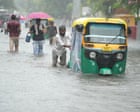
You get severe dry spells in regions that desperately need water, punctuated by sudden, violent floods when the atmosphere finally breaks. This erratic weather makes traditional farming wisdom almost obsolete. Farmers who have planted crops by ancestral calendars for generations are now watching their fields bake under scorching heat domes.
Beyond the Panic: What the Data Actually Says
The WMO's seasonal outlook points to an overwhelming likelihood of above-average temperatures across the Indian subcontinent. Pacific waters driving the current El Niño have never been this warm this early in the cycle.
This means the traditional safety margins are gone. Governments and local communities can no longer treat each failed season as an isolated tragedy. It is a systemic risk.
- Agricultural Vulnerability: Crops like rice, pulses, and soybeans rely heavily on the June-to-September window. A delayed or weak pulse of rain stunts growth before it even starts.
- Economic Shockwaves: India's rural consumption drives a massive share of the broader economy. When farmers have a bad season, retail markets feel the pinch immediately.
- Urban Stress: It isn't just rural fields suffering. Cities face acute drinking water shortages and massive power grids straining under air conditioning loads as heatwaves intensify.
Fixing Our View on Climate Shocks
We talk endlessly about global carbon targets, but local adaptation is where the rubber meets the road. António Guterres pointed out that heat is claiming lives on a growing scale, exposing billions of workers to life-threatening conditions. Building resilience means moving past emergency responses.
Cities across South Asia need comprehensive heat-health action plans, retrofitted buildings, and early warning networks that reach down to the village level. Farmers need better access to drought-resistant seed varieties and micro-irrigation tech that makes every single drop count.
The warning signs are flashing bright red. Ignoring the health of the monsoon is a gamble India and the world simply cannot afford to take.


