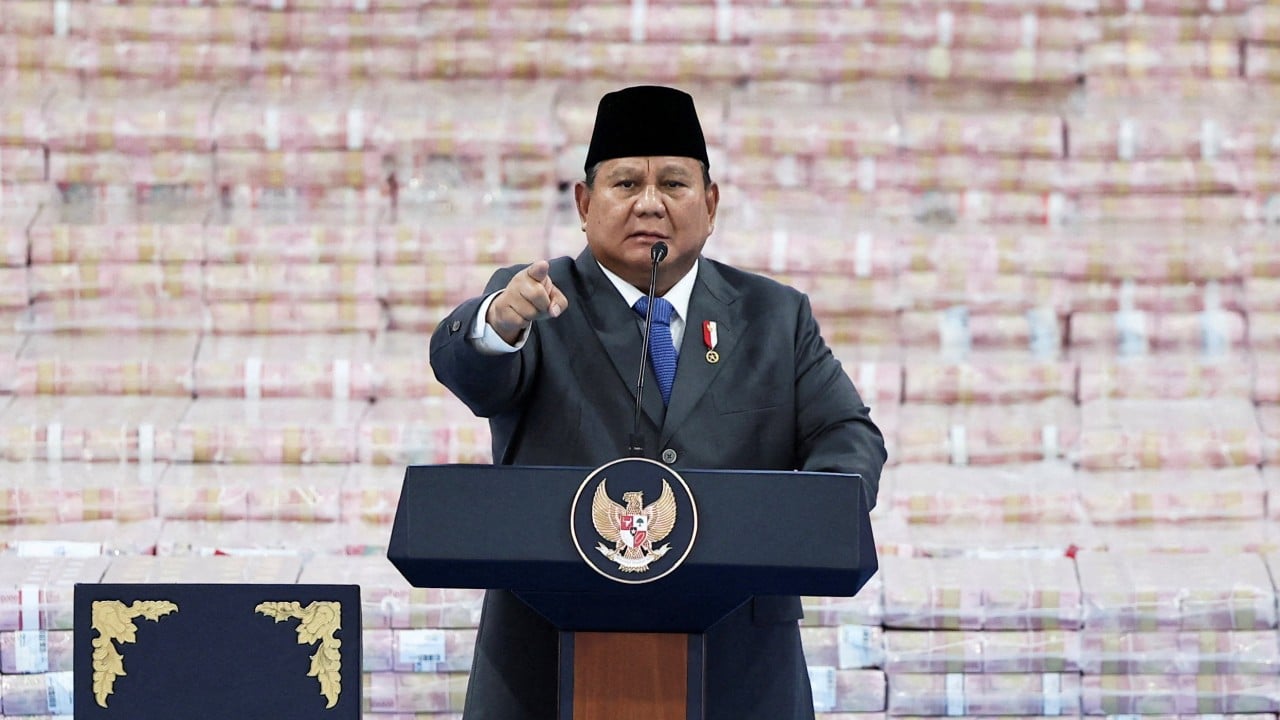
The financial press is panicking over Indonesia. Headlines scream about the rupiah tumbling to multi-year lows. Commentators point fingers at President Prabowo Subianto, whispering that his ambitious spending plans are spooking foreign bondholders and dragging the currency into an abyss. They look at the charts, see a downward line, and declare an impending crisis.
They are reading the playbook upside down.
The lazy consensus in macroeconomics dictates that a falling currency is an absolute failure—a scorecard showing a government losing control. But in the brutal world of emerging market manufacturing and global supply chains, a strong currency can be a economic suicide pact. What the mainstream media frames as a rout is actually a massive competitive calibration. Prabowo isn't shrugging off the rupiah’s slide out of ignorance. He is letting it ride because a cheaper currency is exactly what Indonesia needs to finance its future.
The Deficit Myth That Terrifies Wall Street
Mainstream financial analysts are obsessed with the 3% GDP fiscal deficit ceiling. The prevailing narrative claims that Prabowo’s signature programs—like the national free meals initiative for school children—will blow past this legal limit, trigger hyperinflation, and cause a permanent capital flight.
Let's dissect the mechanics of how global trade actually works. When a country relies heavily on exporting raw commodities like nickel, coal, and palm oil, a super-strong domestic currency acts as a stealth tax on exporters. Indonesia is aggressively trying to transition from a mere dirt-exporter to a high-value industrial powerhouse through its downstreaming policy, known locally as downstreaming or hilirisasi.
Imagine a global electric vehicle battery manufacturer looking to set up a multi-billion-dollar processing plant. They are choosing between Vietnam, Malaysia, and Indonesia. If the rupiah artificially stays strong because Bank Indonesia spends billions of dollars in foreign reserves to prop it up, Indonesian labor, land, and local components become exponentially more expensive in US dollar terms.
By allowing the rupiah to find its natural, lower equilibrium, Prabowo is instantly making Indonesian industrial exports cheaper on the global stage. It is a textbook competitive devaluation that drives manufacturing foreign direct investment (FDI). Wall Street looks at portfolio capital—the hot money moving in and out of bonds. Prabowo is looking at fixed capital—factories, smelters, and deep-water ports. Fixed capital does not run away when a currency drops 5%.
Dismantling the People Also Ask Panic
The financial internet is currently flooded with variations of the same anxious questions. The premises of these queries are fundamentally flawed, driven by historical trauma rather than current economic realities.
Is the Rupiah Heading for a 1997 Style Asian Financial Crisis Collapse?
No. And anyone asking this fails to understand basic central bank balance sheets. In 1997, Indonesian corporates were loaded with unhedged, short-term US dollar debt while the central bank maintained a fixed exchange rate. When the peg broke, the debt burden multiplied overnight, causing systemic bankruptcy.
Today, Indonesia's external debt-to-GDP ratio sits comfortably below 30%. The corporate sector is heavily hedged. More importantly, Bank Indonesia holds over $130 billion in foreign exchange reserves. The central bank is choosing not to burn through those reserves to fight the market trend because doing so is a fool’s errand. They are smoothing the volatility, not defending an arbitrary line in the sand.
Why is Prabowo Not Doing More to Support the Currency?
Because supporting the currency means raising interest rates. Raising interest rates chokes domestic credit, slows down consumer spending, and kills economic growth. If Bank Indonesia hikes rates aggressively to please foreign bond investors, they save the rupiah but sacrifice the domestic economy. Prabowo’s mandate is 7% economic growth, not a pristine, overvalued exchange rate that makes wealthy tourists feel good in Bali.
The High Cost of the Contrarian Reality
Let's be completely transparent: a weaker rupiah is not a free lunch. There are real, painful trade-offs that mainstream analysts love to hyper-focus on while ignoring the broader strategic advantages.
- Imported Inflation: Indonesia imports significant amounts of wheat, soybeans, and specialized machinery. A weaker currency means inflation on supermarket shelves.
- Energy Subsidies: As oil is priced in dollars, a falling rupiah inflates the state oil company Pertamina’s import bill, forcing the government to either increase energy subsidies or risk public anger by raising fuel prices.
- Sovereign Debt Servicing: The portion of government debt denominated in foreign currencies becomes more expensive to pay back in rupiah terms.
These are genuine operational risks. But managing these risks through targeted fiscal subsidies is far cheaper than the alternative: destroying industrial competitiveness by keeping the currency overvalued.
The Structural Playbook: Moving Up the Value Chain
During my years advising corporate boards on Southeast Asian supply chain architecture, I watched multinational firms abandon countries with overvalued currencies. A strong currency breeds economic complacency. It turns an economy into a consumption-driven society that imports everything and produces nothing.
Prabowo’s indifference to the daily fluctuations of the forex market signals a shift toward economic nationalism that prioritizes production over consumption. Look at what happened with nickel processing. Indonesia banned raw ore exports, forced global companies to build smelters domestically, and tolerated the currency volatility that came with shifting the tectonic plates of its economy. The result? A massive surge in high-value stainless steel and battery material exports.
A weaker rupiah accelerates this transition. It forces domestic supply chains to integrate. When importing foreign components becomes too expensive due to the exchange rate, Indonesian companies are incentivized to source components locally. This builds the very industrial ecosystem that the country has lacked for decades.
Stop Looking at Exchange Rates as a Scorecard
The obsession with a currency's nominal exchange rate against the US dollar is a relic of the mid-20th century. The US dollar is currently experiencing a period of structural strength driven by high Federal Reserve interest rates. Almost every emerging market currency is under pressure. Trying to fight the gravity of a strong US dollar is an expensive game that central banks routinely lose.
Prabowo is playing the long game. By refusing to panic, he is telling global markets that Indonesia will no longer sacrifice its domestic growth targets to protect the short-term yields of foreign portfolio investors. If bond traders want to dump Indonesian debt because they fear a higher fiscal deficit, let them. The vacuum will be filled by direct industrial investors who care about long-term production costs, not daily basis points.
The true metric of Indonesia's economic health isn't whether the rupiah is trading at 15,000 or 16,500 to the dollar. The metric that matters is whether the country is building the industrial capacity to sustain its population when the commodity boom inevitably ends. A depreciating currency is the market’s way of adjusting a nation's cost structure to make its goods attractive to the world.
Stop checking the currency tickers. Start watching the factory floors. That is where Prabowo’s economic gamble will be won or lost, and right now, the numbers are heavily in his favor.