Walk into any major robotics expo in Shenzhen, Austin, or Tokyo, and the media crowd clusters around the same spectacle. A shiny, titanium-skeleton humanoid robot takes five agonizingly slow steps forward, waves a five-fingered metallic hand, and prompts a wave of applause from onlookers. Venture capitalists reach for checkbooks. Tech journalists draft headlines about the end of human labor. It is theater at its most expensive.
Meanwhile, behind closed loading dock doors and inside hazardous chemical mixing facilities, a far more profound industrial transformation is quietly unfolding. In other news, we also covered: The Battlefield Experiment Feeding Artificial Intelligence Defense Systems.
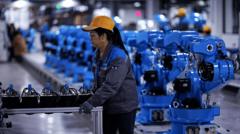
The bipedal humanoid machine gets the cameras flashing. The specialized, non-humanoid automated system keeps the global supply chain from collapsing. While everyone watches robots try to walk like humans, engineers are deploying stationary, wheeled, and track-mounted automation that actually solves labor shortages without defying the basic laws of physics.
Gravity is unforgiving. Maintaining dynamic balance on two legs requires immense computing power, massive battery consumption, and fragile actuators prone to failure under heavy loads. A wheeled chassis carrying a robotic arm does not need to compute center-of-gravity shifts every millisecond. It simply moves from point A to point B, lifts a thousand-pound pallet, and stays operational for three shifts straight. The Next Web has provided coverage on this important subject in extensive detail.
Yet the market narrative remains stubbornly fixated on the human form factor. This bias stems from a fundamental misunderstanding of utility. We assume that because our industrial world was built by humans, it must be operated by humanoids. That assumption is rotting corporate balance sheets and misallocating billions of venture dollars.
The Economics of Efficiency
To understand why the quiet machinery revolution wins, look at the bottom line. Building a humanoid robot requires complex harmonic drives, expensive force-torque sensors, and custom actuators for every joint. The unit economics are currently abysmal. Many prototypes cost upwards of one hundred thousand dollars to build, with maintenance schedules that demand cleanroom environments and constant calibration.
Now examine a standard automated guided vehicle paired with a collaborative robotic arm. The components are off-the-shelf. The maintenance workforce understands how to service them. If a motor fails, a technician replaces it in twenty minutes using standard wrenches.
Factories do not care about anthropomorphic elegance. Factories care about throughput, uptime, and return on capital expenditure.
+---------------------------+---------------------------------+-----------------------------------+
| Metric                    | Bipedal Humanoid Robots         | Industrial Mobile Manipulators    |
+---------------------------+---------------------------------+-----------------------------------+
| Energy Efficiency         | Low (High energy for balancing) | High (Wheeled/tracked motion)     |
| Maintenance Cost          | Extreme (Custom joints/sensors) | Moderate (Standardized parts)     |
| Payload Capacity          | Typically limited (Under 50lbs) | High (Often exceeds 200lbs)       |
| Deployment Environment    | Highly controlled demos         | Messy, real-world warehouses      |
+---------------------------+---------------------------------+-----------------------------------+
This structural divergence explains why smart money is quietly shifting away from humanoid labs and into firms building autonomous mobile robots, overhead gantry systems, and specialized pick-and-place nodes. These machines lack social media accounts. They rarely go viral on X. They just move millions of inventory items per day with a failure rate approaching zero.
Overcoming the Retrofitting Myth
A common argument from humanoid proponents is that factories and warehouses are designed for humans. Stairs, narrow corridors, and multi-level shelving supposedly demand a bipedal worker.
This argument collapses upon closer inspection of modern industrial real estate.
New fulfillment centers are purpose-built for automation. They feature flat, laser-leveled concrete floors, standardized racking, and automated vertical lifts. Even in legacy facilities, retrofitting a warehouse to accommodate autonomous forklifts or conveyor lines is vastly cheaper than deploying fleets of humanoid robots that struggle with battery life and thermal management.
Consider a hypothetical distribution center operated by a mid-sized logistics firm. If management purchases fifty humanoid robots to replace order pickers, they face constant battery swaps every four hours, software crashes when lighting conditions change, and physical falls that shatter expensive sensor suites. If that same firm invests in magnetic-strip-guided autonomous carts and fixed-rail sorting arms, the system runs continuously for years with minor software patches.
The environment adapts to the machine, not the other way around. Human history shows that we change our infrastructure to suit efficient tools. We did not build locomotives with mechanical legs to walk along hiking trails; we laid steel tracks. The same principle applies inside the four walls of modern production facilities.
The Software Layer Driving the Shift
Hardware is only half the equation. The quiet machine revolution succeeds because of advances in spatial intelligence that do not require human-like reasoning.
Modern automated systems use edge computing, simplified SLAM algorithms (Simultaneous Localization and Mapping), and deterministic logic. They do not need massive large language models to decide whether to pick up a cardboard box. They rely on computer vision calibrated for specific shapes, weights, and textures.
This specialization creates extreme reliability. A neural network trained exclusively on recognizing and sorting pharmaceutical vials makes far fewer errors than a general-purpose humanoid attempting to fold laundry, pour coffee, and stock shelves all in the same shift. Generalization is the enemy of industrial efficiency. The more tasks a machine is forced to handle, the worse it performs at each individual task.
The Venture Capital Hangover
We are approaching a correction point in robotics financing. For the past five years, investors blinded by science-fiction fantasies poured capital into companies promising general-purpose domestic and industrial humanoids.
Those bets are coming due. Limited partners are asking hard questions about revenue generation. When a robotics startup shows a video of a robot walking slowly across a flat carpet, institutional investors are no longer reaching for their checkbooks; they are asking for unit economics reports and durability stress tests.
Companies that built their entire business model on the aesthetic appeal of a mechanical human are scrambling to pivot toward industrial automation tasks that actually generate cash flow. They are taking their expensive balancing algorithms and slapping them onto wheeled bases just to survive.
The market is correcting itself through sheer economic gravity.
The Real Future of Labor
None of this means human labor is entirely safe from disruption, but the threat looks different than the one projected by sci-fi movies.
Blue-collar workers are not competing against a steel-and-silicon replica of themselves. They are working alongside silent, tireless conveyors, overhead sorting gantries, and mobile carts that handle the brutal physical strain of heavy lifting. This collaboration reduces repetitive stress injuries while keeping human oversight where it belongs: handling exceptions, quality control, and system management.
The quiet machine revolution wins because it works within the bounds of physics, economics, and engineering reality. While the crowd stares at the dancing humanoid on stage, look away from the lights. Watch the corner of the room, where a simple, unassuming wheeled chassis moves tons of goods across the floor without a single press release. That is where the future of industry is actually being built.