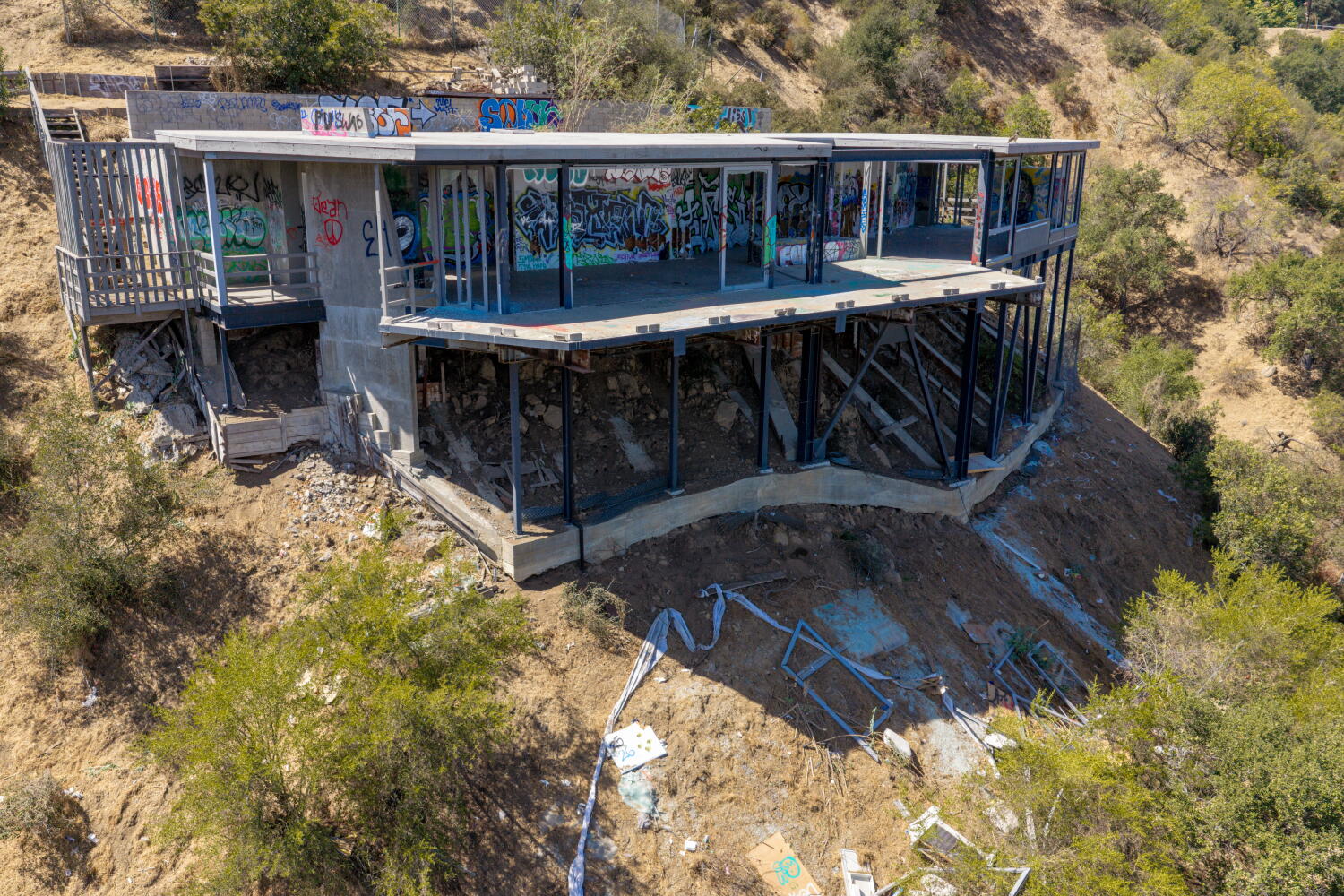
An abandoned property perched precariously on stilts along Mulholland Drive has transformed into a dangerous symbol of municipal paralysis, drawing intense neighbor frustration, squatters, and a persistent wildfire threat just above the San Fernando Valley. For residents living in the shadow of this decaying structure near the Universal City Overlook, the empty multi-million-dollar envelope is not merely an eyesore. It is a ticking clock.
Decades of reporting on municipal decay reveal a recurring pattern. When high-value real estate slips into bureaucratic limbo, local governments move at a glacial pace while neighborhood safety degrades in real time. The abandoned Mulholland Drive home illustrates the systemic failure of municipal enforcement mechanisms when absentee owners simply ignore city citations, liens, and public safety mandates.
The Anatomy of an Abandoned Hazard
Perched more than two hundred feet from the nearest neighboring structure, the property operates as an isolated bunker built directly into steep canyon topography. This geographical isolation, which once promised exclusive seclusion for its former occupants, now acts as an open invitation for illicit activity. Without active inhabitants or functioning security gates, the site routinely attracts trespassers, unauthorized parties, and taggers.
Local residents have taken matters into their own hands out of sheer desperation. In instances that highlight the breakdown of official deterrence, neighbors have resorted to installing padlocks and chains on perimeter gates themselves. These makeshift security measures rarely endure. Within days, locks are clipped or removed entirely, leaving the property wide open once again.
The stakes climb exponentially with every dry season. Nestled amid thick, unmanaged brush and parched canyon slopes, an unmonitored property hosting unauthorized gatherings presents an immediate wildfire risk. In a region where a single spark can trigger a catastrophic hillside evacuation, the presence of vacant, unsecured structures acts as an unexploded ordinance sitting right at the edge of densely populated residential zones.
Why Bureaucracy Falters in the Hills
Understanding how a prominent architectural asset devolves into a public hazard requires looking past the local complaints and examining structural municipal limitations. Los Angeles municipal code grants the Department of Building and Safety the authority to issue abatement orders, levy fines, and place liens on delinquent properties. Yet these tools assume a rational property owner who cares about credit ratings, asset depreciation, or legal penalties.
When an owner possesses vast portfolios or treats multi-million-dollar holdings as distant line items, standard municipal fines become completely toothless. Notices of violation pile up unanswered. Administrative hearings proceed through months of mandatory waiting periods. Even when the city secures a property with temporary fencing or plywood, determined trespassers easily breach the barriers, rendering the official intervention obsolete within hours.
Furthermore, jurisdictional friction between police departments, fire marshals, and building inspectors creates frustrating gaps in enforcement. Law enforcement officers can clear trespassers or respond to emergency calls, but they cannot legally force a structural overhaul or manage long-term property maintenance. Building inspectors issue citations, but they lack the tactical presence required to secure a compound against persistent, unlawful re-entry.
The Broader Regional Epidemic
The situation on Mulholland Drive is not an isolated anomaly. Across the Hollywood Hills and surrounding ridgelines, a cluster of abandoned or neglected luxury estates has languished in legal purgatory. Some properties are tied up in complex probate battles, while others suffer from corporate neglect, tax default, or absentee owners who refuse to communicate with local representatives.
Tax default mechanisms take years to reach the point of foreclosure or forced public auction. During this multi-year window, neighborhood degradation accelerates. Code enforcement officers find themselves outmatched by properties that morph from empty houses into transient hubs.
The financial disconnect is stark. While surrounding homeowners pay exorbitant property taxes and private security fees to protect their investments against environmental hazards, neighboring abandoned parcels hemorrhage value and invite liability. Insurance companies have begun noticing this systemic risk, quietly issuing non-renewal notices or hiking premiums for homeowners whose properties sit adjacent to unmanaged, vacant structures.
Seeking Concrete Structural Remedies
Fixing the chronic rot of abandoned hillside real estate demands an aggressive overhaul of municipal policy. Relying on voluntary compliance from absentee landlords has proven completely ineffective.
Cities must lower the threshold for emergency receivership. When a vacant property accumulates unaddressed safety citations and poses an active wildfire or security threat to a community, the local government should possess the statutory power to seize operational control swiftly, clear the hazards, bill the owner for every incurred expense, and force a rapid sale if debts go unpaid.
Allowing single-family residential neighborhoods to bear the brunt of criminal trespassing, fire vulnerability, and psychological distress while owners hide behind corporate veils or legal technicalities is an abdication of basic governance. Until municipal codes are rewritten to prioritize community survival over absentee property rights, the view from Mulholland Drive will remain a glaring monument to institutional impotence.


